This one, he swears, is the final vessel Issue 74 : Sept/Oct 2010 There comes a time in the life of every sailor when he must contemplate his final vessel. The one (figuratively, at least) that will c...

Resources, Boat Data & Interactive Calculators
This one, he swears, is the final vessel Issue 74 : Sept/Oct 2010 There comes a time in the life of every sailor when he must contemplate his final vessel. The one (figuratively, at least) that will c...
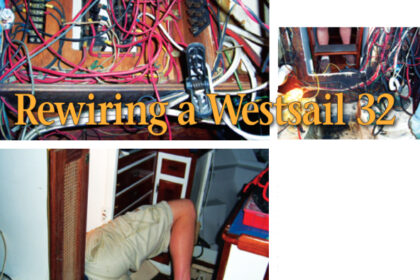
Taming an electrical nightmare to further a cruising dream Issue 74 : Sept/Oct 2010 When our boat, Asia Marie, a Westsail 32, acquired us in the summer of 2007, she came with a wish list of projects w...
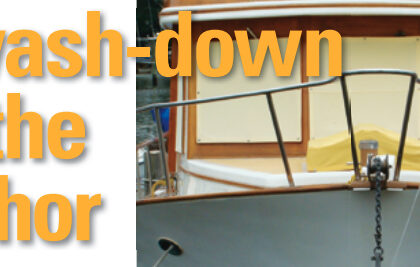
No more muddy souvenirs to foul the foredeck Issue 74 : Sept/Oct 2010 Nothing says you need a washdown system quite like hauling up an anchor and rode full of black goop that attaches itself to the an...
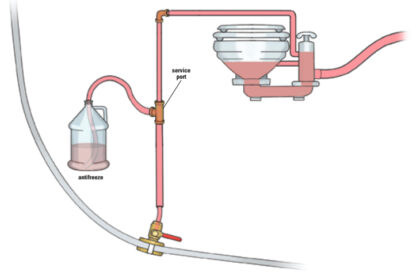
An easier way to ward off Jack Frost’s fingers Issue 74 : Sept/Oct 2010 Northern sailors have two seasons: sailing season and maintenance season. One of the primary goals when preparing a boat for the...
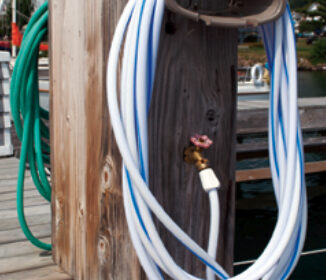
Keep your onboard supply fresh and pure Issue 74 : Sept/Oct 2010 Keeping the water in a sailboat’s tanks tasting fresh is often a challenge and, if a tank goes bad, the consequences can be outright aw...

Cutting your dreamboat down to size Issue 74 : Sept/Oct 2010 Many of us fall victim to the allure of the big boat at the end of the dock. A tear wells up as we sight along the acres of the teak deckin...
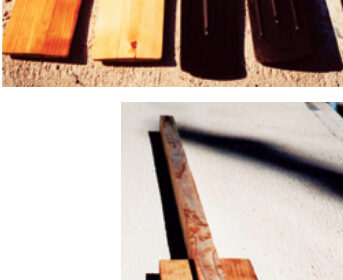
An inflatable dinghy gets a homemade upgrade Issue 74 : Sept/Oct 2010 Before my partner, Magali, and I left England on Joass, our 32-foot wooden gaff cutter, in the spring of 1998, we bought ourselves...
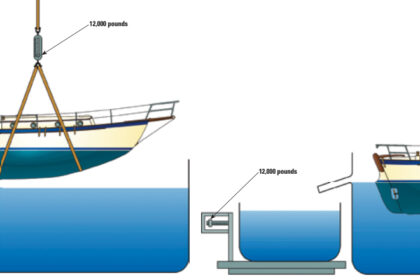
What floats your boat Issue 74 : Sept/Oct 2010 Boats are designed to float. This might seem to be an unnatural act, especially for hulls that are made of aluminum, steel, concrete, or fiberglass. Thes...
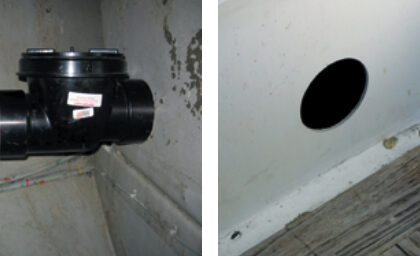
Faster discharge from flooding waves Issue 74 : Sept/Oct 2010 My boat’s original cockpit drains were adequate for a rain shower or a light wash-down but often became partially blocked with one thing o...
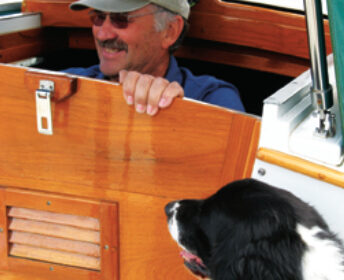
An early riser solves the problem of clattering dropboards Issue 74 : Sept/Oct 2010 Gary Stoop built new teak companionway dropboards to replace the damaged ones that came with his well-used Ericson C...

A low-priced club racer and shoal-water cruiser Issue 74 : Sept/Oct 2010 Needing a break from winter, my wife and I flew to St. Petersburg, Florida, to participate in the inaugural Good Old Boat Regat...
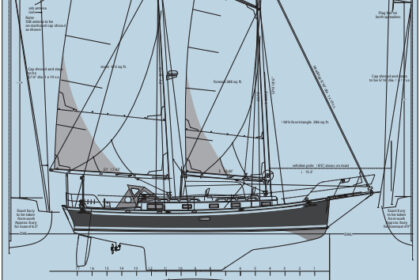
One size, or style, does not fit all Issue 74 : Sept/Oct 2010 Writing about rudders was not much fun. Writing about rigs will be more fun. Everyone has an opinion about sailboat rigs. I have opinions ...

A performance cruiser for the coast and open ocean Issue 74 : Sept/Oct 2010 Duane and Barbara Tack have owned Sequester, a 1979 Esprit 37, since 1981. I first learned of Duane and Barbara when I disco...

When cruising, our days begin with tea and the forecast Issue 74 : Sept/Oct 2010 One of the biggest lessons I’ve learned as we cruise is the difference between weather reports for the landed gentry an...

A well-thumbed book has been a faithful companion Issue 75 : Nov/Dec 2010 I was fossicking around in a used-book store the other day when I came across a copy of A Manual for Small Yachts, by R. D. Gr...
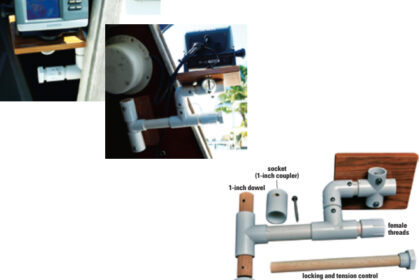
Protect your investment from weather and covetous knaves Issue 75 : Nov/Dec 2010 Many GPS chart plotters are designed for bulkhead mounting but, if they’re visible, thieves love them. With that in min...
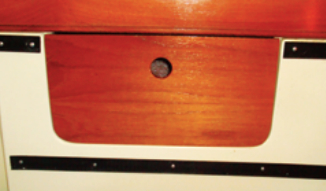
Simple covers provide closure and containment Issue 75 : Nov/Dec 2010 For a while, Ken and I each owned a 1986 Pearson 28-2. When these sisterships originally left their Portsmouth, Rhode Island, birt...
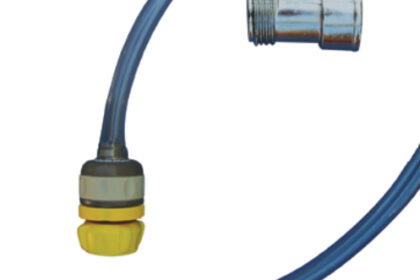
An in-line valve eliminates the on-dock sprint Issue 75 : Nov/Dec 2010 Upon coming into a marina, our first priority is what we like to call “watering the boat.” The procedure begins with filling her ...

A bag of rice resuscitates a $300 lifeline Issue 75 : Nov/Dec 2010 Because we had two children in college in the States as we continued to roam the Caribbean, my husband, Dave, bought me an iPod touch...

Code words let Mars understand Venus Issue 75 : Nov/Dec 2010 The question comes up a lot. Not from sailing friends, they are mostly too polite, but landlubbing friends don’t mind asking, “When you’ve ...
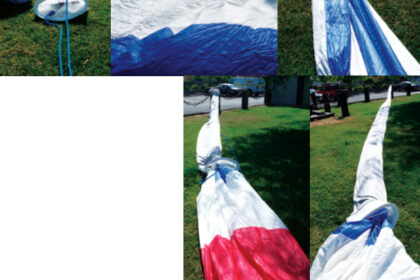
Fly and douse a standard spinnaker like a gennaker Issue 75 : Nov/Dec 2010 People are selling their little-used symmetrical spinnakers and replacing them with expensive cruising gennakers that can be ...
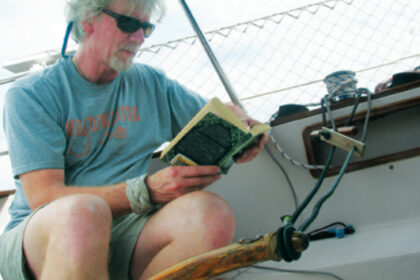
Habitual tinkering comes up trumps Issue 75 : Nov/Dec 2010 Self-steering is the elusive silent partner of every singlehander. Dozens of commercial products have been devised to deliver this blessed gr...

Take preventive steps but be prepared for at-sea repairs Issue 75 : Nov/Dec 2010 This article is an excerpt from Lin and Larry Pardey’s Capable Cruiser, which was published in its third edition earlie...
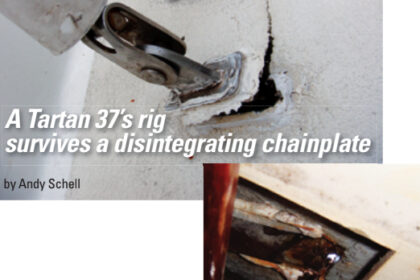
A Tartan 37’s rig survives a disintegrating chainplate Issue 75 : Nov/Dec 2010 At the time I wrote about replacing the backstay on my best friend, Adam’s, new-to-him Tartan 37 (see Good Old Boat May/J...
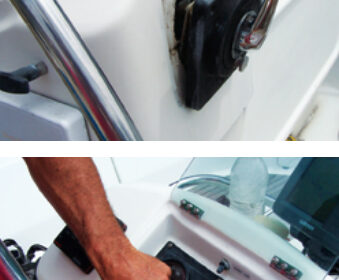
A half-hour job gets stuck in time Issue 75 : Nov/Dec 2010 Easing into the fuel dock with a light wind aft, the skipper shifted into reverse and applied a little engine power for a perfect landing. Th...

The Brother was big, but the Necchi fit the niche Issue 75 : Nov/Dec 2010 This tale begins with the collapsing real estate market. For 7 years, our few shoreside possessions had been residing in a ren...
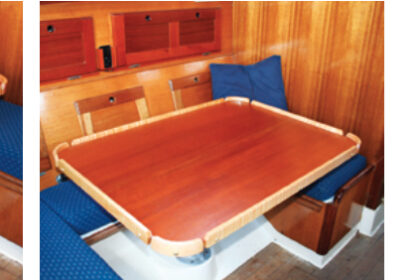
Eat at it, work at it, or park it . . . Issue 75 : Nov/Dec 2010 On many good old boats, the saloon table is mounted on a post bolted to the cabin sole. The post-mounted Formica table on my Bristol 30 ...

Made with a teak substitute, they’ll never need varnishing Issue 75 : Nov/Dec 2010 When it comes to teak, there are three simple truths: new teak is gorgeous; old teak needs regular maintenance; negle...

A chance encounter opens a window in time Issue 75 : Nov/Dec 2010 A few years before I was born, my parents bought a 26-foot Sparkman & Stephens-designed New Horizon sailboat built by Ray Green. T...
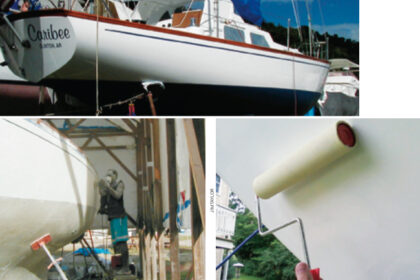
Rolling out a mirror finish is all about preparation Issue 75 : Nov/Dec 2010 Few upgrades can change the looks of your boat as dramatically as a gleaming new coat of paint on her topsides. Modern two-...