After a three-year refit, a much-loved Allied Seabreeze goes cruising again in Maine
Issue 14: Sept/Oct 2000
Leaves turn to muted rusts, reds, and golds in Down East Maine. The weather cells move more quickly and winds pick up, flinging sea spray against the multi-colored lobster buoys. There are fewer sails on the water. The visitors have gone. Maine residents know winter is coming, and they’re preparing for it.
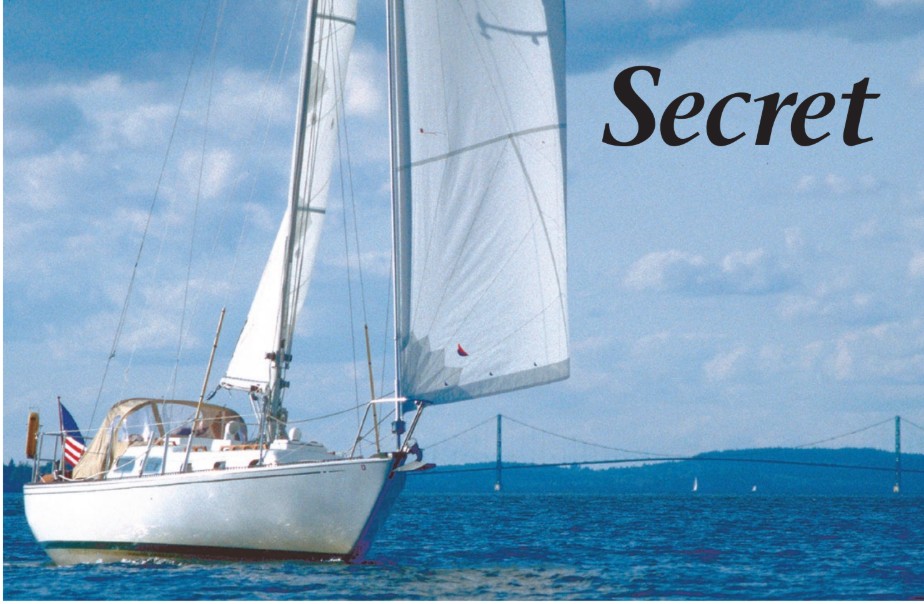
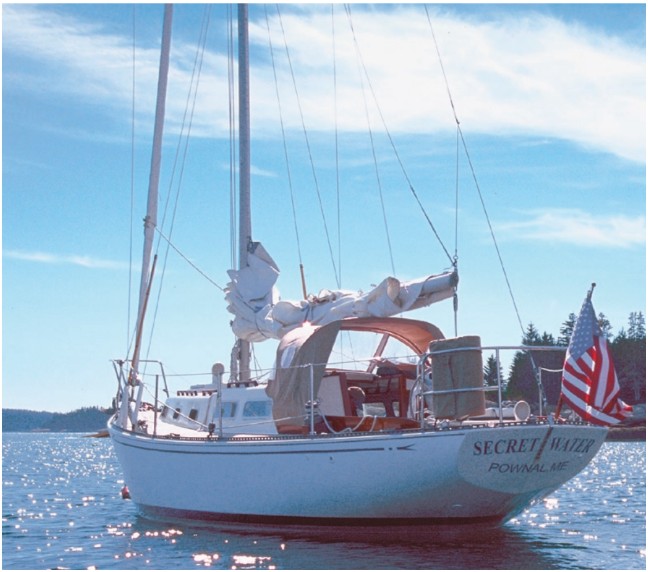
After a three-year refit, 1999 was the first season Art Hall had had his Allied Seabreeze in the water, and he was having a hard time facing the season’s end. When Good Old Boat technical editor Jerry Powlas and I asked him to go for one last cruise, he did not resist. His wife, Sandy, and two teenage daughters prefer summer to late-fall sailing and had become involved in other activities, abandoning Art to the role of quasi tour guide for a couple of sailors “from away,” as they say in Maine. Nevertheless, he was happy to have an excuse for one last weekend cruise before hauling his boat in Belfast.
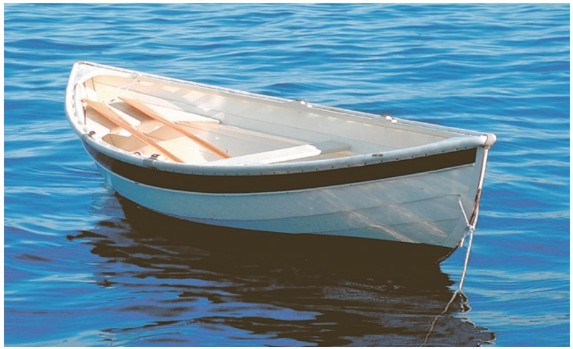
Just south of Belfast, in the cottage community of Bayside, is the mooring where Secret Water, Art’s Seabreeze, awaited her last sail of the season. Secret Water is the name of one of the books by Arthur Ransome in his classic children’s series about childhood adventures and sailing which begins with Swallows and Amazons. In Secret Water, the children have a password that they must be able to say forward and backward: “akarabgnadabarak” and “karabadang-baraka.” The Peapod tender that serves Secret Water is a double-ender that teases the casual observer by having both variations of the password as names, one painted on one side and the reverse painted on the opposite side. Art says this is the source of untold queries and explanations.
Like the children in the Swallows and Amazons series, Art began sailing as a child. When Art was still in grade school in Connecticut, his father bought Rondo, a secondhand Pearson Triton (hull #124) for family sailing. Back in the 1960s, two adults and four children thought nothing of close quarters and “primitive” amenities for their vacation lifestyle. Many families went camping. Art’s family “camped aboard” with the two boys sleeping in the cockpit under a boom tent.
“Mainer” at heart
In the best tradition of an East Coast boy who wanted to make his living at sea, Art went to the Maine Maritime Academy in Castine and became a “Mainer” at heart, establishing his home there. He sailed in merchant vessels all over the world, ending his merchant marine career as the senior engineering officer aboard Texaco tankers.
Shortly after graduation from college, Art bought a 31-foot C&C Corvette, which he sailed on Maine coastal waters and used to court his Maine sweetheart, Sandy. Following their wedding, they made their escape from the reception aboard the Corvette. Next, Art and Sandy briefly owned a Pearson Ensign, but they primarily cruised as a family aboard Northern Light, a 30-foot custom cutter that was designed and built by Sandy’s father, Dick Lagner, a naval architect.
In 1990, Art noticed a familiar-looking Pearson Triton in a boatyard. He even pointed out to Sandy and the girls upon occasion: “That looks just like the boat that Papa Bob (the girls’ name for their grandfather) used to sail.” Eventually he stopped for a closer look, was struck by the similarities, and realized with joy that it was hull #124, the boat he had grown up on. He bought it.
The Triton had seen better times in earlier years with Art’s family. Now she was in need of a complete renovation. The deck was delaminated; trim was decayed; from cushions to countertops, the interior was in need of a refit; the plywood cabin sole was shot; the electrical wiring was ready for replacement; and the boat was a cosmetic nightmare. Art says it looked as if it had been painted with a broom. Three years later this boat was in tip-top condition from the inside to the newly Awlgripped topsides and deck. Shortly thereafter, job upheaval caused Art and Sandy to sell the boat while it was in mint condition.
During the boat’s transformation, Rondo had been blocked on stands in the Halls’ backyard in Pownal, Maine. Once life had stabilized again, Art was encouraged enough by the results of the first renovation to take on another project. He began looking for a larger and more comfortable cruising boat. The next “project boat” was the Allied Seabreeze, which he found in Connecticut and trucked back home to that familiar spot in the backyard.
Project boat
Like her predecessor, Secret Water was in need of minor structural and major cosmetic repair. In particular, her spongy deck frightened prospective buyers. About 10 percent of the deck was damaged, but Art had already tackled a delaminated deck, so he bought her for a reasonable price. He says if you’re going to buy a project boat, your best bet is to find one that won’t pass a survey, can’t be insured, and can’t be financed. Then, he adds, if you can pay as is, where is, no survey, and cash for it, it’s a buyer’s market. He offered $10,000 less than the asking price and says the seller just about chased him away with an oar but later called him up and accepted the offer.
A fine craftsman, Art transformed the boat inside and out over another three-year period. He started with the areas with deck delamination. He removed and discarded the outer layer, removed and replaced the rotten core and built up, faired, and refinished the top laminates. He Awlgripped the deck and applied a new non-skid to traffic areas.
And he built new engine beds. As he says, “When the boat was repowered with the Lehman diesel, some ‘bonehead’ had bolted the engine mounts through the skin of the boat. There were 12 half-inch holes. It was a textbook case of how not to install an engine. I removed the welded steel pedestals that had elevated the forward engine mounts and then glassed in substantial mahogany stringers to form proper engine beds. And I drilled and faired the 12 holes.”
Art also performed miracles inside the boat: repainting the overhead with one-part polyurethane, resurfacing the countertops and vertical surfaces, completely redoing the head compartment, and rewiring the electronic equipment. (There was more on this in Good Old Boat, March 2000.) Before the Seabreeze had begun her trip to Pownal, Maine, in fact, Art had stripped all the wiring, the bulk of the equipment that he says had no value — life jackets, fenders, docklines, Loran, knotmeter, depthsounder — and tossed them in the dumpster in Connecticut. The old roller furler and jib were sold, but he salvaged the mainsail, the spinnaker, and the drifter.
Lest you think Art is a carefree squanderer, we should point out that this is one man who made use of every salvageable piece of teak and other wood on that boat. If a piece couldn’t be repaired and reused in its original location, it was stripped and used in another place. A piece of wood salvaged from the Triton, in fact, has a place of honor as part of Secret Water’s breadboard.
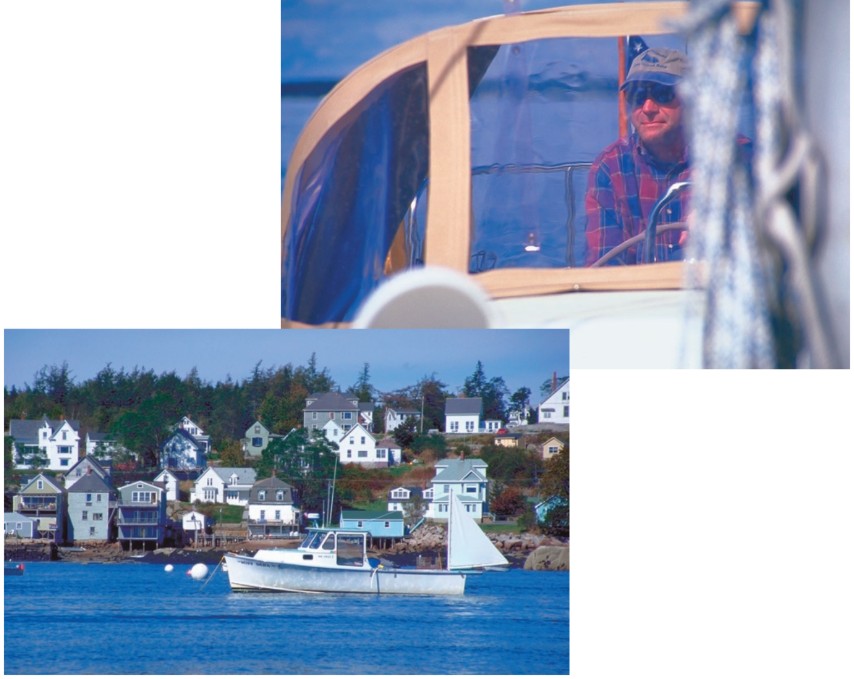
Art is a self-described “bottom feeder.” When parts could not be salvaged, he cruised marine consignment shops for equipment such as winches, a forward hatch, and a traveler. The furler is new, however, and the 135-percent furling tri-radial jib is a new high-tech sail made of laminated cloth. Art notes that this sail was made by his local sailmaker and adds, “You should support your local sailmaker. He’ll be there to tweak the minor problem you might encounter. Not so with the mail-order outfits.”
During this entire process, Art strove to keep Sandy involved. She thought self-tailing winches would be nice, and Art’s only comment was, “No problem, honey.” Next thing she knew, Secret Water was equipped with self-tailing winches from a local buy-and-swap magazine called Uncle Henry’s, which Art characterizes as “a real Maine institution.” It was crucial to Art that Sandy have ownership and full partnership privileges from start to finish. He notes, “Her input and contributions should not be underestimated.”
Art didn’t just restore this Seabreeze, he put his own stamp on the design of the interior. He and Sandy attended a rendezvous of Seabreeze owners and took away from that gathering the best interior innovations and then added a few more of their own. For example, an awkwardly placed oilskin locker (behind the galley space in the sail locker and to starboard of the companionway steps) became the location for a trash container.
He added a lift-out panel for better access to the engine compartment. He eliminated the pilot berth and built cabinets and a dedicated chart locker, sized just right to hold folded charts. Wherever there was an unused spot, Art turned the cubbyhole into a storage space. Finally, three years into the project, as the 1999 sailing season approached, Art said, “It’s time to go sailing.” It was. The boat’s topsides were promised Awlgripping or a paint job to be done at another time. It was at the end of that first season that Jerry and I joined Art on his last sail.
Season’s last sail
We met him one Friday late in September in Bayside, south of Belfast. Before having a chance to fully appreciate the architecture of Bayside, a quaint Victorian community where Sandy’s family has spent summer vacations for four generations, we bailed the dinghy, loaded gear on Secret Water, and were off. We sailed across Penobscot Bay in brisk winds to Holbrook Island, just south of Castine, where Art had attended the Maine Maritime Academy and fallen in love with Maine.
Seabreeze designer Frank MacLear is quoted as saying that any centerboarder requires earlier sail reduction than full-keel boats. This suggests that the boat should be sailed on her feet. Art, however, was having none of that when we sailed with him. In 25-knot winds, with seas of 3 to 4 feet in the bay, Secret Water carried a single reef in the main and a full jib. This pushed the rail under and held it there as Art hunkered down on the leeward side of the cockpit and happily sailed his boat. His faith in the ability of his boat to sail in this condition was complete and, from what we saw, justified.
Jerry’s dinghy sailor instincts, however, kept telling him we’d see seaweed on the masthead before sunset. But the Seabreeze continued to have good steering and perfect balance with no tendency to round up. Eventually it became too much even for Art, and he decided to roll a small reef in the jib as we cracked off on a reach near Holbrook Island. We’re certain no one will accuse Art of having Secret Water undercanvassed. Perhaps this is a glimpse of how Secret Water is sailed in casual club racing where Art picked up a first place in the Around Isleboro Race in his first season with her.
Art has Secret Water rigged with a 135-percent genoa with a foam luff and a full-battened main. The main halyard and reefing lines are led to the base of the mast and, with Secret Water’s wide sidedecks, getting to the mast is no problem. She has a well-fitted dodger, which Art considers to be a necessity on the coast of Maine. He has replaced her original Crosby rig mainsheet system with a traveler mounted to the afterdeck, which, he notes, together with a powerful vang at the toerail, effectively flattens the main.
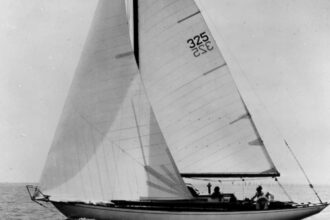
Frank MacLear and Bob Harris designed the Seabreeze 35 as a keel centerboard boat, a design that was influenced heavily by Finisterre, as were so many boats of the time. A total of 135 were built between 1963 and 1972. This was the second boat introduced by the Allied Boat Company (for the history of the company, see Good Old Boat January 1999), following in the wake of her popular predecessor, the Seawind, a 30-foot ketch. The Seabreeze was rigged both as a yawl and as a sloop. The Seabreeze has a shallow full keel with an attached rudder. It’s just the thing for cruising among Maine lobster pot warps. The 350-pound all-bronze centerboard is housed inside the full keel and pivots from its forward edge, improving pointing ability and changing the draft from 3 feet 10 inches to 7 feet. The board’s controlled by a worm-gear winch located in the cockpit. A Monel cable is used to raise and lower the board.
Although the Seabreeze is considered to be an acceptable bluewater boat, Art has modified her to be a coastal cruiser. In the merchant marine, Art traveled all over the world. But he believes the coast of Maine is the most beautiful place in the world and has no plans to go farther than Nova Scotia’s Bay of Fundy and other destinations that can be reached during a two- or three-week vacation. “It is said that you can spend your life cruising these waters and not see it all,” Art says. “I hope to disprove that.”
The next day had lighter winds, so light that we motored through most of the morning until a nice breeze came up around lunchtime. Art recognizes most other sailboats cruising the area. He knows at a great distance the type of boat, the characteristics of the boat, and in many cases the name on the transom of the boat and where it is moored. He carries the WoodenBoat directory along and often looks up the classics he sees on his journeys. The directory provides information on the designer, builder, and current owner. Art loves these boats and knows many as individuals.
Seals and surprises
With Art pointing out boats, harbors, and other points of interest, we circumnavigated Deer Isle, remarking at the vast numbers of lobster traps and thrilled by the occasional sightings of curious harbor seals, which popped up to see what sort of boat belonged with Secret Water’s keel. The Down East area — so named because of the prevailing southwesterlies which let a sailing craft run downwind and east along the coast — is made up of rocky fingers that extend into the Gulf of Maine, offering vast opportunities for shelter from any wind.
Deer Isle held two surprises. The first was the town of Stonington. This is a last holdout against the tides of Maine tourism, which are turning many coastal towns into something derisively characterized by Art as towns full of “T-shirts and taffy.” Not so in Stonington. This harbor lies too far off the beaten path to attract tourists (except for those arriving by boat) and therefore retains the flavor of a commercial fishing village with sailboats thrown in for the sake of diversity. In fact, we were struck by the integration of sailboats and lobster boats in all harbors and on all docks as we toured this part of Maine — polished Hinckleys tied up next to well-worn lobster boats without an ounce of discrimination, as far as we could tell, from either boater.
We enjoyed a lovely sail up Eggemoggin Reach, past Center Harbor and Brooklin, and the spectacular home of WoodenBoat magazine. The second surprise was dredged up from my childhood. Each morning when we awoke in Maine, I invoked the title of a favorite childhood book by Robert McCloskey, One Morning in Maine, while appreciating the surroundings. I told Jerry the storyline from memory and described the detail and warmth of the illustrations. Little did I know that Art would take us on a pilgrimage to Bucks Harbor, the scene of the story, and that Condon’s Garage would still be there nearly unchanged, almost 50 years after the book was written. Mooring in Bucks Harbor the second night was a special treat.
The next day we sailed back up Penobscot Bay, this time on beyond Bayside to Belfast where the boat would be hauled for the winter. Jerry and I were sorry to see the cruise end. Art was sorry to see the season end, but, like a chapter in the book for which she was named, Secret Water was prepared to wait patiently for her next adventure. Spring would surely come, and this beautiful boat would once more sail the coastal waters that Art knows so well.
Karen is editor of Good Old Boat magazine.
Thank you to Sailrite Enterprises, Inc., for providing free access to back issues of Good Old Boat through intellectual property rights. Sailrite.com