

Don’t wait until it happens; get your boat ready now Issue 24 : May/June 2002 My first memory, as a small child, was being in the middle of a hurricane in the North Atlantic. It was the 1930s. Our fam...

Don’t wait until it happens; get your boat ready now Issue 24 : May/June 2002 My first memory, as a small child, was being in the middle of a hurricane in the North Atlantic. It was the 1930s. Our fam...
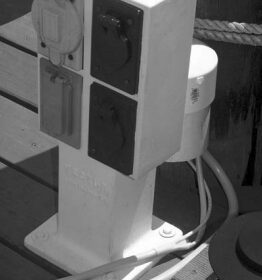
Issue 25 : Jul/Aug 2002 At our dock we have three shore cables: the 35-amp AC power cable, the telephone cable, and the cable-TV. To keep the shore-end plugs of these cables out of the weather when th...

Hard work converts a classic Hinckley from total wreck to total delight Issue 25 : Jul/Aug 2002 For sailors, one of the worst nightmares is to be driven into the breakers of a lee shore. At 2:35 a.m. ...
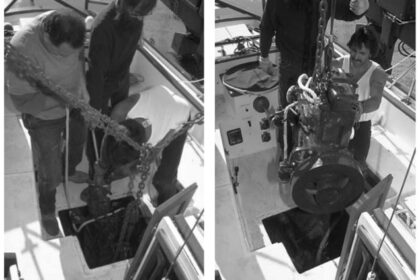
Tips on how to extract the old one and install the new one Issue 27: Nov/Dec 2002 IN THE SEPTEMBER/OCTOBER ISSUE OF Good Old Boat, we discussed the decisions to be made when the inevitable day comes t...

New engine or rebuild? And should you install it yourself? Issue 26 : Sept/Oct 2002 Chances are your boat is like a member of the family. You could no more dispose of it than sell your only child. But...
Driven mad by noisy halyards, a sailor plans his revenge Issue 34: Jan/Feb 2004 I’M BAD. I ADMIT IT. I’VE BRAZENLY JUMPED aboard other people’s boats without even asking “permission to come aboard” an...
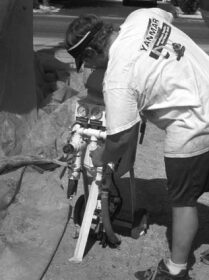
This unique paint-stripping material won’t rip off your gelcoat Issue 29 : Mar/Apr 2003 Chances are your boat has many years’ worth of paint on the bottom. Removing the paint buildup without rui...

Oars: How to choose ’em and use ’em Issue 30 : May/Jun 2003 Although some dinghies can handle outboards and some have sailing rigs, every dinghy has a set of oars. The ease and pleasure of rowing a sm...
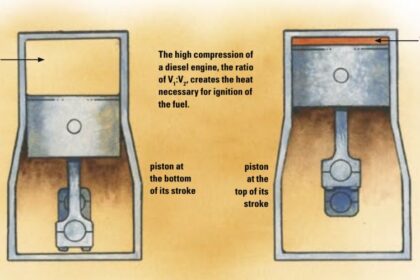
A little tender loving care brings longer trouble-free life Issue 34: Jan/Feb 2004 DIESEL ENGINES ARE NOW THE ENGINES OF CHOICE FOR auxiliary sailboats, and with good reason. They have a superior reco...
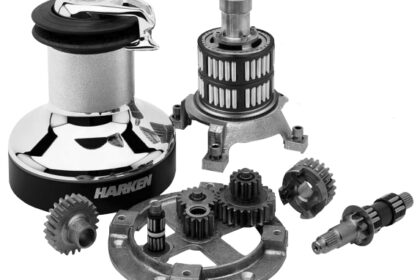
Here’s how to maintain your winches for long, reliable service Issue 30 : May/Jun 2003 In the early history of sail, all sail handling was accomplished through brute strength or with the help of multi...

Here’s how to help a good old body keep sailing Issue 30 : May/Jun 2003 Growing old is the most unexpected thing that happens in one’s lifetime. When that three-score milestone fades into the distance...

Why there will be no magnetic compasses for future generations Issue 34: Jan/Feb 2004 AROUND A.D. 1090 THE CHINESE first reported the use of a magnetic needle to indicate north. This primitive compass...
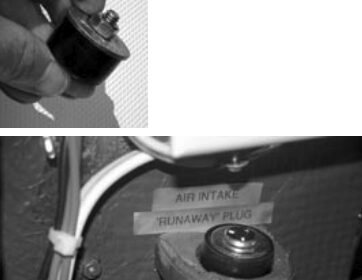
How to stop a diesel that’s running amok Issue 31 : Jul/Aug 2003 A runaway diesel engine can be a destructive, dangerous, and terrifying experience for people nearby. Although it happens infrequently,...
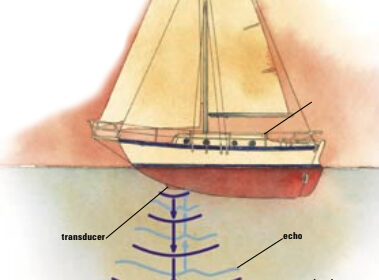
The short course — the first in a series of overview articles for those who want just the big picture Issue 31 : Jul/Aug 2003 Two thousand years ago, during the age of the Roman Empire, weights were m...
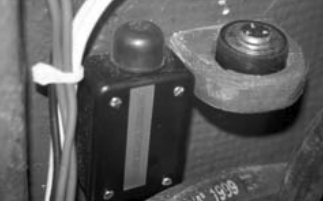
Issue 32 : Sept/Oct 2003 Many diesel engines aboard sailboats have compression-release or decompression levers on top of the engine for each cylinder. As their name implies, these levers hold open the...

Understanding and using your marine-band radio Issue 32 : Sept/Oct 2003 The primary short-range radio-communication system for most small craft is the VHF-FM marine-band radio. It is the communication...

Simple ebb and flow results from highly complicated physics Issue 32 : Sept/Oct 2003 Poets and ancient cultures have long compared life itself with the tides. Historically, a flood tide has been consi...

Generating electricity — how the alternator and regulator produce their magic Issue 33 : Nov/Dec 2003 Although sailboats are usually small and compact, they have the infrastructure of a large city: th...

Here’s how to get that professional finish Issue 33 : Nov/Dec 2003 My Sunbrella dodger is a wonderful asset, and I can’t imagine why I sailed so many years without one. I keep mine in place nine month...

When the fog arrives, it’s time to blow your own horn Issue 35 : Mar/Apr 2004 Operating your boat in a dense fog can be an anxiety-filled experience. You need to maintain a safe course; check your com...

GPS, the system that supports your navigational eyes in the sky Issue 35 : Mar/Apr 2004 In October 1957, the first man-made satellite was thrust into orbit around the earth. The USSR’s tiny Sputnik ha...
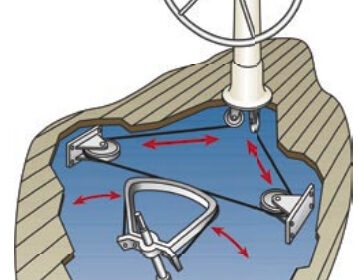
Eight ways to steer a boat Issue 36 : May/Jun 2004 When it comes to steering a sailboat, even die-hard wheel enthusiasts agree there is no steering system that is simpler, more affordable, or offers b...
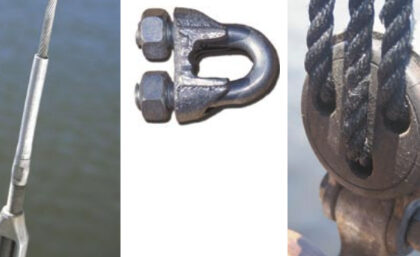
What’s at the end of your shrouds and stays? Issue 36 : May/Jun 2004 The stainless-steel standing rigging that supports our masts is critical to our sailing safety, and the terminals at the end of the...
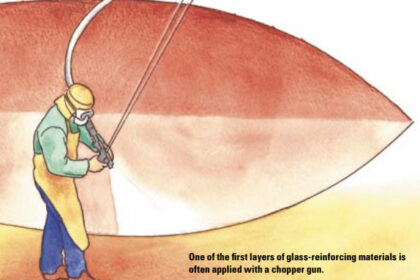
The magic combination of plastic and glass that changed boatbuilding Issue 37 : Jul/Aug 2004 Composite construction in the United States began in the 1940s — during World War II — when a southern Cali...
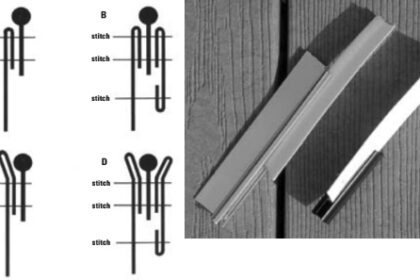
The best way to join fabric to hard surfaces Issue 38 : Sept/Oct 2004 There occasionally comes the time when you need to fasten fabric to wood, fiberglass, or some other hard object. Sometimes eyes an...
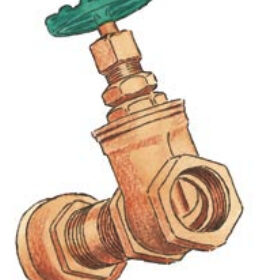
Inspecting and maintaining seacocks Issue 38 : Sept/Oct 2004 The hull of a boat is designed to keep water out, but most boats also have through-hull fittings and seacocks that are designed to allow wa...
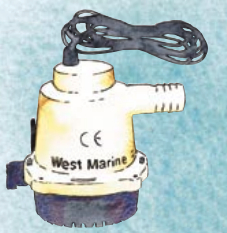
How to put that water back outside where it belongs Issue 39 : Nov/Dec 2004 There is an enormous variety of bilge pumps on the market. Some are electric, some manual, and some are belt-driven from the...

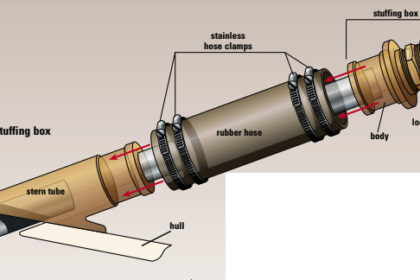
Keeping that drip-drip-drip under control Issue 40 : Jan/Feb 2005 A shaft log guides the propeller shaft through the hull while keeping watertight integrity. It consists of two parts, a watertight sea...

Electronic charts offer choices for every budget Issue 41 : Mar/Apr 2005 The typical chart plotter consists of a display unit, either black-and-white or color, and a GPS. The plotter displays your boa...