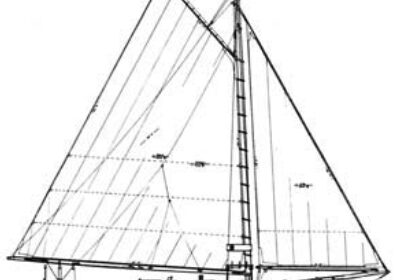
While economics favor the sloop, other rigs have much to offer Issue 17 : Mar/Apr 2001 The history of the fore-and-aft rig is a fascinating one. It is particularly interesting when you realize that tw...

Resources, Boat Data & Interactive Calculators
While economics favor the sloop, other rigs have much to offer Issue 17 : Mar/Apr 2001 The history of the fore-and-aft rig is a fascinating one. It is particularly interesting when you realize that tw...
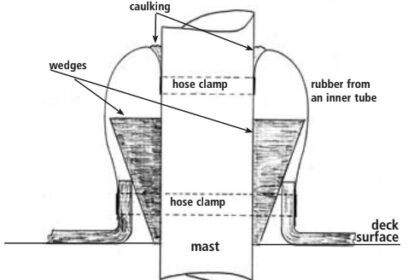
A small project that brings satisfaction and pride Issue 21 : Nov/Dec 2001 An acquaintance raised the question concerning those little wedges that hold the mast in column on many boats. On a recent sa...
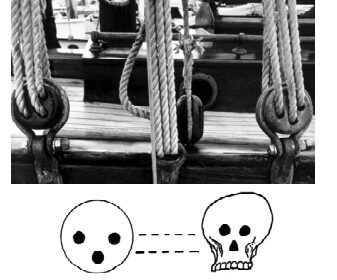
These relics of nautical history still have practical modern uses Issue 22 : Jan/Feb 2002 As sailors, sometimes our most basic feelings come to the surface when we go aboard an old boat. Whether it be...
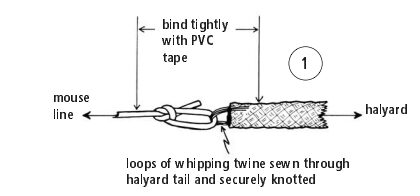
An easier way to thread a new line through your mast Issue 23 : Mar/Apr 2002 Threading a new electrical cable or halyard down the inside of a mast is tricky — especially if you have internal halyards ...
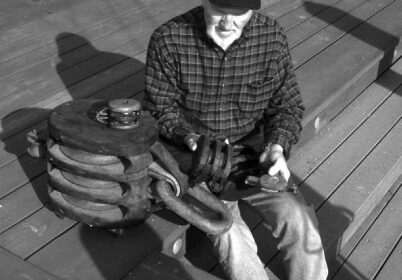
Make them last longer and perform better Issue 23 : Mar/Apr 2002 Blocks, or to use the landlubber’s term, pulleys, are as indispensable to the operation of a sailboat as an engine is to a powerboat. T...
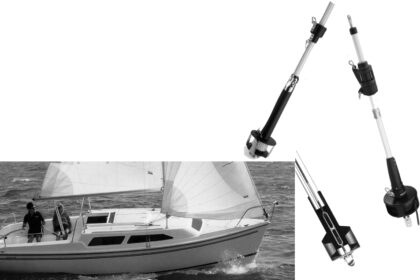
Choosing and installing a roller furling system . . . options and opinions Issue 23 : Mar/Apr 2002 Back in the late 1980s, when my wife, Andra, and I were cruising aboard our 1965 Pearson Vanguard, al...
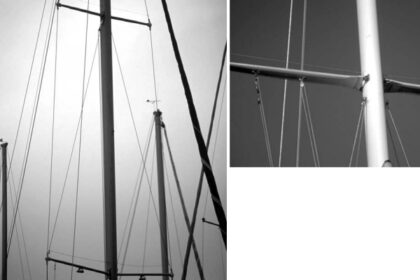
Defeating the feathered menaces that alight in your rigging Issue 24 : May/June 2002 How many times have you scrubbed your deck only to notice, scant minutes later, a juicy purple Rorschach pattern vi...
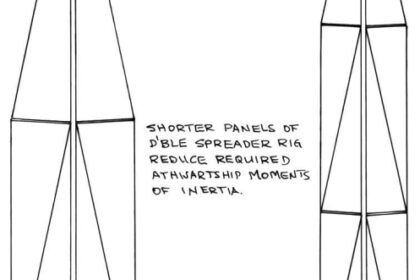
A designer names his preferences for mast and rigging strength Issue 25 : Jul/Aug 2002 Recently I was consulted about a new mast for an older 40- foot cutter, as the owner was planning a world cruise....
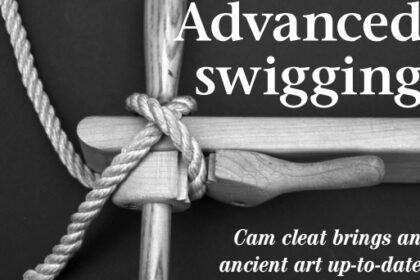
Cam cleat brings an ancient art up-to-date Issue 29 : Mar/Apr 2003 Swigging up a halyard can be a bit daunting for youngsters, since it takes coordination. At the other end of the age spectrum, older ...

This compatible couple makes mainsail handling a snap Issue 34: Jan/Feb 2004 WHEN SAILBOAT OWNERS UPGRADE their sail-handling systems, the first thing they usually do is add a jib roller-furler system...
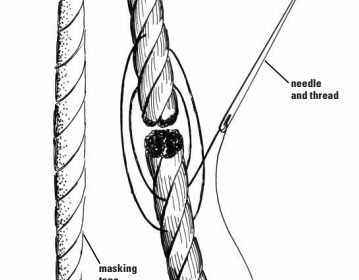
Issue 33 : Nov/Dec 2003 Whether your halyards are of braided or laid rope, as long as they are external, new ones can be reeved without sending a person aloft. Two things are needed: a nearly windless...
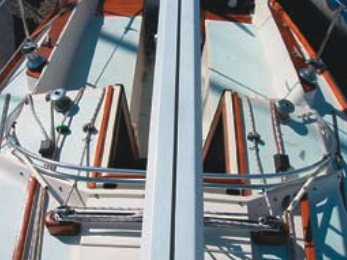
When the noise died down, he needed a new boom Issue 35 : Mar/Apr 2004 There are a few good reasons to replace your boom. If you want to add capability or features, it’s easier and more cost-effective...
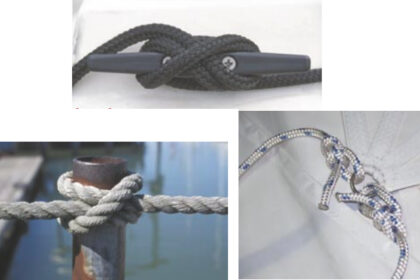
Improve your marlinspike seamanship with knots, bends, and hitches Issue 36 : May/Jun 2004 During my two-plus decades of Boy Scouting (as a Scout during my youth and then as a Scoutmaster), knots and ...
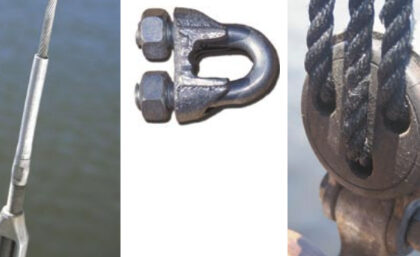
What’s at the end of your shrouds and stays? Issue 36 : May/Jun 2004 The stainless-steel standing rigging that supports our masts is critical to our sailing safety, and the terminals at the end of the...
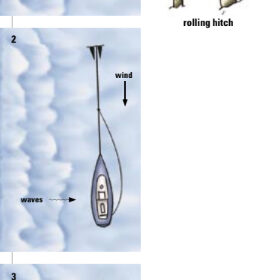
Try this simple substitute for flopper-stoppers Issue 37 : Jul/Aug 2004 Have you ever anchored in an apparently protected harbor only to find a surge running into it? The boat starts rocking and rolli...

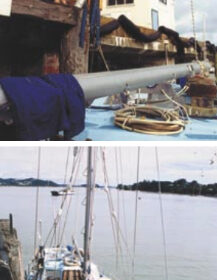
A 20-year-old 47-footer gets new rigging and spruced-up masts Issue 40 : Jan/Feb 2005 There comes a time in the life of every vessel when it needs more than routine annual maintenance. Our 47-foot ste...
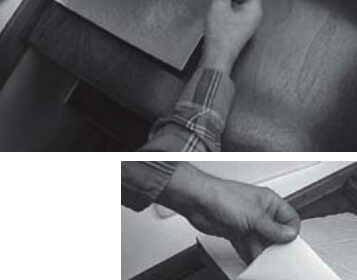
Using sound-deadening tiles on the mechanical jib Issue 41 : Mar/Apr 2005 Our 2QM15 Yanmar diesel is a hard-working and reliable iron jib. But it tends to be a bit loud. You know the type: give them a...
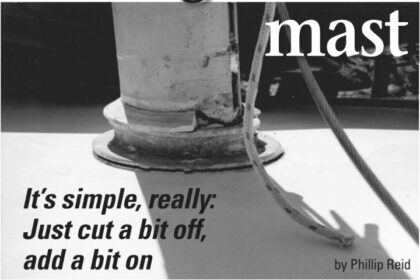
It’s simple, really: Just cut a bit off, add a bit on Issue 44: Sept/Oct 2005 WHEN WE HAD OUR BOAT SURVEYED before purchase, the surveyor noted “yellow moisture readings” on the moisture meter at the ...
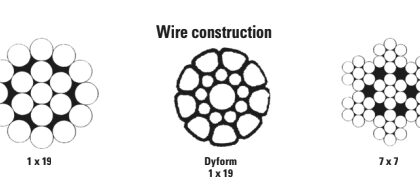
How changes can affect the strength of a rig Issue 46 : Jan/Feb 2006 In recent weeks I’ve had several inquiries from boatowners asking for advice on mast rigging. Their questions prompted me to write ...

A crafty idea to help singlehanders raise and lower sails Issue 47 : Mar/Apr 2006 One of the chief hassles when sailing alone is raising and lowering sails while maintaining your usual dignity and dec...
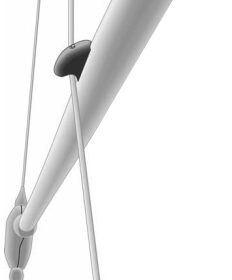
How to stop noise at night Issue 49 : Jul/Aug 2006 Here’s a pair of halyard chocks I made and tried out this summer. They go a long way toward silencing those Dacron alarm clocks that can interr...
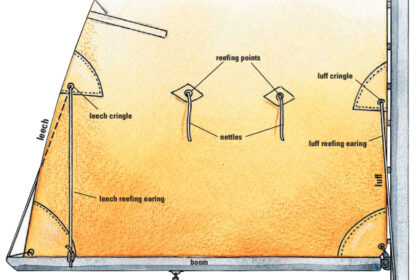
Check out the various ways to reduce sail area Issue 49 : Jul/Aug 2006 When the wind suddenly picks up or a squall line is approaching, the ability to douse the sails or reduce sail area quickly, effi...
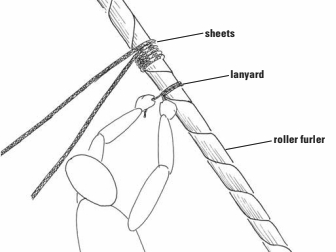
Prevent your roller-furling sail from unfurling Issue 50 : Sept/Oct 2006 Considering the number of roller furlers in use around the world today, the accidental unfurling of a sail on a moored or berth...

It’s as important for cruisers as for racers Issue 50 : Sept/Oct 2006 How long have we been sailing? Twenty years? Thirty? How many different sailboats have we owned? Five? Ten? Had we ever tuned our ...
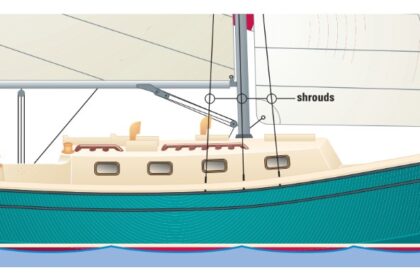
What it’s made of and how to check it Issue 52: Jan/Feb 2007 STANDING RIGGING IS THE TERM GIVEN TO THE CABLES that support a sailboat’s mast(s): the forestay, backstay, and shrouds, as well as special...
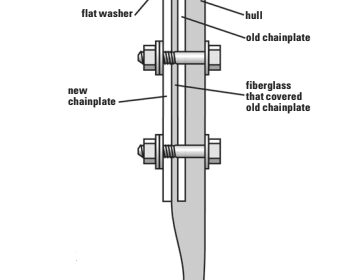
Dire necessity drove this 24-hour emergency repair Issue 51 : Nov/Dec 2006 Short-tacking in and out of anchorages is one of my favorite types of sailing. With a competent husband/captain, crew in the ...
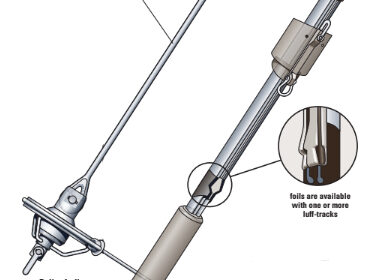
Modern systems for stowing sails and reducing area Issue 53 : Mar/Apr 2007 When the wind suddenly picks up or a squall line is approaching, the ability to furl or reef sails efficiently and safely is ...

It’s versatile, efficient, and above all, handsome Issue 54 : May/Jun 2007 The schooner rig is considered to be distinctively North American. There is even a stale old story of how the name came to be...

Keep things under control with off-center vangs Issue 59 : Mar/Apr 2008 When we reconfigured MOMO, our Mason 43, for bluewater sailing, we searched for a way to replace our 4:1-purchase vang with some...