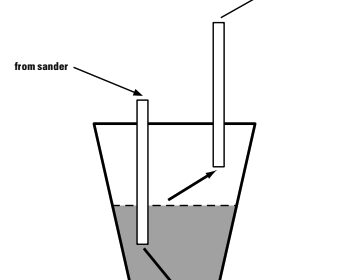
Use this low-tech water trap for sanding dust Issue 38 : Sept/Oct 2004 I have a random-orbital sander for which I have an affection that borders on the unseemly. Hook it up to a shop vacuum cleaner, a...
Use this low-tech water trap for sanding dust Issue 38 : Sept/Oct 2004 I have a random-orbital sander for which I have an affection that borders on the unseemly. Hook it up to a shop vacuum cleaner, a...
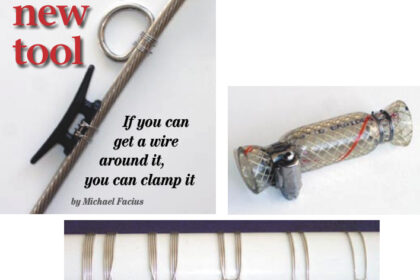
If you can get a wire around it, you can clamp it Issue 39 : Nov/Dec 2004 Last January, at the Strictly Sail show in Chigago, Robert Wozencraft introduced me to a tool that uses wire to clamp almost a...

A simple way to create more cockpit rails Issue 39 : Nov/Dec 2004 Solar panels are very sensitive to partial shading. Even the thin shadow of a stay falling on one of the cells causes a dramatic reduc...
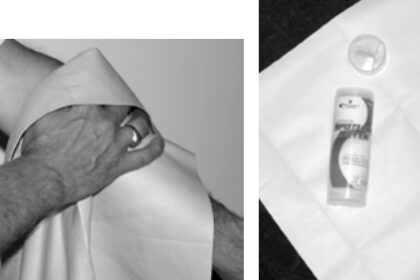
No more grungy towels for this solo cruiser Issue 39 : Nov/Dec 2004 Early September . . . the Dog Days whelp no more . . . overnight cruises are again pleasant. By 6 p.m. the anchor is secure, the sai...
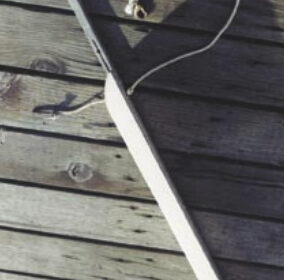
A simple but effective idea to improve a dinghy’s tracking Issue 40 : Jan/Feb 2005 I have made many modifications to our Hughes 26, Smooth Moves, over the years. Some have been real improvements, some...

Not even Sherlock Holmes would have solved this mystery Issue 40 : Jan/Feb 2005 On the desk in my study there is a curious thin-bladed paper knife. As an item of intrigue it would not have disgraced t...
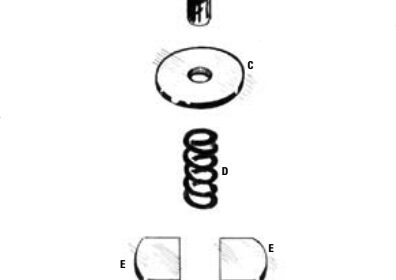
Here’s a quick fix for a serious anchor winch failure Issue 40 : Jan/Feb 2005 The typical foot-operated anchor winch switch lives just a membrane away from a very hostile environment. This membrane is...
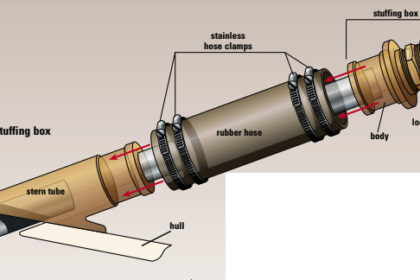
Keeping that drip-drip-drip under control Issue 40 : Jan/Feb 2005 A shaft log guides the propeller shaft through the hull while keeping watertight integrity. It consists of two parts, a watertight sea...
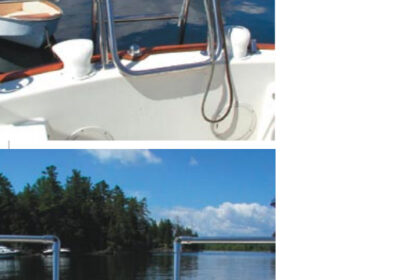
Cutting away the stern pulpit eases the boarding problem Issue 41 : Mar/Apr 2005 With a stern-mounted ladder and a continuous stern pulpit, climbing aboard our 1977 C&C 29, Echo, from a dinghy mea...

A remote control for short-handed sailors Issue 41 : Mar/Apr 2005 Among the myriad of knots available to the sailor, one is most conspicuous by its absence. I cannot recall seeing a toggle hitch in us...
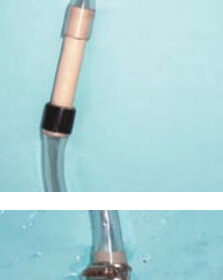
These new clamps have potential, but failed our test Issue 41 : Mar/Apr 2005 The editors of Good Old Boat asked me to evaluate some new hose clamps made by Gates Rubber Company and marketed as Power G...
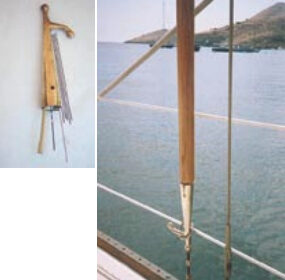
How to build it and stow it conveniently Issue 42 : May/Jun 2005 Years ago I was thumbing through a sailing publication and saw a photo of Larry Pardey standing on his sidedeck grasping a stowed boath...

Treat them with care and they’ll serve you well Issue 42 : May/Jun 2005 A binocular is an essential piece of boating equipment, and the selection of this item of navigational gear requires some basic ...
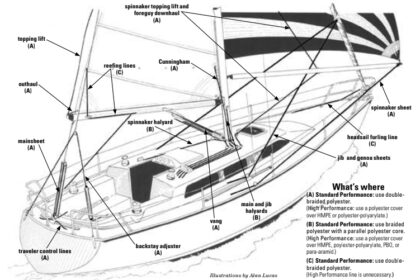
All you need to know about ropes for your boat Issue 42 : May/Jun 2005 A few years ago, after carefully inspecting my running rigging, I decided it was time to replace much of it. I identified each li...
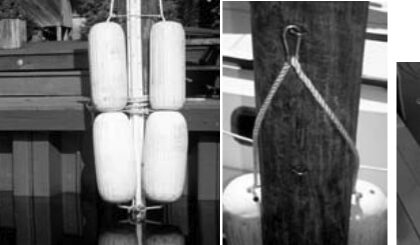
A novel way to overcome the problem of lying alongside pilings Issue 43 : Jul/Aug 2005 Fendering a boat in a berth next to pilings — such as alongside a bulkhead — is always a problem. If the fender i...
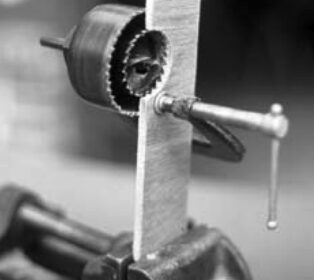
How to turn a small hole into a bigger one Issue 43 : Jul/Aug 2005 As a long time carpenter, I’ve often been faced with the task of enlarging a hole. I’ve used lots of tricks over the years, not...
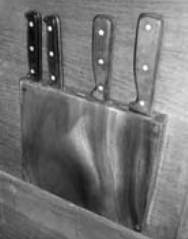
An elegant and convenient way to store galley knives Issue 43 : Jul/Aug 2005 Close behind the two loves of my life (my partner, Judy, and my 1979 Newport 41, Forty Two) is my love of cooking. Sharp kn...

What it is and what it does for you and your engine Issue 43 : Jul/Aug 2005 Most boaters have probably heard about biodiesel as an alternative fuel but never actually seen or used it. As long as our a...

A contrarian view from a practical mariner Issue 43 : Jul/Aug 2005 Like most boaters, I’ve been exposed to many ads for binoculars and come away convinced that most of what I’ve read has been written ...
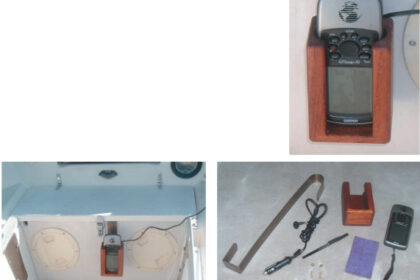
Out with liquid soap, in with GPS Issue 46 : Jan/Feb 2006 With prices becoming more reasonable, I broke down and purchased a handheld GPS. I chose a Garmin GPSMap 76. Handhelds eat batteries, so I pur...
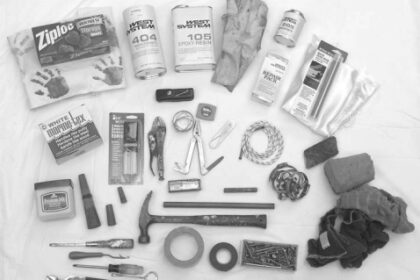
Emergency kit saves boat after sailor drills hole in hull Issue 46 : Jan/Feb 2006 A fellow sailor told me he was installing a new water-tank fill pipe and almost sank his boat. He said he was tired of...
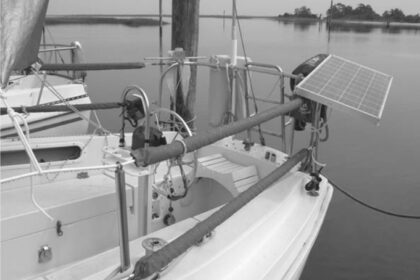
Make them yourself this easy way Issue 52: Jan/Feb 2007 A LIFELINE CUSHION IS SOMETHING YOU CAN THROW TOGETHER from materials intended for other projects, and you can save a nice wad of cash while you...
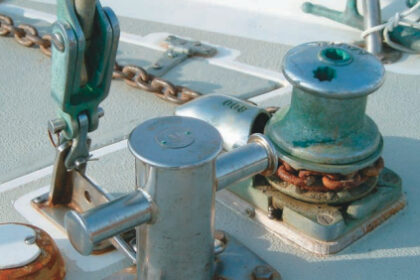
How to equip your boat for the wild blue yonder Issue 46 : Jan/Feb 2006 Visit a marina, yacht club, or boat show, and you will meet or hear of sailors who are planning a long cruise or circumnavigatio...
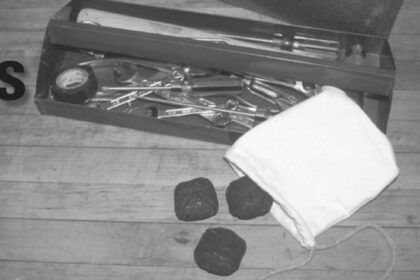
Barbecue charcoal does the trick Issue 52: Jan/Feb 2007 SINCE I PERFORM THE BULK OF THE MAINTENANCE ON MY SAILBOAT, not to mention on my cars, pickup, tractor, and house, it’s only reasonable that I w...
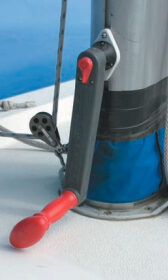
Here’s a handier way to keep it in place Issue 47 : Mar/Apr 2006 Our boat has halyard winches to port and starboard near the base of the mast and another winch on the boom for the outhaul and reefs. I...
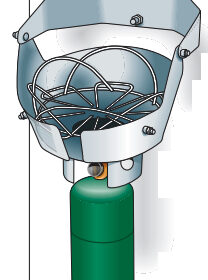
Available fuel choices for cruising sailboats Issue 47 : Mar/Apr 2006 The selection of the best galley stove for use aboard your sailboat depends on the size of the boat, the layout of the galley, and...
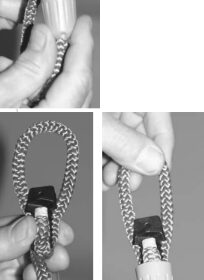
A high-tech substitute for the bowline knot Issue 48 : May/Jun 2006 Steve Brennan was up in a bosun’s chair during a race some years ago, trying to free a spinnaker-halyard splice that had jamme...
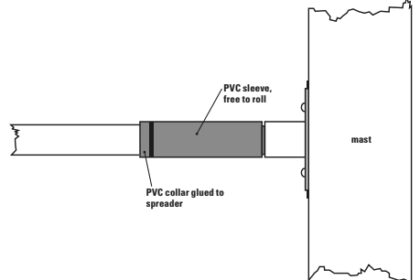
Roller guards tame halyard chafe Issue 48 : May/Jun 2006 When I took my mast down for repair, I noticed that the surface of the aluminum spreaders was flattened in places by halyard chafe. A friend su...
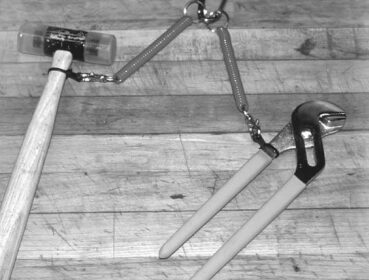
A tether keeps your tools aboard Issue 49 : Jul/Aug 2006 I’ve lost quite a few items during my years of sailing to the aqueous, gravity-enhanced environment. It all began many years ago with my first ...
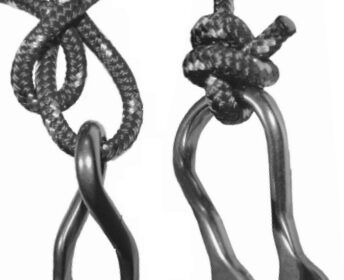
This hitch is often better than a bowline Issue 50 : Sept/Oct 2006 The most common knots on and about boats are the bowline and the reef knot (commonly known as the square knot). Beyond that, it seems...