A simple way to power up or down the mainsail
Issue 90: May/June 2013
Many mainsails have a cringle at the luff of the sail a few inches above the tack. It’s known as the Cunningham and is named after its inventor, Briggs Cunningham (1907-2003) of New York. He was a successful 6-Meter sailor in the 1930s and was the winning skipper of Columbia in the 1958 America’s Cup. He later donated his schooner, Brilliant, to Mystic Seaport.
Although it is well known and used regularly by racing sailors, most cruising sailors don’t bother with the Cunningham because they know little about it or how it can increase the efficiency of a mainsail.
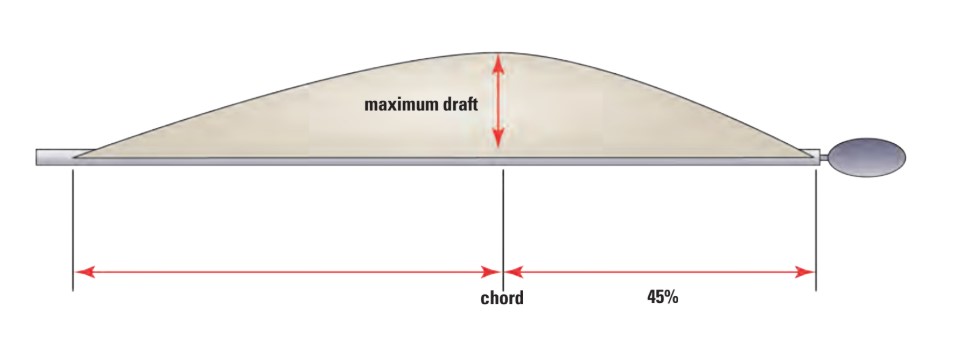
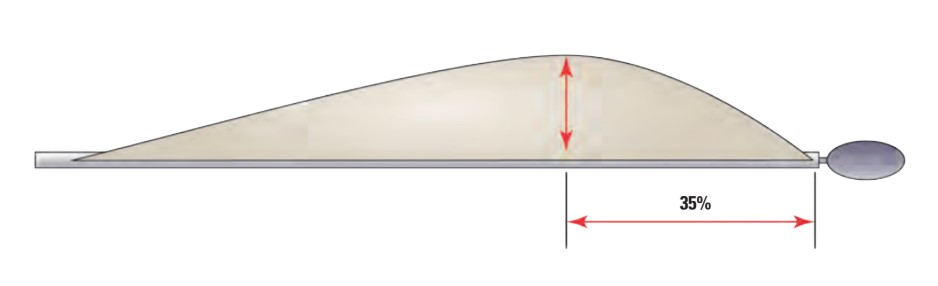
A mainsail should have a curve, called draft or camber, from luff to leech. Within limits, the greater the curvature, the more power the sail has. We need our sails to have the most draft and driving force in light winds. In strong winds we need to reduce that power to keep our boats under control. We reduce power by flattening the sail — reducing its draft. We can also move the location of the sail’s maximum draft forward or aft to best accommodate the sailing conditions. The principal ways to affect the draft of a mainsail are with the halyard, the outhaul (see “Outhauls 101,” July 2012), and the Cunningham.
The Cunningham effect
In light winds, the mainsail’s maximum draft can be as far as 50 percent of the chord length (the distance from luff to leech) aft of the luff. In strong winds, the maximum draft should be about 40 percent or less of the chord aft of the luff. Tensioning the Cunningham shifts the sail’s draft forward to achieve the optimum draft for the wind conditions.
Downhaul methods
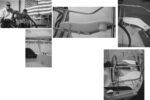
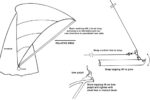
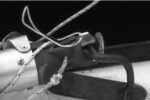
The Cunningham cringle can be hauled down in a manner similar to a reefing cringle. In one method, a line fastened to a fixed point on the mast or boom below the foot of the sail runs up through the Cunningham cringle and back down to that fixed point. The downhaul line can be tensioned at the mast or led aft to the cockpit. On small boats the Cunningham can be hauled down without the need for additional mechanical advantage. On larger craft, however, a block and tackle or some other means of gaining mechanical advantage is necessary.
In some instances, the downhaul line is fitted with a Cunningham hook that is placed in the Cunningham cringle when needed and used to bring it down. One small disadvantage of that method is that the sail will be brought down slightly off center.
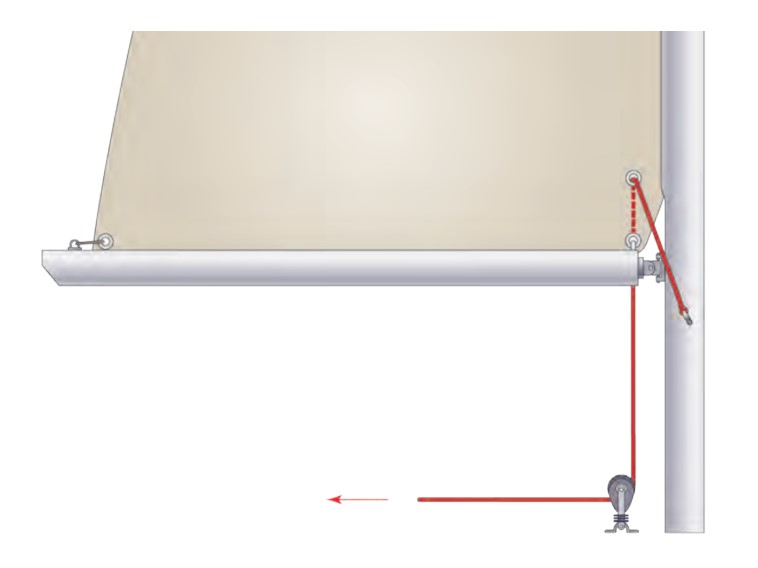
Tensioning options
The luff of a sail can be tensioned with the halyard, the Cunningham, or both. The halyard does not do the job as well as the Cunningham and the end results are different. One disadvantage of trying to tension the luff with the halyard is that the halyard is pulling upward while supporting the sail’s weight. The Cunningham, on the other hand, pulls the sail down, with the weight of the sail helping. Because the Cunningham is more easily and rapidly adjusted than the halyard, racing sailors tend to play the Cunningham tension frequently.
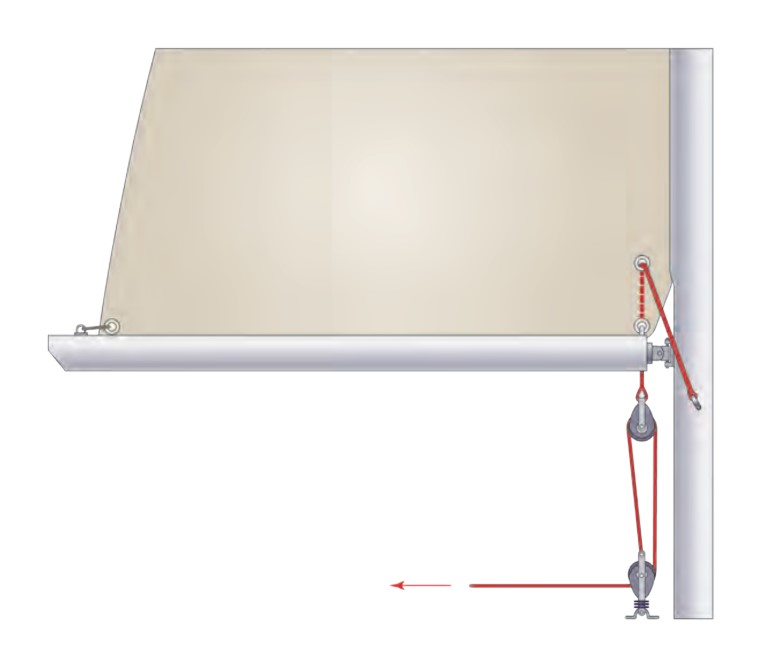
Many racing classes place restrictions against hoisting the mainsail higher than a particular mark on the mast, often known as the black band. When this is an issue, the Cunningham makes it possible to tension the luff as necessary without chancing a violation by accidentally raising the mainsail above the mark with the halyard.
The Cunningham does create small puckers near the Cunningham cringle, but they are more than compensated for by the improvement to sailing performance.
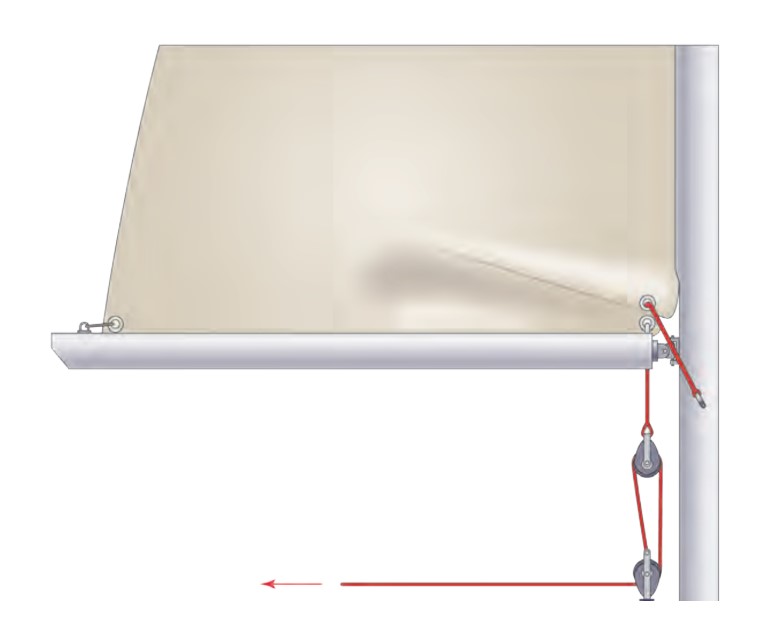
Advantage for old sails
Knowing how to use the Cunningham should be in the bag of tricks of every sailor, whether racer or cruiser. As a mainsail ages and stretches, its draft moves farther aft, making the sail increasingly less efficient when close-hauled and in higher winds. Cruising sailors, who do not replace their mainsails with the same fervor as racing sailors, can derive an advantage from the Cunningham by using it to extend the useful life of the sail.
Don Launer, a Good Old Boat contributing editor, built his two-masted schooner, Delphinus, from a bare hull. He has held a USCG captain’s license for more than 40 years and has written five books. All of his 101 articles through November 2011 are now available for downloading as a collection from the Good Old Boat download website, <www.audioseastories.com>. Look under Archive eXtractions.
Thank you to Sailrite Enterprises, Inc., for providing free access to back issues of Good Old Boat through intellectual property rights. Sailrite.com