
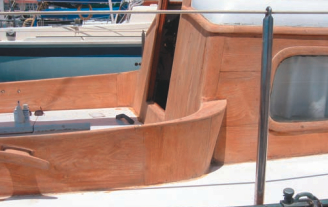
Classic varnish solves boater’s problem Issue 47 : Mar/Apr 2006 Any owner of a good old boat will, at some time or another, be confronted with the sight of brightwork that no longer lives up to the na...
Classic varnish solves boater’s problem Issue 47 : Mar/Apr 2006 Any owner of a good old boat will, at some time or another, be confronted with the sight of brightwork that no longer lives up to the na...
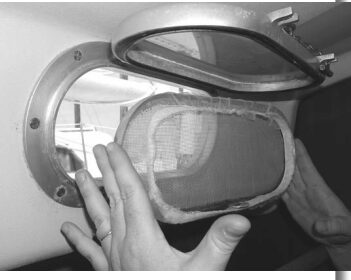
Use these socks on your portlight screens Issue 47 : Mar/Apr 2006 I dream of there mass extermination but, alas, it remains a dream — no-see-ums (midges, punkies, sand flies, and sand fleas) are a fac...
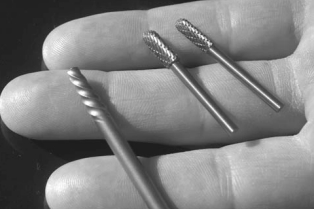
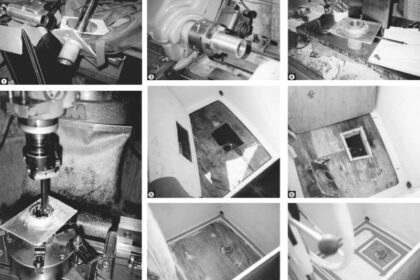
Or how a desperate sailor drilled out a sheared stud Issue 47 : Mar/Apr 2006 So there we knelt, staring at the bolt head in my hand in horror. What was once a beautiful 5⁄16-inch x 3-inch bolt was now...
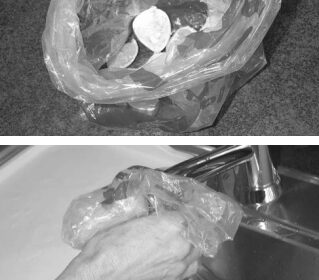
It’s easy to help these pesky pests on their way Issue 47 : Mar/Apr 2006 Drat those wretched fruit flies! Here’s an odd, but quick and effective, way of dispatching them. Keep a plastic bag with...

A crafty idea to help singlehanders raise and lower sails Issue 47 : Mar/Apr 2006 One of the chief hassles when sailing alone is raising and lowering sails while maintaining your usual dignity and dec...

Rescuing a rare classic: a Cape Dory Typhoon daysailer Issue 47 : Mar/Apr 2006 I retired in July and, after clearing up a few projects around the house, I began searching for a new summer project. As ...
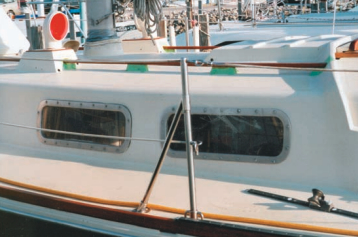
Old leaking portlights? Here’s one solution Issue 47 : Mar/Apr 2006 Just about every sailboat over 20 years old has the same basic construction for its fi xed portlights. Clear plastic or glass in the...
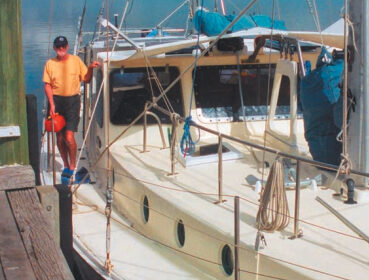
A better way to keep the crew on board Issue 47 : Mar/Apr 2006 Commercial vessels have a lot to teach their recreational cousins, yet many of their lessons go unheeded. A prime example is cabintop han...
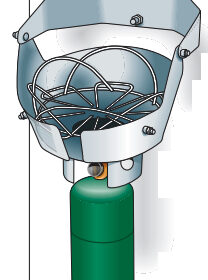
Available fuel choices for cruising sailboats Issue 47 : Mar/Apr 2006 The selection of the best galley stove for use aboard your sailboat depends on the size of the boat, the layout of the galley, and...
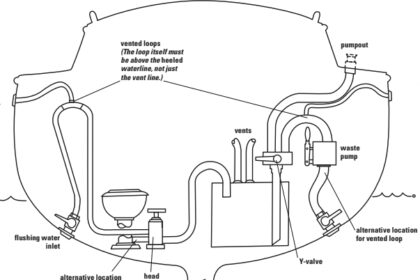
Refining the boat’s most important plumbing system Issue 47 : Mar/Apr 2006 We have all had that experience: you complete a project, feel justifiably proud, but as you live with the results you realize...
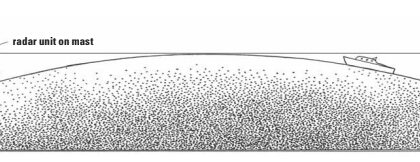
Is it right for your boat? Issue 47 : Mar/Apr 2006 Retrofitting your sailboat? Thinking about upgrading your electronics? Wondering whether you should install one of those expensive new chart-plotting...
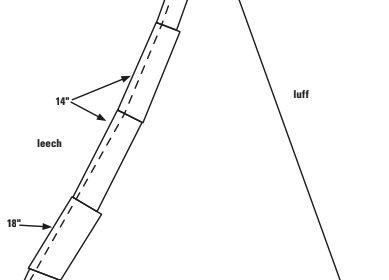
Make your own sacrificial strip for the genoa Issue 48 : May/Jun 2006 It was time to replace the sacrificial sun cover on our 150-percent genoa. It wasn’t worn out or damaged, but I was getting tired ...
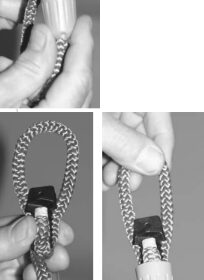
A high-tech substitute for the bowline knot Issue 48 : May/Jun 2006 Steve Brennan was up in a bosun’s chair during a race some years ago, trying to free a spinnaker-halyard splice that had jamme...
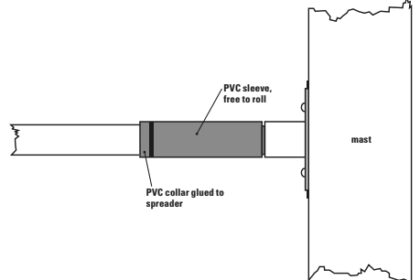
Roller guards tame halyard chafe Issue 48 : May/Jun 2006 When I took my mast down for repair, I noticed that the surface of the aluminum spreaders was flattened in places by halyard chafe. A friend su...

Dress them up and domesticate them Issue 48 : May/Jun 2006 Rubber tires are used everywhere in the world as fenders — but on workboats, not on yachts. They’re big, ugly, awkward to stow, and when they...

Extend your cruising season with this added protection Issue 48 : May/Jun 2006 After many years of dreaming, sketching, and reading about other similar projects, a hard dodger became a reality for Whi...

The way we keep time at sea Issue 48 : May/Jun 2006 The concept of latitude and longitude have been known since the early days of sail, but without accurate timepieces longitude readings required long...

How a world voyager improved light-air performance Issue 48 : May/Jun 2006 If you wonder how much drag and hinderance a 2-, 3-, or 4-bladed propeller puts on a sailboat, I suggest you toss a large met...
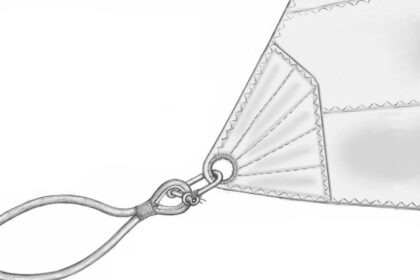
Eliminate heavy hardware on that flogging headsail Issue 48 : May/Jun 2006 Different skippers, different long-splices, they say. Bending on jibsheets is a task that allows for considerable variety fro...

Hard work (plus cash) saves a classic from the scrapheap Issue 48 : May/Jun 2006 Strider’s clean white deck and the rich red paint job attracted our attention as she floated in her slip at Sugarloaf M...
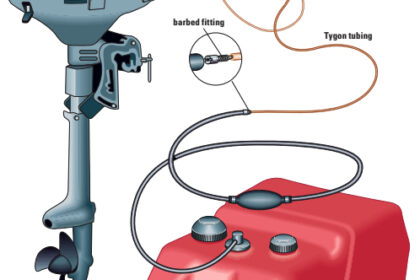
How one cruiser swapped power for ease of handling Issue 49 : Jul/Aug 2006 Our 8-hp Honda, all 98 pounds of it, is for sale. When we bought the engine back in 1995 it was intended to help our 1976 Nor...
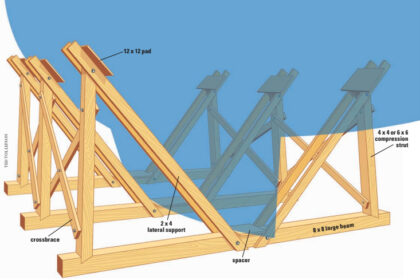
One man’s response to an emergency haulout Issue 49 : Jul/Aug 2006 When my wife and I were trapped by fog in Burgeo, Newfoundland, we met Dave and Fran Dickenson, who were trapped there as well becaus...
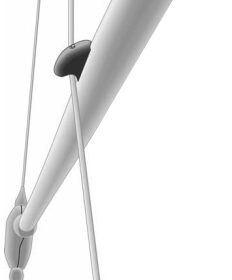
How to stop noise at night Issue 49 : Jul/Aug 2006 Here’s a pair of halyard chocks I made and tried out this summer. They go a long way toward silencing those Dacron alarm clocks that can interr...
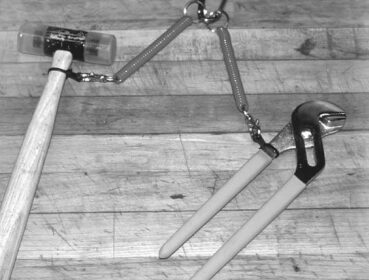
A tether keeps your tools aboard Issue 49 : Jul/Aug 2006 I’ve lost quite a few items during my years of sailing to the aqueous, gravity-enhanced environment. It all began many years ago with my first ...
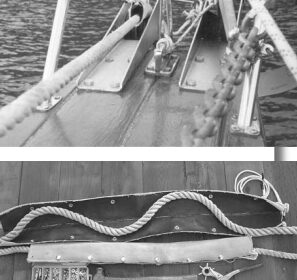
Simple fix for those who don’t want to be parted Issue 49 : Jul/Aug 2006 Walk the docks and you’ll see pieces of fire hose used as chafing gear for docklines. Simply slip the hose over the bitte...

A cruiser’s improvements for sitting and sleeping Issue 49 : Jul/Aug 2006 Berths need to serve different functions depending on who’s in them and whether the boat’s in port or at sea. The traditional ...
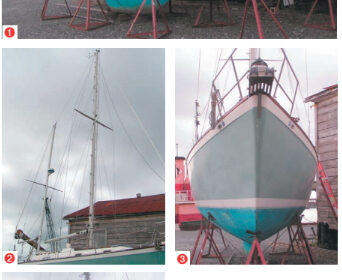
This orphaned Pearson 365 will rejoin the fleet of good old boats Issue 49 : Jul/Aug 2006 Most of the time I am looking at or looking for boats. If there were a self-help group for excessive boat owne...
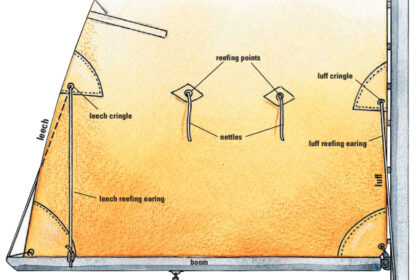
Check out the various ways to reduce sail area Issue 49 : Jul/Aug 2006 When the wind suddenly picks up or a squall line is approaching, the ability to douse the sails or reduce sail area quickly, effi...
Finding the cause was the trickiest bit Issue 49 : Jul/Aug 2006 The wheel steering of my 1973 Grampian 30 had not worked well with the autopilot for several years. Holding a course when steering manua...

How to lessen the danger of cooking with propane Issue 49 : Jul/Aug 2006 We know that 90 percent of people who sail do their cooking with liquefied petroleum gas (LPG) because modern propane stoves ar...


