Roller guards tame halyard chafe
Issue 48 : May/Jun 2006
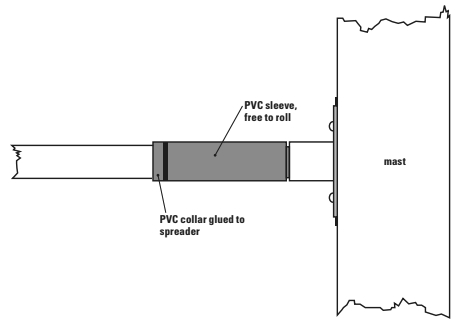
When I took my mast down for repair, I noticed that the surface of the aluminum spreaders was flattened in places by halyard chafe. A friend suggested gluing short lengths of PVC pipe over them to protect them. I thought about that. I feared the halyard would eat through the PVC pretty durned quick. Then it occurred to me that if the PVC could roll freely, the halyard wouldn’t chafe in one place.
So I measured the diameter of the spreaders and cut some short pieces of gray electrical conduit PVC (sunlight-resistant), which I happened to have (but will cost you next to nothing to buy if you don’t) that were just a little bit bigger. I glued retaining collars on the outboard side, inside of which the longer tubes can rotate freely.
The spreader socket retains the rolling part at the other end. Being gray, like the aluminum, they’re pretty unobtrusive. You could use white PVC if your rig is painted.
Thank you to Sailrite Enterprises, Inc., for providing free access to back issues of Good Old Boat through intellectual property rights. Sailrite.com