Simple fix for those who don’t want to be parted
Issue 49 : Jul/Aug 2006
Walk the docks and you’ll see pieces of fire hose used as chafing gear for docklines. Simply slip the hose over the bitter end of the short line, slide it to the cleat or chock, and presto, you have it. But what about a long line, such as the anchor rode? It has a hunk of metal at the working end that prevents your slipping anything over it.
When anchoring, you usually don’t pay out enough rode to reach its bitter end. If you do, you have too short a rode. Different water depths require different lengths of rode, so you don’t know in advance which section of rode will chafe against bow cleats, anchor windlass, anchor-roller guides, and the like.
Fire hose still works. Go to your city fire station, rural fire hall, Forest Service, or Bureau of Land Management field office and talk to the friendlies. They often have a pile of old hose out back that no longer passes pressure tests or that has holes in it. It becomes a storage problem for them, and they can usually spare a few lengths. You can also buy hose new at any fire-supply house. City firefighters use larger diameter, rubber-lined hose, whose tough exterior provides a durable wearing surface for anti-chafe on anchor rodes. Wildland firefighters use smaller diameter hose, often unlined, that has lightness and flexibility suitable for dockline anti-chafe.
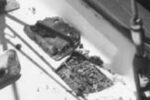
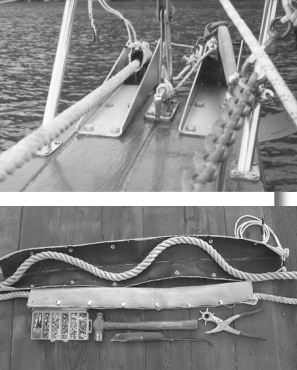
Select a length of 1- to 2-inch diameter hose. Chop it to about 2 or 3 feet long and then slit it open lengthwise along its flattened crease. Get some stainless-steel snap-fasteners from any marine chandler. Install the snaps along the slit, at about 4- to 6-inch intervals, males and females adjacent, but on opposite sides. Punch two holes at one end of the hose, reinforce each hole with a grommet, and tie a short length of small stuff to each grommet.
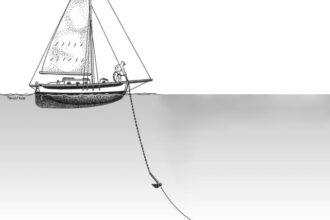
Sail out to your favorite cove, pay out your rode, and set your anchor as usual. You do actually set your anchor, don’t you? Determine which section of rode will rub your boat. With tension off the secured rode, simply slip the opened-up anti-chafing gear under the potential trouble section and snap the gear closed around the rode. Tie the small stuff to any handy hard point to keep the anti-chafe from slipping out of position.
The next time the barometer plummets and the wind slues your boat around its anchor, you won’t have to fret that your nylon rode will chafe through at zero-dark-thirty in the morning.
Thank you to Sailrite Enterprises, Inc., for providing free access to back issues of Good Old Boat through intellectual property rights. Sailrite.com