

Miss Marley offered “learning opportunities” aplenty Issue 64 : Jan/Feb 2009 I bought my Cape Dory 30, Miss Marley, without a survey — not something I would recommend to anyone, but something I was wi...
Miss Marley offered “learning opportunities” aplenty Issue 64 : Jan/Feb 2009 I bought my Cape Dory 30, Miss Marley, without a survey — not something I would recommend to anyone, but something I was wi...

One sailor’s method of maintaining an iron keel Issue 64 : Jan/Feb 2009 A few years back, my friend Roland purchased a used 31-foot sailboat with a fin keel made of cast iron. After his first sailing ...

Experience the joyful Zen of boat restoration Issue 64 : Jan/Feb 2009 It’s a good idea to begin a major fiberglass boat restoration project by starting each morning in front of the mirror repeating, “...

Up to 50,000 of these stalwart gasoline engines were built between 1948 and 1980 Issue 64 : Jan/Feb 2009 In 1948, the Universal Motor Company of Oshkosh, Wisconsin, introduced a new engine model that ...

An automatic bailer for deck puddles Issue 65 : Mar/Apr 2009 This is not an original idea. We copied it from fellow sailor and Good Old Boat publisher Michael Facius. After all, we figured, if it work...

Use an upside-down blade to cut without tears Issue 65 : Mar/Apr 2009 For anyone fitting out a boat’s interior, the jigsaw is a very versatile tool. Unless you are familiar with a few simple technique...

A remote-control searchlight on a sailboat is a bright idea Issue 65 : Mar/Apr 2009 While preparing my Caliber 28 for a recent solo sail up the East Coast, I was in search of an affordable searchlight...
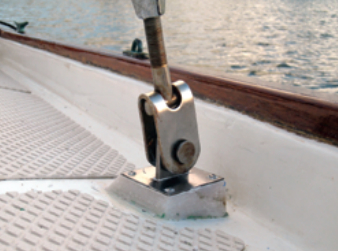
An uplifting way to cure pesky deck leaks Issue 65 : Mar/Apr 2009 All the water that comes aboard our boat, whether from sea or sky, is supposed to drain off through scuppers in the sidedecks. Unfortu...
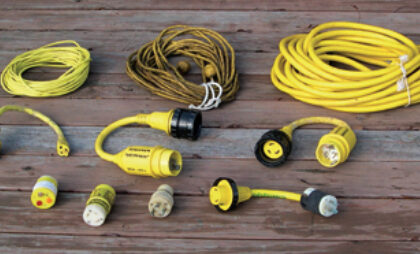
A “bag of tricks” has the power to connect you, anywhere Issue 65 : Mar/Apr 2009 Cruising is full of surprises, but one you don’t need, and can easily avoid, is arriving in a strange marina to find th...

A better way to mount deck hardware Issue 67: July/Aug 2009 No doubt the builders who installed the original deck hardware on your boat took the easy way, and later owners who added further hardware p...

Food-safe epoxy makes potable possible Issue 65 : Mar/Apr 2009 At the end of a two-year search for a fixer-upper cruising boat, I acquired a Pearson Vanguard, hull #142 built in 1964. I found her in a...
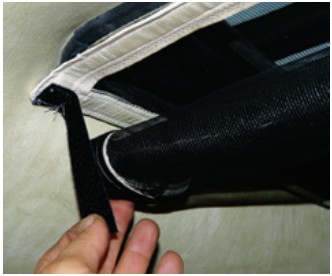
Creating a bug-free zone down below Issue 67: July/Aug 2009 When you’re anchored in a marshy cove, it’s important to keep the bugs from invading the confined space belowdecks. Even if they aren’t the ...

To avoid engine troubles, fit the right propeller Issue 65 : Mar/Apr 2009 The shark meandered toward my right foot. It was so close I could see brown spots on its nose. Loaded with tools and dive gear...
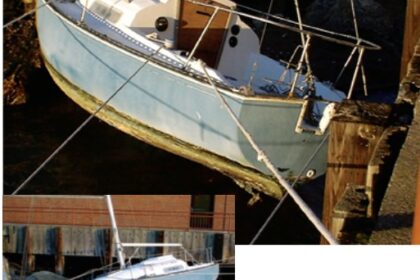
Once stranded and condemned, she’s now her salvor’s Ruby Deux Issue 67: July/Aug 2009 In the tradition of all good seafaring stories, this one began on a night dark as pitch. The wind built from the s...

Four fateful words that spelled six years of work Issue 65 : Mar/Apr 2009 Something must have blinded me to the first words in the Findings and Recommendations section of our boat’s pre-purchase surve...
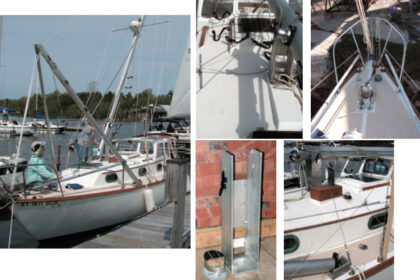
Two good old boaters take the A-frame to the tabernacle Issue 65 : Mar/Apr 2009 Over the past several years, our cruises on Whippoorwill, our Cape Dory 27, have taken us to several places where we hav...
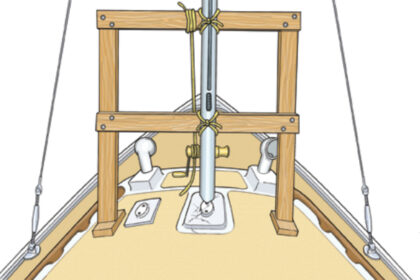
Fixing the mast step without pulling the mast Issue 65 : Mar/Apr 2009 No matter how you looked at it, we had a serious problem. Our boat’s mast step was compromised and would have to be repaired. In D...

A new way to get a grip on deck clutter Issue 66 : May/Jun 2009 “OK, Sam, slap the cuffs on her.” This line from an old B-rated cops-and-robbers movie could have a new life as good advice on how to ke...
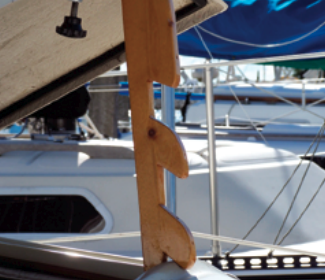
Custom woodwork at a price you can’t beat Issue 66 : May/Jun 2009 Having never given the subject much thought, I assumed that all overhead hatches were fitted with some sort of locking or adjustable s...

Navigation catches up with science fiction Issue 66 : May/Jun 2009 A dream is coming true far faster than I ever would have imagined. It’s foggy, and I’m anchored in Gambier Island’s Halkett Bay on th...
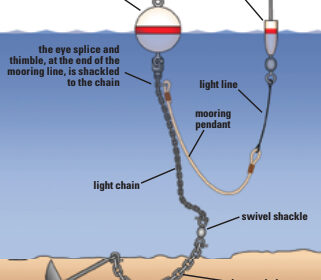
Pick up a mooring with grace and élan Issue 66 : May/Jun 2009 A mooring-and-buoy system consists of an anchor, a length of chain, and a mooring buoy that both holds up the chain and marks the location...
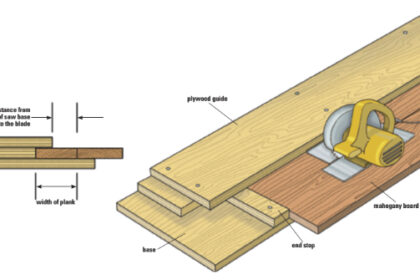
Economical recycling of throwaway mahogany Issue 66 : May/Jun 2009 My partner, Magali, and I have attempted to carry out the improvements and modifications to Sigfrid, our 34-foot 6-inch steel ketch, ...
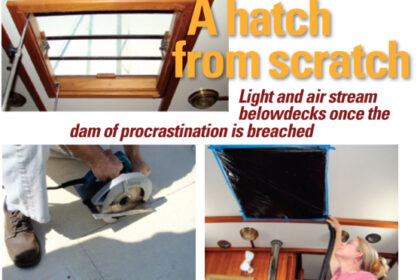
Light and air stream belowdecks once the dam of procrastination is breached Issue 66 : May/Jun 2009 Sometimes, the simple solution to a problem is not easy to contemplate. Although Sea Trek, our Marin...

Creating stowage for volumes and tools Issue 66 : May/Jun 2009 The only thing I can compare to spending a rainy night reading while rocking at anchor in some distant, seal-haunted cove, is stretching ...

Clean cuts in fiberglass cloth Issue 68 : Sept/Oct 2009 Working with fiberglass cloth presents a number of challenges. One of them is making a straight cut across the width of the material. To draw a ...

Putting golf balls to a higher purpose Issue 68 : Sept/Oct 2009 At haulout time in northern climates, sailors perform an annual ritual of cleaning, packing, winterizing, and covering their boats to pr...
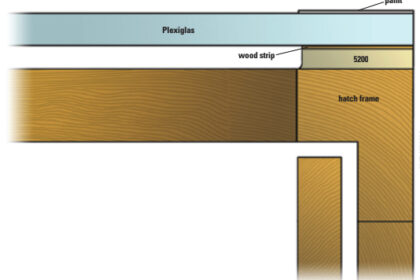
A flexible joint accommodates different expansion rates Issue 68 : Sept/Oct 2009 Leaks and cracks are all too common when Plexiglas is fastened to a wooden hatch frame with screws. They are largely a ...
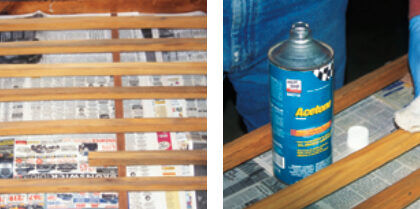
Urethane finish generates the Wow! factor Issue 68 : Sept/Oct 2009 From my perspective, nothing is more pleasing to the eye than the gleaming finish of a sailboat’s brightwork. It makes no difference ...
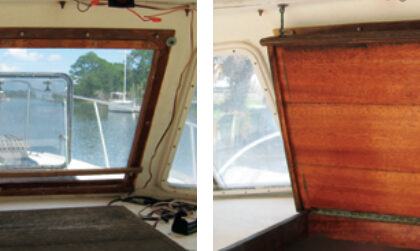
A hatch trick restores the view ahead Issue 68 : Sept/Oct 2009 On some boats, the field of view from the helm is quite poor. We faced this problem on our Sisu 26. It was built in 1985 and some of the ...
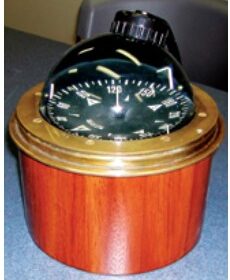
A new old compass goes in the right surroundings Issue 67: July/Aug 2009 When I purchased my good old Hallberg-Rassy Mistral 33, I knew I was in for a lot of work. All the wood above deck needed to be...


