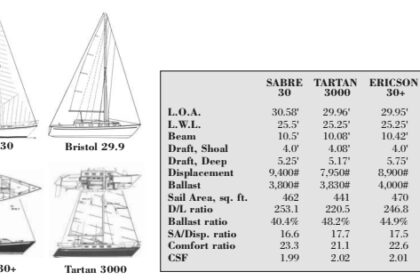
Built for cruising and round-the-buoys fun Issue 24 : May/June 2002 The Sabre 30 is a fine example of the modern club racer/coastal cruiser and stacks up very well indeed against much of the competiti...
Built for cruising and round-the-buoys fun Issue 24 : May/June 2002 The Sabre 30 is a fine example of the modern club racer/coastal cruiser and stacks up very well indeed against much of the competiti...

Rigorous and expensive surveys lead to yacht certification Issue 27: Nov/Dec 2002 MANY READERS WILL HAVE HEARD of Lloyd’s Rules or, perhaps, seen ads boasting that this or that yacht has been designed...
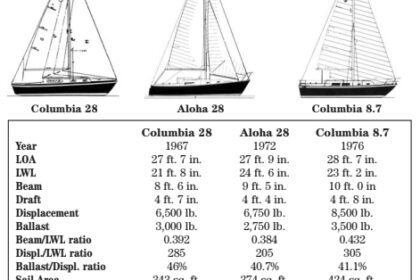
Good safe coastal cruiser, but no world-girdler Issue 25 : Jul/Aug 2002 In the mid-to-late 1960s, many designers, myself included, were turning out full-keel auxiliaries such as the Luders 33, my own ...
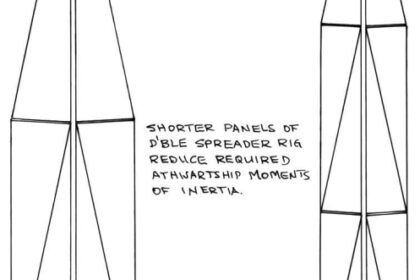
A designer names his preferences for mast and rigging strength Issue 25 : Jul/Aug 2002 Recently I was consulted about a new mast for an older 40- foot cutter, as the owner was planning a world cruise....
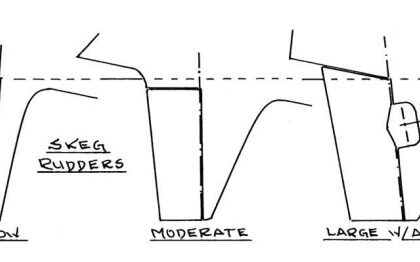
What type of rudder’s on your boat? Advantages and disadvantages of each Issue 26 : Sept/Oct 2002 The main purpose of the rudder is to steer the boat, of course, but far too many sailors do not realiz...
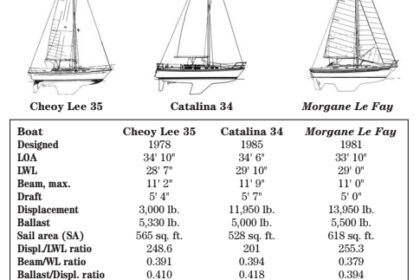
A used production boat is a bargain Issue 26 : Sept/Oct 2002 Bob Perry told me that when he designed the Cheoy Lee 35 in 1978 he styled her after the Luders 33 and similar classic CCA-type cruiser/rac...
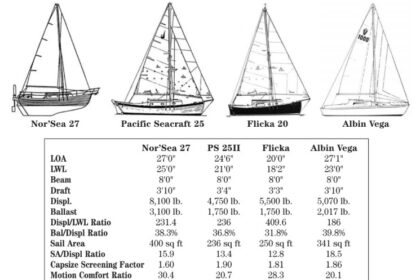
Issue 27: Nov/Dec 2002 THE NOR’SEA 27 is one of those very rare birds, a true bluewater auxiliary cruiser of trailerable beam and, as such, she has become almost a cult boat. In looking for other yach...
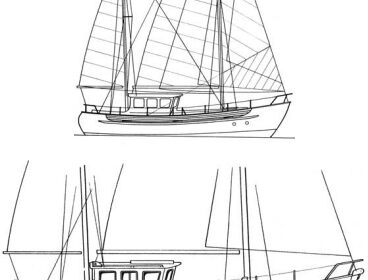
A professional yacht designer says you might be happier with one Issue 28 : Jan/Feb 2003 The summer winds are fickle and light in many of the waters of North America. I’ve sailed in a number of them: ...
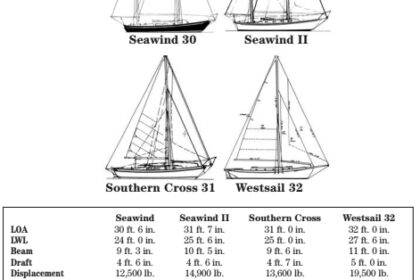
They’re designed to be perfect yachts for ocean voyaging Issue 28 : Jan/Feb 2003 In the 1960s the Tom Gilmer-designed, Allied-built, Seawind ketch became the first fiberglass yacht to circumnavigate t...
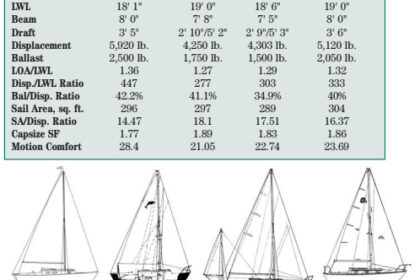
The Bristol 24: Relatively comfortable, stiff, and forgiving in extreme conditions Issue 29 : Mar/Apr 2003 This review is a bit unusual because, for the first time, I’ve selected a custom wooden yacht...

Issue 29 : Mar/Apr 2003 It was not all America’s Cup and 5.5-Meter yachts in my years at Luders, as the yard still had its regular work maintaining and repairing clients’ boats, and I was kept b...
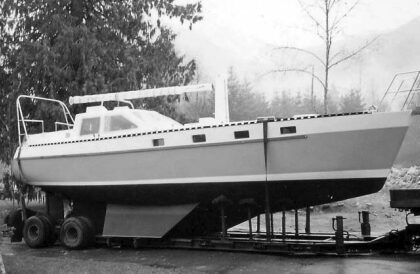
Twins are good, says noted yacht designer. Just don’t call them keels Issue 29 : Mar/Apr 2003 First, I’d like to clear up the terms I use. Every dictionary I’ve seen agrees that the maritime “keel” is...
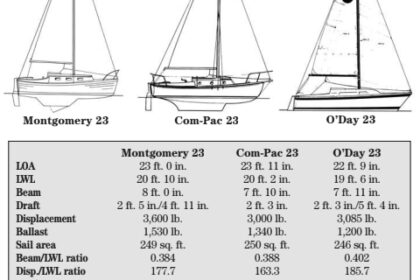
An architect crunches the numbers to compare performance Issue 30 : May/Jun 2003 The Montgomery 23 and the two similar small cruisers in this review are classed as “trailersailers.” The problem with a...
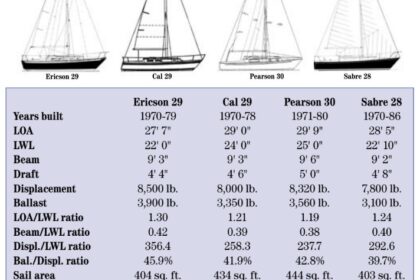
A comparison with three of its rivals Issue 34: Jan/Feb 2004 AVID NUMBER CRUNCHERS WILL SEE I’ve added a new item to the table below: the dates the boats were built. I feel this is significant for two...
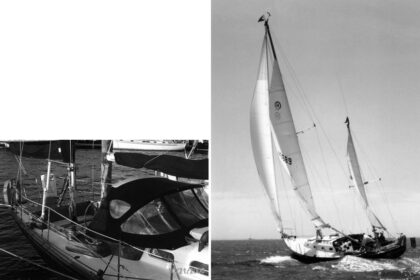
A famous designer tells how to discern real quality in a yacht Issue 30 : May/Jun 2003 Those who have read that fascinating book Zen and The Art of Motorcycle Maintenance will be aware of the author’s...
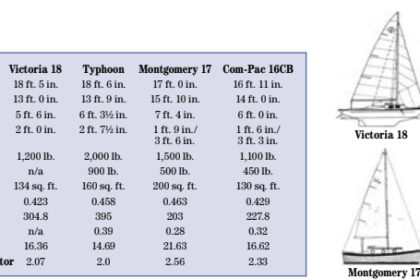
Comparing the Victoria 18 with three trailersailer cousins Issue 31 : Jul/Aug 2003 This comparison posed a few problems for several reasons. First, data on these boats was on the slim side, and no wat...
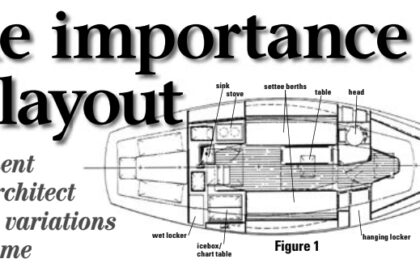
An eminent naval architect looks at variations on a theme Issue 31 : Jul/Aug 2003 In the good old days of wooden yachts and iron men, it was widely accepted that no sailing yacht under 30 feet could h...
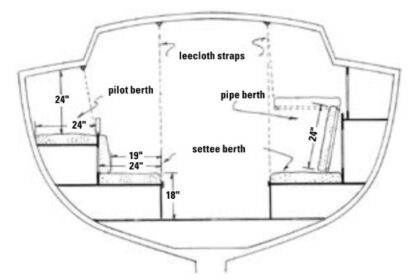
A prominent yacht designer discusses the importance of beds Issue 34: Jan/Feb 2004 IN THE NOVEMBER 2003 ISSUE OF GOOD Old Boat we discussed arrangement plans: aft cockpit, center cockpit, and pilothou...
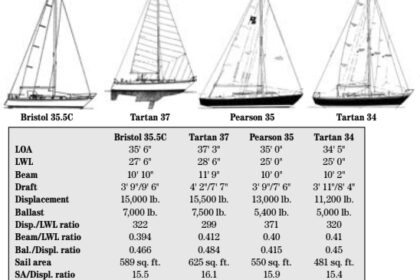
Ted Hood’s lively centerboarder still a great performer Issue 32 : Sept/Oct 2003 The Pearson 35 and Tartan 34 first saw the light of day in the late 1960s, the Bristol 35.5C and Tartan 37 in the late ...

All you ever wanted to know — and much more Issue 32 : Sept/Oct 2003 Webster’s dictionary: Scend (send), n. [<send, assumed to be a contr. of ascend], the upward heaving of a ship: correlativ...
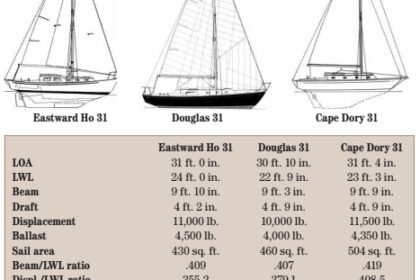
Three modified full-keel 31-footers Issue 33 : Nov/Dec 2003 The Eldredge-McInnis-designed perky little Eastward Ho 24 has always been one of my very favorite designs in her size range, a superb little...

Designer Ted Brewer ruminates about the development of these popular designs Issue 33 : Nov/Dec 2003 The first center cockpit yacht that intrigued me was the British-built 26-foot Atlanta, a laminated...
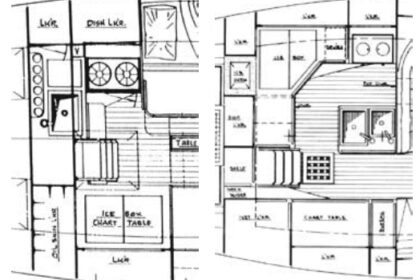
Don’t blame the cook if the galley’s no good Issue 35 : Mar/Apr 2004 Napoleon once said that an army marches on its stomach. If that is true, a ship floats on its stomach. A well-fed crew is always a ...
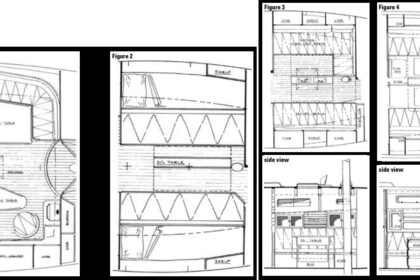
Finer dining afloat calls for special table design Issue 36 : May/Jun 2004 Only the very largest yachts actually have a separate dining room. I’ve been on more than one that did, complete with linens ...
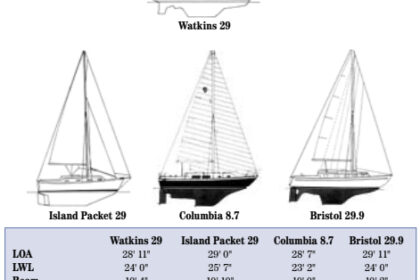
A comparison of the Watkins 29 with three contemporaries Issue 36 : May/Jun 2004 For comparison I tried to choose boats from a reasonably similar era with a reasonably similar purpose: that is to say,...
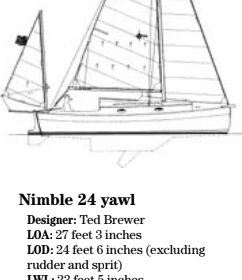
Designer Ted Brewer remembers builder Jerry Koch with fondness Issue 37 : Jul/Aug 2004 In early 1982 I was approached by Jerry Koch, who asked me to come up with a unique small boat design unlike anyt...
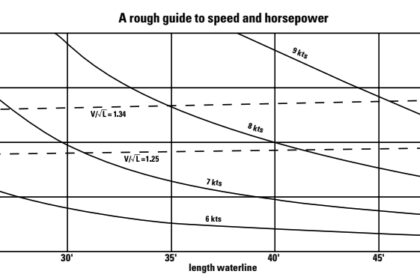
Too big an engine for an auxiliary can be a mistake, warns Ted Issue 37 : Jul/Aug 2004 Owners planning to repower their yachts almost always decide to put in bigger engines, reasoning that they will a...
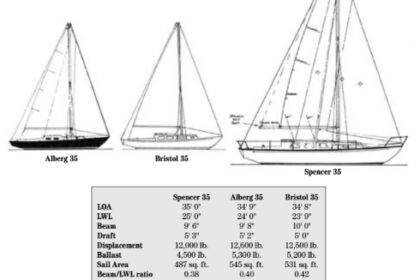
She’s capable of cruising anywhere in the world in comfort Issue 38 : Sept/Oct 2004 With this issue we have three yachts that are about as alike as peas in a pod — or peapods in Maine, if you prefer. ...

Sloops and cutters — here’s a good look at the family tree Issue 39 : Nov/Dec 2004 Most of today’s sailors think of cutters as having a rig much better suited for offshore voyaging than that of ...
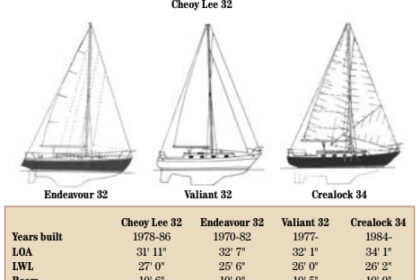
A designer compares four sturdy, solidly performing cruising yachts Issue 40 : Jan/Feb 2005 The four yachts under discussion here cover a 14-year design period, from the 1970 Endeavour to the 1984 Cre...