Stave off rust with diligence, coatings, and care
Issue 77 : Mar/Apr 2011
Steel is probably the most misunderstood boatbuilding material — especially in the USA. Many people (so-called experts included) view steel yacht construction as a recipe for disaster due to the effects of corrosion and electrolysis. Nothing could be further from the truth. Bare steel placed in a vacuum will never rust (due to the absence of oxygen). Isolated from electric currents under laboratory conditions, steel will never undergo electrolysis. How you effectively isolate steel from the environment and stray electrical currents in the marine environment is the key to preventing these problems.
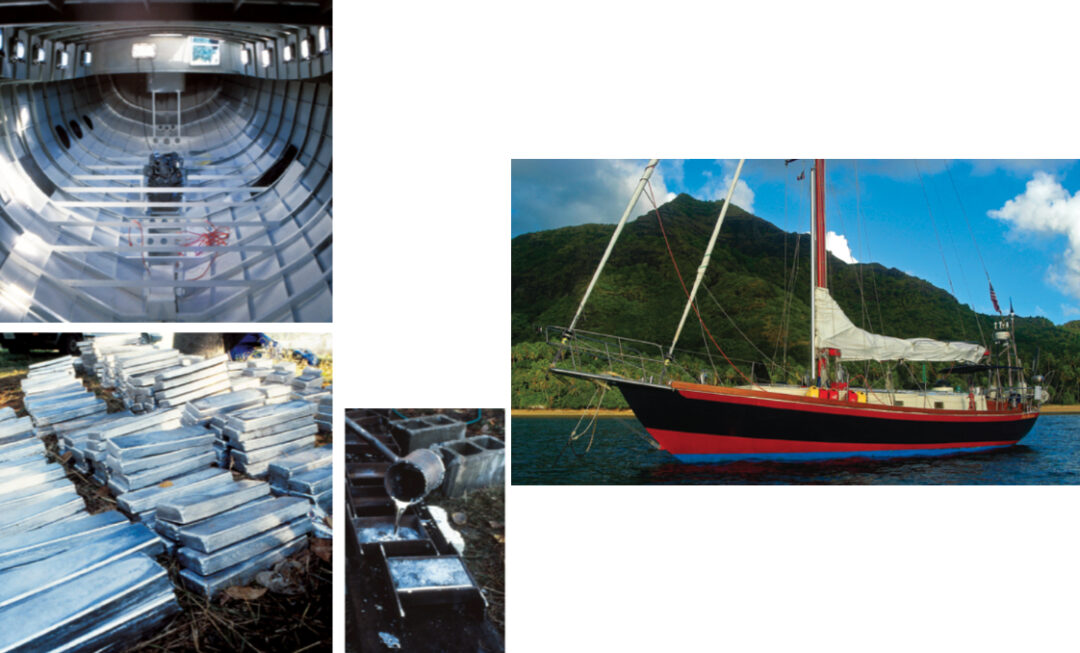
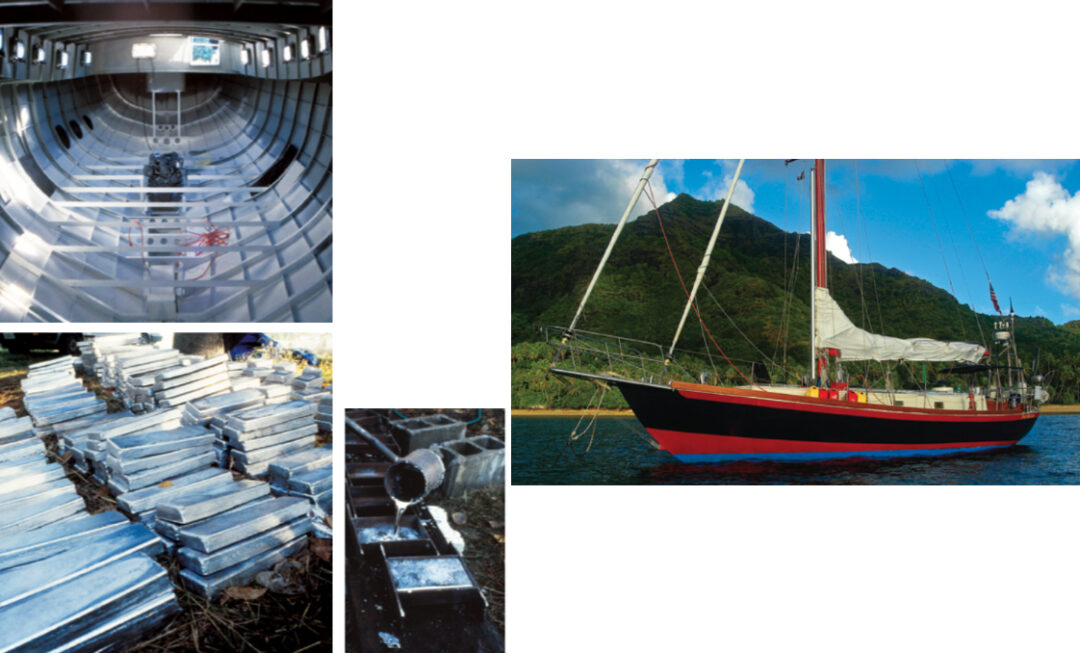
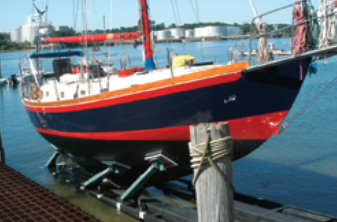
Iron Mistress is a custom-modified 45-foot round-bilged steel cutter designed for me by Ted Brewer. The design is based on his popular Corten Schooner design. She was built of mild steel to avoid the pitfalls of COR-TEN steel, which was popular at the time of Ted’s original design but later proved to be a bad material for use in seawater. Her bare hull and deck were built by Mooney Marine of Deltaville, Virginia, and I finished her out from there. Paul Rollins, a master wooden-boat builder in Maine, built the basic interior, which I then finished.
I painted her, built and designed all her systems, and did most of the stainless-steel welding and fabrication. I installed all the electronics, as well as the refrigeration/freezer system, the engine and running gear, her rig, and the thousand and one other things that go into making a yacht ready for the open sea. I even melted down 11,000 pounds of wheel weights in custom homebuilt molds to form the lead ingots for her ballast. I have put more than 10,000 hours in her and spared no expense in her construction. All the time, effort, and money put into Iron Mistress created a strong, beautiful, and seaworthy yacht that took two of us — my wife, Elyse, and me — around the world between 2003 and 2008. We suffered no breakdowns of anything other than our watermaker, which gave up the ghost at the end of our trip.
Many “experts” state that steel has a finite lifespan. This is technically incorrect if a proper paint system is
maintained. It’s true that even the most meticulously maintained steel boat has maintenance issues with its coating systems (to think otherwise is naïve), but this is usually due to inaccessible areas that cannot be maintained or inspected, damage, age, or initial preparation that was not 100 percent correct.
Coating systems
Protected with modern two-part epoxy primers over-coated with polyurethanes (polyurethanes must be used above the waterline), steel will have a yacht finish that will rival any fiberglass boat with regard to fairness and appearance and will outlast anyone reading this article. As with all painting, preparation is the key. This is especially important with steel construction.
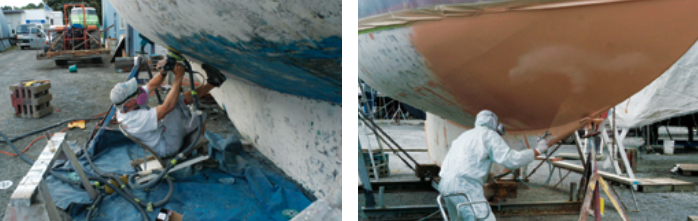
Although there are many methods for preparing and maintaining steel, the best way is to sandblast with a product that leaves a good profile (the microscopic pattern left behind to hold the paint). I use Black Beauty sandblasting medium. The newly sandblasted surface should then be coated with either “flame sprayed” molten zinc (usually only for new construction) or an inorganic-zinc primer, which is more economical and can be applied by anyone. I have used an inorganic-zinc primer, also known as cold galvanizing, with excellent results. The theory is that, if the original topcoats are scratched to bare steel, the zinc will sacrifice itself to save the steel.
The next step is tie-coat primers (which aid in the adhesion of the other topcoats) followed by barrier-coat underwater epoxies. This method is the gold standard and will protect steel indefinitely as long as the coating system is maintained. There are many coating systems on the market. I have used Devoe epoxy products and AwlGrip polyurethane topcoat products for Iron Mistress with good results.
Maintaining the protection
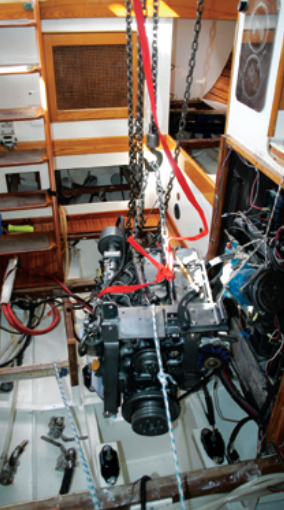
Accessibility is essential in steel boats, especially in the bilge area. On Iron Mistress, I have total access to the bilge area, making it easy to inspect and perform regular maintenance. All the water tanks and the engine can be removed easily for maintenance.
Another thing to look for is limber holes. If your boat does not have them, cut or drill holes in all the frames so any water that gets into the boat (and it will) can drain into the bilge and not create pockets of standing water.
When I see an area of corrosion, I use a needle gun, a device run off an air compressor that is used to chip old paint away. I then spot blast with a portable sandblaster (available at any auto store) that can be run off a scuba tank or small compressor. Finally, I paint the area with the protective paint system I mentioned earlier.
When you just can’t sandblast for any reason, you can use OSPHO, a phosphoric acid that converts minor rust scale to an inert substance that can be painted over. I have used this process occasionally on small spots with fair results, but sandblasting to bare steel is the best way to go.
If you are looking for a used steel boat, be aware that you’re in for a rude awakening if the boat was not built from the keel up with future maintenance in mind or if it was not properly prepared and coated in the first place. Initial construction by a reputable builder or skilled detail-oriented craftsman is essential for longevity. Otherwise, you will quickly understand the old saying, “rust never sleeps.”
Don’t be discouraged, however. I have redone the bilge in Iron Mistress only twice in 25 years . . . and it still looks new. Also, other than the bottom, which I recoated with new epoxy in New Zealand in 2006, she still has the original epoxies (inorganic zinc, tie coat, and barrier coats) underneath with no corrosion!
Stainless steel in construction
One of the best ways to eliminate or at least reduce corrosion above the waterline is to use extensive amounts of 316L marine-grade stainless steel where possible. In fact, the old steel BT Global Challenge one-design boats were designed with mild-steel hulls and stainless-steel decks. This is the ultimate combo, but it’s expensive. For the rest of us, stainless steel can be easily welded to mild steel in high-wear areas or areas that are hard to get to. On Iron Mistress, for example, all the hatch coamings, the windlass base, stanchion bases, chainplates, and so on are made of stainless steel — these are painted and require no further maintenance. If you buy a used steel boat, you can retrofit it with stainless steel in these areas using TIG welding.
Don’t let water in
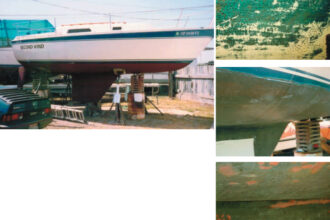
While at Patten’s Boatyard in Eliot, Maine, right before we left for our circumnavigation, we noticed a steel boat that had just come in from Trinidad. It was a 10-year-old high-end professionally built boat from England. The new American owner was proud of her and told me the surveyor in Trinidad (where he bought the boat) had said the grapefruit-sized blisters around the anchor locker were only cosmetic. I told him I thought he might have a serious problem. Soon afterward, the yard pulled his boat and put her next to Iron Mistress.
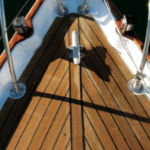
The next morning, we checked out the “cosmetic” blisters under the fairing compound with my needle gun. The gun went right through the hull with the first trigger pull! The cause was the beautiful teak deck that had been screwed directly to the steel below. Water eventually migrated down the screws, along the longitudinal frames, and under the loose glass insulation. The whole boat was, in reality, a wreck. Our cruise began a week later, just as they were welding in new plates. We noticed a “For Sale” sign on her.
Iron Mistress has sprayed polyurethane insulation over the epoxy coating system above the waterline. At one point, while replacing some deck gear, I got to see the epoxy paint underneath. Even after 25 years, it was spotless. In my opinion, based on experience, this is the best kind of insulation and should be one of the things you look for in a used steel boat.
Prevent electrolysis
Electrolysis is the other issue that concerns fellow sailors when they list their objections to steel boats. This is a problem that occurs when electrical current — whether from inside your boat or an outside source (such as a marina) — drives an otherwise non-spontaneous chemical reaction. When dissimilar metals are immersed in water, all it takes to wreak havoc with underwater running gear and through-hulls is a “leaking” current. That’s why all boats use sacrificial zincs to protect expensive underwater gear. There’s no question about it: in the case of a steel or aluminum boat, electrolysis can be devastating.
I have often heard the statement that metal boats are “nothing more than floating batteries.” If a boat is improperly wired, there is some truth to that criticism, but there is an easy way to eliminate or reduce electrolysis on all boats, including steel ones. Known as a floating ground or isolated ground, this system is used on many European boats and should be mandatory on all boats, especially metal boats.
Before you purchase a used steel boat, be sure to consider how it’s wired. Iron Mistress has a true floating-ground system (as distinct from that in most boats that use the motor as a ground). All electrical loads go to large negative and positive bus bars with no communication with the hull anywhere.
To accomplish this, you must have dual-pole instruments and an isolated-ground wiring harness on your engine — positive and negative poles that do not use the engine as a ground. (By comparison, single-pole sensors — the sort of sensor you see on most production boats — use the engine block as the ground.) Next, you need an electrical isolator for your shaft coupling and true isolated-ground alternators, which have two poles, positive and negative. Note that most standard alternators are “case-grounded” to the motor through their mounting hardware.
The above, coupled with an isolation transformer that allows shorepower into your boat via a “magnetic coupling,” will ensure that there is no internal electrolysis.
Iron Mistress has about 50 pounds of “indicator zincs” on her hull to protect her from stray currents in marinas. They had lasted for 15 years in New England. But when we docked in Whangarei, New Zealand, at a great funky marina that had a lot of stray electrical leakage, the zincs worked as designed and were 80 percent wasted in five months! We replaced them with new ones and she is fine now.
After hearing about these maintenance considerations, you might ask why anyone would own a steel boat. The answer is simple: they’re watertight and the safest cruising platform you can have for going offshore. These days, with modern construction techniques and coating systems, a steel boat can truly look like a yacht.
Take it from us, when you’re voyaging with a big sea running . . . when it’s pitch black and the wind is howling . . . at these times you will not be thinking about the paint system on your boat. You will be secure in the knowledge that you are in the safest and sturdiest of all vessels — a steel boat! That’s what it’s all about.
Robert Brown and his wife, Elyse, escaped the world of health care, where Robert was a podiatric surgeon and Elyse was a critical care nurse and, between 2003 and 2008, circumnavigated aboard the 45-foot Iron Mistress. For details see <www.ironmistress.com>. Robert first restored a Pearson Coaster and a Sea Sprite. He is a certified welder and experienced in spraying Awlgrip.
Thank you to Sailrite Enterprises, Inc., for providing free access to back issues of Good Old Boat through intellectual property rights. Sailrite.com