Good old boat-cleaning recipes use cheap, natural ingredients
Issue 36 : May/Jun 2004
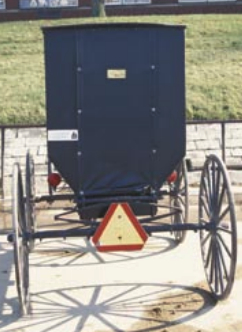
We live on a farm in rural, northeastern Ohio, nestled in among the fourth-largest Amish community in the world. All of our neighbors live, work, and play as though it were still the 18th century. Having a Yankee (that’s what non-Amish are called) living in their midst is not only a constant reminder to them of the “outside world” but also provides them with a degree of entertainment. This is especially true of my sailboat.
Initially, one would think that farming and sailing would be conflicting interests, since these activities occur at the same time of the year. However, the flexibility achieved by trailersailing works well for us.
Each spring as I prepare for plowing, I also use the tractor to pull the boat from its winter storage place next to the barn. I then place it in the center of the rear yard, where I can get it ready for the upcoming sailing season. It is at this time that my spring commissioning ritual becomes entertainment for my neighbors, especially Noah Hostetler. This elderly gentleman, a retired dairy farmer, possesses the uncanny knack of appearing out of nowhere, especially when I’m messing about with the boat. Last spring’s commissioning was no different. As I was cleaning the cockpit, I heard a noise behind me. It was Noah, rummaging around in my crate of cleaning supplies, all the while shaking his head.
“What is it, Noah?” I asked.
“Got a lot of fancy chemicals here,” responded Noah.
Knowing from experience that this cat-and-mouse discussion could take quite some time, I cut to the chase: “What’s your point?”
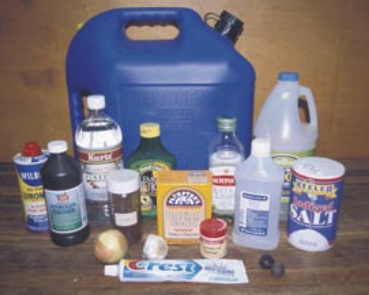
It turned out that Noah did me a favor and provided me with the recipes for several homemade cleaning supplies that can be made from ingredients commonly found aboard. Needless to say, this transfer of knowledge took several months of Noah’s visits to complete.
No, I haven’t given up commercially prepared cleaning products entirely. But there are those times when you run out of your favorite product and need something right away to get that stain out. You just may find that one of the following homemade substitutes is a lifesaver. Common sense dictates before using any cleaner — commercial or homemade — that you first test it on a hidden area to determine compatibility.
All-purpose cleaner: Mix and dissolve in a pail of soft, warm water (Noah uses rainwater) the following ingredients: one cup of ammonia, a half cup of vinegar, and a quarter cup of baking soda.
All purpose cleaner and disinfectant: Dissolve a half cup of borax in one gallon of soft, warm water.
Mildew removers: Try one of the following:
- Mix a half cup white vinegar and a half cup liquid bleach in two quarts of water. Rinse well with clean water to which a half cup of white vinegar has been added.
- Mix a half cup of white vinegar and a half cup of borax in two quarts of warm water. Rinse with fresh water. (The borax is said to inhibit mold growth.)
- Scrub with equal parts of white vinegar and table salt.
- Clean mildewed area with equal parts of lemon juice and table salt.
Window cleaners: Each of Noah’s family members had a favorite. We use the second one below with great success.
- Mix one-third cup of vinegar (cider or white) with two pints of water. Use a soft rag to wash and crumpled newspaper to dry and polish the window.
- Mix one-third cup of alcohol with two pints of rainwater.
- Use the first formula above followed by the second. (According to Ada, Noah’s wife, the first is the grease cutter and the second is the polisher.)
- Blend one quart of hot water with half a cup of kerosene. Dampen a soft cloth with the solution and wring it out well before using. The residual kerosene film will keep the glass cleaner longer.
- For clear plastic windows, use one part vinegar to two parts water, but don’t use paper to clean — use soft cloth only.
Brass and copper cleaner/polish: To remove tarnish from brass and copper, use a mixture of two parts table salt to one part lemon juice and one part vinegar. Apply the liquid to the metal with a sponge and let it dry. Rinse it off with hot water.
Chrome cleaner/polish: Clean chrome with cider vinegar and polish with baby oil.
Aluminum cleaner: Dissolve two tablespoons cream of tartar in one quart of hot water.
Stainless steel cleaner: Use window cleaner or ammonia and a soft cloth.
Cleaning lines: Soiled rope can be cleaned in a tub filled with water and Woolite. Avoid using bleach; it will discolor and weaken the fibers. Rinse them several times with clean water. Add a small amount of fabric softener to the final rinse. Allow the lines to air dry. The lines will be both clean and less abrasive to your touch. Noah uses this technique on his synthetic harnesses with good results.
Removing water marks on interior wood: Try one of the following:
- Rub the area with the meat of a nut.
- Apply either mayonnaise or cooking oil with a small amount of baking soda.
- Rub the area with toothpaste on a damp cloth. (Always rub along the grain of the wood when using mild abrasives.) Wipe up any residue and buff with a soft cloth.
Waxed wood polish: Mix one part vegetable oil and one part lemon juice or vinegar into a solution. Apply a thin coat and rub in well.
Unwaxed wood polish: Use vegetable oil or lemon oil to replenish the shine.
Varnished wood cleaner: Use equal parts vinegar and water.
Varnished wood cleaner/polish: Use three parts olive oil and one part white vinegar to clean. Polish with straight olive oil.
Varnish remover: Mix one cup turpentine and two cups ammonia together. Brush this mixture on the old finish. This may take a few applications. Once all of the old finish is removed, wipe with a solution of one cup vinegar to one quart of water.
Screen cleaner: Clean with kerosene and rinse with water with a few drops of dishwashing detergent added.
Scouring powder: To remove stains from pots and pans, make a paste of three parts baking soda, one part table salt, and a little water. Rub the paste onto the metal and let dry. Rinse with hot water and wipe with a soft cloth. For stubborn stains, repeat the process.
Quick, mild abrasives: Sprinkle borax, baking powder, or dry table salt onto a damp sponge, scour, and rinse.
Grease cutter: To remove that dull, greasy film from the galley, use half a cup white vinegar mixed into half a gallon of warm water.
Drain cleaner: To keep drains clog-free, pour in one cup of baking soda followed by one cup of hot, white vinegar. Allow the mixture to stand overnight. Rinse with hot water.
Head cleaner: Sprinkle baking soda into the bowl and drizzle some vinegar on top. Scour with a toilet bowl brush. This cleans and deodorizes.
Deodorizer: To deodorize upholstery and carpet, sprinkle baking soda over the affected area and let rest overnight. Vacuum. If no vacuum is available, use a whisk broom or beat it out.
Laundry bleach alternative: Use a quarter cup of lemon juice.
Laundry spot remover: Try hydrogen peroxide straight from the first-aid kit. Let it sit overnight and then wash as normal.
Insect repellent: Blend six cloves of crushed garlic, one minced onion, and one tablespoon of soap in one gallon of hot water. Let the mixture age one or two days. Strain. Apply with a spray bottle.
Ant killer: Sprinkle cream of tartar, red chili powder, dried peppermint, or boric acid where the ants are.
Cockroach killer: Use equal parts of baking soda and powdered sugar. The sugar attracts them, and the baking soda kills them.
While not necessarily as alluring as a “magic bullet” product that promises to clean everything in mere seconds, most of these homemade formulas are just as effective, cost less, and are non-polluting. These are classic cleaning recipes that Noah’s grandmother (and her grandmother) used and Noah still uses today.
Thank you to Sailrite Enterprises, Inc., for providing free access to back issues of Good Old Boat through intellectual property rights. Sailrite.com