A quest for reliable electrical connectors
Issue 44: Sept/Oct 2005
MY BOAT CAME EQUIPPED WITH A POWERFUL AND RELIABLE hand-held spotlight. I consider a spotlight to be an essential piece of safety equipment when boating after dark. If I’m out at night, I keep mine plugged in and at hand in the cockpit. Unfortunately, the spotlight had a flimsy power connector that was very unreliable. When you plugged the connector into the receptacle, the only thing that held it together was the friction of two small metal prongs. My spotlight has a coiled cord that was springy enough to accidentally unplug the connector. It was always an unpleasant surprise when the cord would spring back and everything would go dark. I resolved to replace the connector with something more reliable.
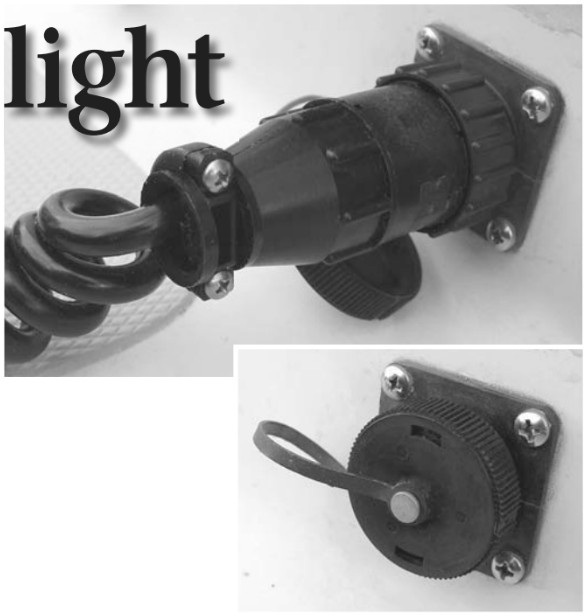
Other portable electronic devices use cigarette lighter plugs, but they also rely on a friction fi t. Looking on the Internet, I found a nice set of industrial-quality connectors manufactured by AMP, which I ordered online from Digi-Key. The AMP connectors have a few advantages:
- They are twist-lock connectors that can’t accidentally pull apart.
- They are polarized (to prevent a reverse-polarity connection) and have beefy contacts.
- The receptacle has a weather-resistant cap.
- The plug has good strain relief to keep the wire connections from breaking if the wire is pulled.
- They are available in many sizes and pin configurations for different applications.
What you’ll need
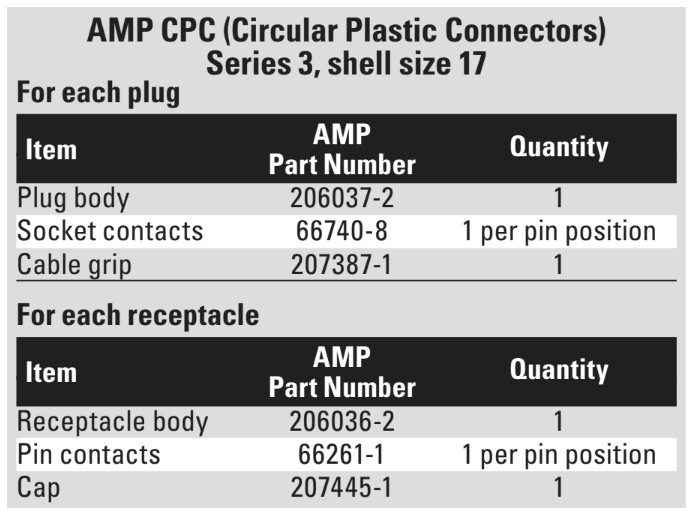
All of the connector pieces are available separately so you can install new connectors or replace worn parts. Here’s a breakdown of the parts you’ll need. Consider getting extra parts as spares and to convert new equipment in the future. (A note on terminology: the plug goes on the end of the spotlight wire; the receptacle attaches to the boat.)
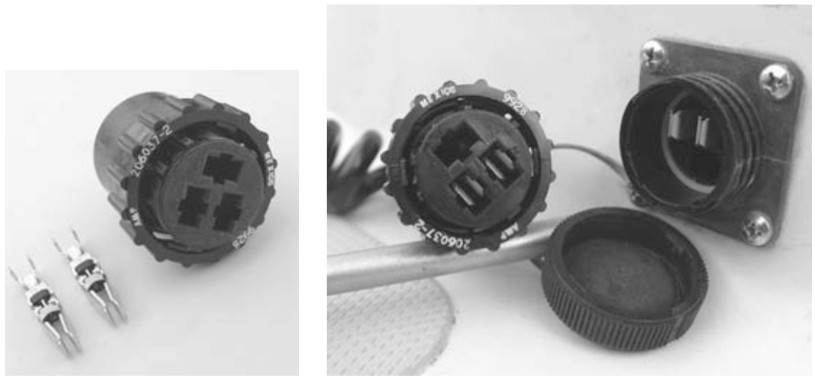
At last check, the approximate parts cost for a plug was $13.40 and for a receptacle $8.70. This might sound expensive, but the AMP connectors are good quality and work well. What’s the cost of a cheap connector failing on a dark and stormy night?
Assembly notes
If you add new receptacles to your boat’s wiring, be sure to use marine-grade wiring of the proper size and protect the circuit with a fuse or circuit breaker. For example, a spotlight can draw 10 to 12 amps or more. The AMP connectors can easily carry 15 amps per pin.
Follow a consistent polarization plan. For example, connector pin 1 is ground, pin 2 is 12 volts.
After crimping a pin to a wire, reinforce the connection by soldering it too. Use only rosin-core solder intended for electronics; other types of solder may contain corrosive acid. To avoid melting the plastic connector body, solder the wires to the connector pins before inserting the pins in the connector body.
After assembling a plug or receptacle, put silicone caulking on the soldered wires inside the connector to protect them from moisture and vibration.
Use silicone spray on the connector pins to avoid corrosion.
Cigarette lighter plugs — Bob MacDonnell
Are you tired of those self-defeating cigarette lighter plugs and receptacles that lose contact at inopportune times? No wonder. They have a spring in the tip of the plug that tries to eject the plug!
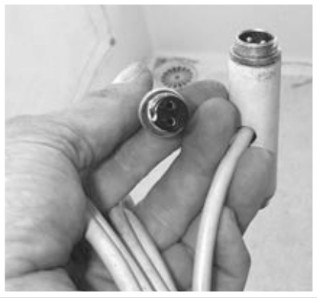
Microphone plugs and jacks are available in several pin configurations, are polarized, and have a threaded locking ring. Since they are made of brass, they are not recommended for outside use, but inside they are great for light loads such as GPSs and portable lights. No more accidentally disconnected instruments, trouble lights, or light pumps.
Thank you to Sailrite Enterprises, Inc., for providing free access to back issues of Good Old Boat through intellectual property rights. Sailrite.com