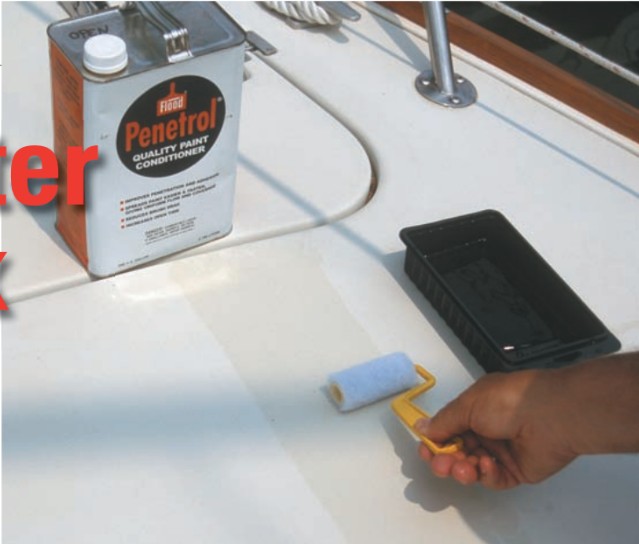
This tough, flexible, shiny oil penetrates old gelcoat
Issue 52: Jan/Feb 2007
OVER THE YEARS, I’VE OWNED SEVERAL “EXPERIENCED” FIBERGLASS sailboats. These are boats that have already had at least one or two owners. By the time I got my hands on a boat, the cosmetic condition of the fiberglass laminate was usually fair to poor. I’m not speaking of scratches, scrapes, and collision damage or even age-related gelcoat crazing. I’m talking about fading and chalking due to the boat’s routine exposure to the elements, especially the harsh rays of the sun. Without exception, I’ve found it necessary to buff, polish, glaze, and finally wax the topsides. This technique restores the majority, if not all, of the boat’s original gloss. While this four-step procedure has served me on the boat’s hull, it doesn’t lend itself to the horizontal deck surfaces, especially the molded-in non-skid areas.
Having worked for many years in the specialty chemical business, I have contacts in the coatings, adhesives, and paint industries. Periodically, I glean a gem of an idea from my sources and successfully apply it to the upkeep and maintenance of my boat. I queried my friends with my dull-deck dilemma. What I came up with is simple and easy and has worked wonders on my decks.
First, I wash the deck thoroughly using a mild abrasive cleaner and brush. The combination of Soft Scrub with bleach and a fingernail brush works well. This somewhat “mildly aggressive” cleaning approach insures the removal of dirt, most stains, and loose oxidization. It also cleans the molded-in non-skid.
After the entire deck has been washed, I go over it again with clear water and, using the fingernail brush, brush the non-skid to remove any residue.
Dry thoroughly
I usually do the cleaning at midday, when the sun is high and the deck surface is warm. I then kick back with a beverage and allow the deck to dry thoroughly.
Late in the afternoon or early the next day, I begin the final step. (Don’t do this in direct sunlight.) Using a 3-inch-wide paint roller with a very short nap (maybe 1⁄4 inch), I apply a thin coating of Penetrol to the entire deck. If applied too heavily, Penetrol can flake off and leave the surface blotchy. It works best when applied in very thin multiple (2 to 3) coats. Thin coats dry very fast . . . in minutes. I roll out most of the moisture so I don’t clog the non-
skid. Excess material should be cleaned up quickly with mineral spirits and a lint free cloth. Old T-shirt rags work great. If dried, Penetrol can be removed with any paint remover formulated specifically for use on fiberglass.
Penetrol is a petroleum-based additive originally developed to increase the penetration and adhesion of oil/alkyd paints and varnishes. When used alone, this deep-penetrating oil reaches down into the fiberglass and restores the original color. Upon drying, it cures to a tough, flexible, and shiny finish. It is available in many hardware stores, most paint stores, and the local chandlery.
All fiberglass laminates are permeable to some extent and will allow moisture to penetrate them. As an added benefit and as its name implies, Penetrol penetrates the porous fiberglass and impedes moisture penetration. It also eliminates the need for other surface coatings, such as polishes, that dry out quickly.
The Penetrol coating isn’t slippery, but sailors should always be careful on wet fiberglass, especially on older boats where the non-skid may be severely worn.
As far as reapplication goes, I’ve learned to apply Penetrol based on need, rather than schedule. And reapplication should always follow the same four steps: clean, rinse, dry,
apply.
Thank you to Sailrite Enterprises, Inc., for providing free access to back issues of Good Old Boat through intellectual property rights. Sailrite.com