Ways to cope with motion unease
Issue 79: July/Aug 2011
Call it mal de mer, Neptune’s revenge, or the breakwater flu . . . chances are, if you venture very far offshore, you will become acquainted with the most unwelcome of on-board guests: seasickness. This malady spares few sailors and usually amounts to nothing worse than passing discomfort, but because seasickness may become life-threatening in some cases, it should be understood, planned for, and taken seriously.
Despite what some might say, seasickness is not “all in your head.” Medically speaking, it is an acute condition, meaning it isn’t permanent or long-term. It’s the result of a sensory conflict caused by exposure to passive motion. If this sounds uncomfortably familiar, you’re not alone. Clinical studies reveal that 25 percent of those people exposed to moderate passive-motion situations experience motion sickness. NASA admits that 75 percent of its astronauts are afflicted. In short, although tolerance levels differ among individuals, most everyone is susceptible. While total immunity may be out of reach, effective prevention and treatment is not.
Preventive measures
The surest way to prevent seasickness is to determine your level of tolerance to motion and to set appropriate limits. If 4-foot seas make you nauseous, keeping to protected waters the first few days or limiting early passages to those that can be completed in 24 hours may prove wise. Establishing a limit of 3-foot seas whenever possible for offshore sailing might be a good idea, but bear in mind that individual tolerances improve with exposure; you may soon overcome that 3-foot limit.
Since mental and physical activity lessen the likelihood of seasickness, steering the boat, coiling lines, performing simple on-deck maintenance chores, or just engaging in conversation often stave off motion-induced nausea. Physical posture, location on the boat, and visual orientation also significantly affect a person’s reaction to motion. Sitting upright or standing near midships, where relative motion is less exaggerated, frequently brings relief. Focusing on the horizon may alleviate the sensory conflict that produces seasickness. Conversely, close-focused tasks such as reading, using binoculars, or prolonged periods belowdecks may invite the onset of seasickness and worsen its symptoms.
Nutrition and hydration are key factors in the prevention of seasickness. Some things are obvious. A greasy jalapeno-and-sausage omelet probably isn’t the best breakfast choice ahead of a day of heavy-weather sailing, but neither is abstention. A strong, well-nourished body withstands the rigors of motion far better than a weak and hungry one. Choose easily digested, energy-packed foods, such as boiled eggs or oatmeal, for that pre-sail breakfast. Menu planning for a cruise should follow the same logic: hearty but relatively bland fare for passages, saving the exotic, spicy dishes for quiet anchorages.
Fluid intake is also vitally important as a preventive measure and as treatment if seasickness does occur. Pre-hydration is a common practice among athletes preparing for competition. Ensure your body is thoroughly hydrated prior to leaving the dock to fortify it against the onset of motion sickness. Then continue to drink adequate quantities of water once under way. Non-acidic fruit juices and mild teas offer variety with the added bonus of vitamins and nutrients, but they are not a substitute for water. Consume these liquids in addition to, not in lieu of, good old H2O. Avoid caffeine and alcohol. Both substances tend to deplete and dehydrate the body. What’s more, the latter may serve to block the secretion of another essential element, common sense.
Physical well-being affects tolerance to motion. Minor maladies, such as a cold or simple fatigue, may invite the onset of seasickness in conditions that would otherwise appear benign. Consider the crew’s general state of health before beginning a passage. Lin and Larry Pardey’s excellent book, The Care and Feeding of Sailing Crew, offers sound advice about health maintenance and nutrition for cruisers.
Home remedies
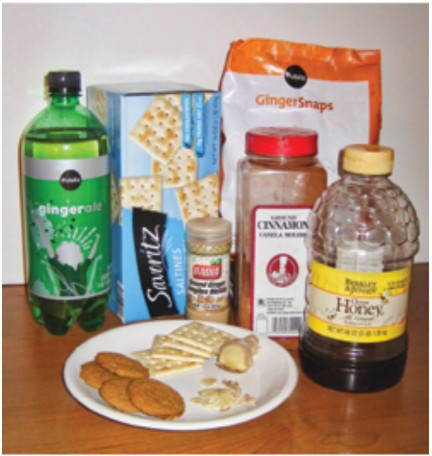
Ginger has long been used to treat seasickness; its effectiveness is not mere folklore. Ginger is a carminative herb, proven to increase bile secretion and stimulate digestion. A double-blind study demonstrated that one gram of ginger, taken 12 hours prior to exposure to passive motion, is effective in reducing nausea. Ginger is readily available at most grocery stores in root or powder form and is also found in processed food products such as ginger cookies and ginger ale. This spice doesn’t have to be consumed raw to have an effect on seasickness. It is not altered by cooking, so processed food products such as ginger cookies, ginger ale, and even ginger candies, such as Preggie Pops, Queasy Pops, and Queasy Drops, will produce the same soothing effect as the raw herb while adding a few carbohydrate-based calories. Another source of ginger is ginger teas. These are available in a wide variety on most grocery-store shelves and in profusion in any health-food store.
Saltine crackers will sometimes ease the symptoms of seasickness, especially in its early stage. Saltines are easily digested and induce secretion of natural sugars that help calm the stomach. These crackers are also useful for treating prolonged seasickness, as they provide a digestible medium for replacing salt, an essential mineral needed to replenish depleted electrolytes.
Honey and cinnamon, taken together or separately, are remedies many seasoned mariners swear by. Cinnamon produces gastric benefits similar to those of ginger but is found by many to have a more pleasing flavor. Honey provides an impressive degree of nutritional value, is soothing to the stomach, and can often be held down even in severe cases of seasickness.

Non-prescription remedies
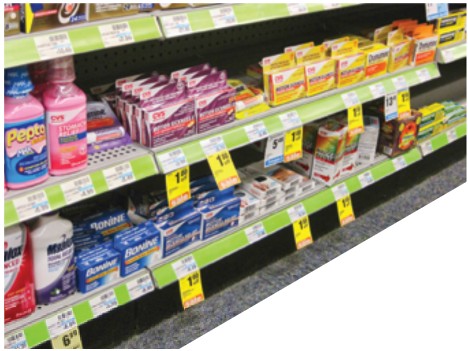
A recent visit to a local pharmacy revealed seven non-prescription drugs advertised as preventing or treating seasickness. Many of these products were variations promising enhanced effectiveness through “extra strength” or offered in a “non-drowsy formula.” There were also a number of products intended specifically for children. All formulas, however, contained one of four FDA-approved active ingredients. A fifth is not yet available in the U.S.
- Dimenhydrinate, under the brand name Dramamine, may be the best-known and most widely used over-the-counter motion sickness treatment in the U.S.
- Diphenhydramine, another common product, is marketed under the trade names Benadryl, Banophen, and Hydramine.
- Meclizine is contained in Antivert, and the popular medication Bonine.
- Cyclisine is the active ingredient in Marezine.
- Cinnarizine, sold under the brand names Stugeron and Stunarone, has become an increasingly popular non-prescription treatment within the global cruising community. However, this product lacks FDA approval and is not available in the U.S. or Canada.
Independent studies have found that all these products effectively relieve or prevent motion sickness in approximately 50 percent of the people tested. The labels on these products warn of a host of possible side effects (drowsiness being the most common), some of them quite severe if the product is not used properly. Caution and perhaps the counsel of a physician is advisable, especially when contemplating frequent or prolonged use of these medications.
Wrist bands, sold under brand names such as Sea Band or Bio Bands, have recently found wide acceptance in the prevention of seasickness. Employing the ancient principle of acupressure, the bands work by applying a light, steady pressure to the Nei Kuan, or P-6 pulse points located in the wrist. A more advanced version delivers a mild electrical shock to the same points. Many sailors report that acupressure bands are effective, adding that the bands produce no side effects and have the further advantage of being reusable.
Prescription remedies
If common preventive measures and non-prescription medications fail to prevent or effectively reduce the symptoms of seasickness, a physician may prescribe more powerful drugs. Cruising sailor Fred Bagley, M.D., points out that many doctors lack extensive experience treating motion sickness. He wisely counsels, “Educated patients who make their problems clear to their doctors are very important.”
Your doctor may prescribe Scopolamine, often administered via the popular Transderm-Scop patch or sold in tablet form under the name Scopace. Following its initial release, Scopolamine was recalled amid fears it contributed to birth defects. It was later reintroduced in a modified form and has a reputation for effective and consistent results. NASA considers Scopolamine the most effective motion-sickness medicine, reporting 75 percent effectiveness in clinical testing. However, some users have reported visual distortion while on the patch. Scopolamine should not be used if you have glaucoma, and it is not presently available for children.
Phenergan, compazine, ephedrine, promethazine, and emetrol are also sometimes prescribed to control seasickness and may even be available outside the U.S. without a prescription. However, these are powerful drugs that may produce significant side effects. Don’t experiment; consult a doctor before taking new and unfamiliar medications.
First aid
With the passage of time, the symptoms of seasickness will usually lessen, become sporadic, and subside. Seasickness that persists unabated beyond 24 hours and involves frequent vomiting, however, will result in dehydration and must be treated as a medical emergency.
Divert to a safe port, if possible. Continue to employ the preventive techniques discussed and administer any appropriate remedies and medications available, while being mindful of known allergies and cautionary labeling. Encourage the afflicted crewmember to sip water. Provide saltine crackers, honey, applesauce, and salty broths in small amounts but at frequent intervals. Consult all available first-aid or medical publications. Consistently monitor the person’s condition. Should it worsen, consider transmitting a distress message requesting medical assistance or possibly evacuation.
Conclusion
As your sailing horizons broaden, seasickness, pardon the pun, is bound to come up. When it does, don’t ignore it or treat it as a joke, but don’t consider it to be a cruise-ending calamity. Employ the preventive measures and remedies outlined, remembering that what works for one person may not work for another. Keep experimenting, within the bounds of safety, until you discover which methods work best for you and members of your crew. Address seasickness as you would any other disruptive event — equipment breakdowns or unexpected bad weather — with knowledge, teamwork, and sound judgment.
Ginger cookies
Fred and Jennifer Bagley make sure they have ginger cookies on hand before each passage. They figure a cookie or two each day may just keep seasickness at bay. Even if this recipe doesn’t cure mal de mer, these cookies are mouthwatering good. — Editors
Directions
In a large bowl, combine 3⁄4 cup shortening, 1 cup sugar, 1⁄4 cup molasses, and one egg.
In another container, combine 2 cups flour, 2 teaspoons baking soda, 1 teaspoon cinnamon, 1 teaspoon ginger, and 1⁄2 teaspoon ground cloves.
Blend flour mixture into the sugar batch. Chill the mixture for an hour or so.
To bake, take a small spoonful, roll the batter in your hands into a round ball, dip it in sugar, and place on cookie sheet.
Cook in moderate oven (approximately 350 F). Cookies will have a cracked surface. Take them out after 10 to 12 minutes, depending on whether you want them crispy (cook a bit longer) or chewy (remove from the oven a bit sooner).
Vern Hobbs and his wife, Sally, sail a Bristol 35 from their home port of Cape Canaveral, Florida. Check out Vern’s new novel, Flying Fish, as well as his maritime art at www.flying-fish-creative.com.
Thank you to Sailrite Enterprises, Inc., for providing free access to back issues of Good Old Boat through intellectual property rights. Sailrite.com