An inland loft with saltwater aspirations
Issue 36 : May/Jun 2004
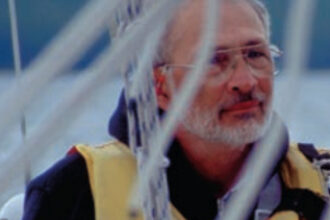
As we traveled across eastern Washington to meet Don and Mary Yager, we kept thinking how incongruous it was to be driving through such hot, dry country to see a sailmaker. Yager Sails and Canvas is located in Veradale, Washington, on the eastern edge of Spokane, about as far from the ocean as you can get and still be in the state of Washington. We soon learned there is a lot of wonderful sailing to be found on nearby lakes in the panhandle of Idaho.
Yager Sails is a family business. Don and Mary offer sail and canvas design, construction, and customer support out of a building on their property. As a small shop, they are able to provide options and services not found at the major lofts. Furthermore, they are able to offer traditional sails along with what are considered to be “modern” designs. While some of the major sail lofts do a portion of their sail construction offshore, particularly with lower performance sails, the Yagers emphasize the “custom” in custom sails.
Don was raised in Spokane and, at age 19, began racing catamarans on Lake Coeur d’Alene. He attended local colleges, graduating with a business degree. His first position, with a local bank, made him realize the business world was not for him. The one lasting benefit of that first job was a relationship with a bank customer that blossomed into a lasting partnership with Mary. Don went back to school for training that led to his current day job — working with kids who have congenital heart defects. Mary was schooled in accounting and eventually started her own accounting business, which she still runs in addition to her canvas work. She also keeps the books for Yager Sails and Canvas.
Boats in succession
In their life together, Don and Mary have owned a succession of boats. The first was a Newport 16. Then came a Buccaneer 22. Next was a Catalina 27 to provide more comfortable cruising. They raced the Buccaneer and the Catalina. Later, they did bareboat charters in places that featured great scuba diving, such as the Florida Keys, Hawaii, Belize, and the Caribbean. This started them thinking about one last boat with open-ocean capabilities. Working through a broker in the Seattle area, they found their boat — a Fantasia 35 — moored on Lake Coeur d’Alene.
Many young people grow up with a love of sailing. But the path to becoming a sailmaker is an uncommon one. Don and Mary began with sail repairs and simple canvas products, such as rail and tiller covers, using an older commercial sewing machine. They enjoyed the work and realized they had a knack for this craft. Their next step was to develop a relationship with Sailrite. Owners Jim and Connie Grant helped them with designs and materials for building sails. From Sailrite they purchased materials and pre-cut sail panels that Don then assembled. This gave Don a good foundation in the construction of computer-designed sails.
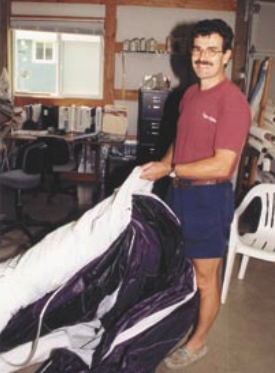
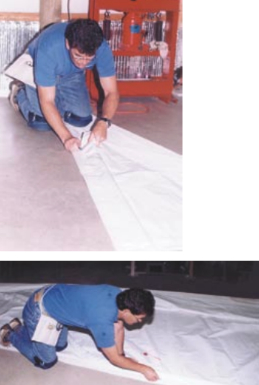
Through a variety of other work experiences, Don mastered the handwork and finishing touches that assure long life in cruising sails. He enjoys sharing these details with interested customers. Unrolling a jib that needs re-cutting, he notes that black thread has been used in some of the seams. Speaking almost to himself, he comments that white thread should be used, since it is more UV-resistant. The luff tape also needs a second line of stitching to meet his standards.
While Don was mastering sailwork, Mary began to broaden her canvas product offerings to include boom tents, winch covers, and sailcovers. She makes all the sail bags for Don’s sails as well. As they became more experienced and confident, the couple decided it was time to set out on their own. That was 15 years ago. They established accounts with appropriate sources for sailcloth and other essential materials, and they purchased Autometrix software for sail design and plotting.
Leather reinforcements
Overall, Mary’s canvaswork accounts for about one third of their business today. Her sailcovers are well reinforced with leather or a synthetic material called Top Gun in all areas where chafe might occur. She shies away from the use of zippers since they are prone to UV damage.
As they expanded from repairs and canvaswork to include new sail design and construction, Yager Sails and Canvas grew largely through word-of-mouth among satisfied customers. Once the volume of business became more than two could easily handle, they added a couple of employees and opened a storefront operation. However, Don and Mary each continued working at a day job as well. The workload, which now included personnel management issues, was becoming a strain. So, when Mary became seriously ill a year or so ago, they decided to close the storefront and take a break.
Not long ago Don and Mary reopened the business, but this time their business plan was to operate from their home and keep operating on a scale they could handle without employees. They built a shop in the backyard for sail construction, as large as the building code would allow. Although they would have liked a bit more space, it’s big enough to construct sails for yachts up to 50 feet. Mary does her canvaswork in the basement, which she shares with Don’s plotter. Without the storefront, their total revenue is down but the net cash flow is about the same, since they are spending less time on low-value projects. More importantly, the stress level is down.
Enjoys the challenge
Don really enjoys the challenge of designing and constructing a fine sail. This was easy to sense during our conversations about clarifying customer requirements, making critical measurements, sail design, and materials and construction.
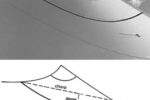
Before starting the design process, Don works to make sure that he and the customer understand how the sail will be used. In particular, he needs to know the wind range, the sea conditions (protected vs. waves), and the expected jibstay sag or mast bend. A key factor in customer satisfaction is getting the luff curve of the sail correct. This involves both the intended usage and the jibstay sag or mast bend on the boat.
The Yager Sails website gives a good overview of the critical measurements for sails. Most new orders come in via the site. Don has a good database for boat rigs, but he still needs to work with customers to make sure that all the numbers are accurate. Did a previous owner modify the rig (taller mast or longer boom)? Do they have the tall or short rig? Have the jib fairlead tracks been relocated?
Once Don is confident of the dimensions and application for a sail, he starts the design process. His primary design tool is Autometrix software by John Palmer. Don was first introduced to Autometrix by Harry Pattison, a sailmaker in Newport Beach who was an early mentor for him in a long-distance relationship.
Autometrix runs on a high-end desktop machine. This software allows him to create the desired sail shape using any of the common construction techniques — paneled or some version of radial. The luff curve is set to that computed from the data provided by the customer. And the camber is set for the expected wind and waves. The design software allows him to review the final designed shape while rotating the field of view under various sheeting angles and wind strengths. This is an impressive capability; it’s fun to see the sail shape evolve on the computer monitor.
Creating patches
The next step is creating the various patches required for reinforcing the corners, batten pockets, reef points, and so on. The shapes for these patches are generated using Patch Tool by Sandy Goodall, a Canadian sailmaker who has now retired to Mexico. Using Patch Tool, Don is able to optimize the location and orientation of the various panels and patches before sending the file to the plotter. This helps him minimize waste and reduce costs.
Traditional sails are designed with a different software package, Sailcut 2000. This software was written in Europe by Robert Laine. Don has served as a beta site for several upgrades to this software. According to Don, there seems to be a growing community of build-your-own boat types who need square sails (gaff-headed and sprit rigs).
The patterns for the finished design are generated on a 7-foot by 30-foot Blackman & White plotter. The size of his plotter requires that Don be a bit creative when working on sails for larger boats. Cutting is done as a separate step. A combination plotter/cutter would enhance productivity, but the $50,000 price tag is hard to justify with the company’s current volumes. The actual sail construction is done with one of three flatbed, double-walking-foot, zigzag machines.
Don uses cloth from Bainbridge International for most of his racing sails and from Challenge Sailcloth for most of his cruising sails. (Interestingly, Bob Bainbridge started both companies.) He has been very satisfied with the quality and consistency of his primary sources for sailcloth. There are lower-cost sources for sailcloth, but Don does not find them to be a good value for his customers. They may have a good hand initially, but this is achieved with a more liberal use of resin and a lower thread count than with the better cloths. Over time they do not hold up as well.
Strong and light
Don constructed the mainsail for their Fantasia 35 from Bainbridge’s CL-75 P. He is rather partial to this sailcloth. This laminate is light but strong, has a nice hand, performs very well, and gives a long performance life. He recommends it as a good choice for serious sailors, whether cruising or racing. However, he does have concerns about the use of laminated sailcloths for furling sails. These fabrics are prone to mildew and, when a sail is kept tightly furled on a boat for prolonged periods, mildew damage often results. For these applications, he recommends woven Dacron.
Fortunately, improvements in woven Dacron sailcloth provide Don with good choices for customers who want the convenience of a furling sail without giving up performance. These advances in sailcloth are due in part to the availability of higher-tenacity fibers (which give higher modulus). Enhancements in the weaving and finishing of the sailcloth are also important to their improved performance.
When Don constructs a furling jib he uses heavier cloth in the portions that will be exposed and loaded when the sail is partially furled. This minimizes weight while assuring a long performance life. The lighter weight is important because a heavy sail requires stronger winds to assume its designed shape. To help maintain proper shape when partially furled, Don uses a tapered high-density foam strip encased in a fabric sleeve to pad the luff. The resulting luff, he notes, has a cleaner shape with better attached airflow than the rope-filled tubes used by some lofts.
Don has strong preferences regarding mainsail battens. He usually recommends a full/partial combination: full battens for the top two and partials for the remaining ones. He uses only tapered battens because they make it easier for the sail to assume its correct shape in light air. The battens are tapered to about the point of maximum draft (narrow end toward the luff). The fittings for these battens are by Rutgerson and are front-entry with a rigid plastic stop at the leech end. This avoids the problem of a batten chafing through the Velcro closures and shaking out.
Also spinnakers
In addition, Don designs and constructs symmetric and asymmetric (cruising) spinnakers. To launch them, he recommends the ATN, which has been recently improved, and the Chute-Scoop. Artwork on spinnakers has provided some of these sailmakers’ greatest creative challenges. Don and Mary still talk about inletting the state flag of Alaska into a spinnaker and getting all the stars in the correct locations.
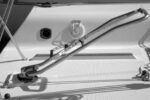
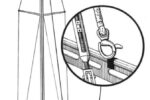
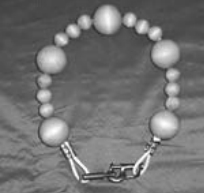
Don has developed an intriguing design for drifters. It builds upon the idea of deploying a storm jib over a furled headsail. His novel approach is to use parrels with wood or plastic rollers on a wire loop to secure the luff of the drifter around a furled headsail (see photo on Page 68). The parrels are relatively gentle on the sailcloth of the furled sail. They also make it easy to raise and lower the drifter over the furled headsail. Don noted that similar parrels could be used to secure the tack of an asymmetric spinnaker to the headstay. This makes it much easier to ease or tension the luff with the tack line than with the fabric and plastic loops usually used because the parrels will roll readily along the furled headsail.
Don sells several brands of furlers — Pro Furl, CDI, and Hood — and often assists with installation as well. CDI furlers are particularly popular for trailerable sailboats, due to their resistance to damage when a boat is being rigged or unrigged. Trailersailers are an important market for the Yagers in eastern Washington, Oregon, and Idaho.
Sail repairs also represent a significant part of the Yager Sails and Canvas business. This aspect of the business sometimes provides a bit of humor. Sails that have been rolled up and left in storage for long periods often contain surprises. Don has been bitten by spiders and stung by bees. He has had to sweep mice out of his shop that tumbled out when a sail was unrolled. He has even seen a sail that slid partway out of a truck bed and was dragged down the highway.
Tired sails re-cut
The re-cutting aspect of his business might be of particular interest to sailors who have found that special boat complete with an inventory of tired sails. Re-cutting the sails to enhance their performance can considerably increase the pleasure they find in their new (old) boat. Re-cutting to alter the shape of the sails may also be desirable if the boat is to be relocated and sailed in different wind and wave conditions.
The Yagers have a strong customer base in the Spokane area. These sailors enjoy the beautiful lakes in the Idaho panhandle, such as Coeur d’Alene and Pend Oreille. They also have a significant customer base in the Tri-City area (Pasco, Kennewick, and Richland, Washington). Many of these customers keep their boats on the Columbia River for the winter and then head down to the Pacific in the summer for extended cruises. The Yagers have one dealer, Randy Blair, of Blair’s Wind and Wood, in Clarkston, who enthusiastically campaigns a San Juan 21 and also races a trimaran. Don designed and built a unique asymmetric spinnaker for him that reaches very well.
Although the majority of the Yagers’ customers are west of the Cascades, along the shoreline of western Washington, Oregon, and British Columbia, the business is steadily growing in the Midwest. They also have customers sprinkled along the East Coast (from Annapolis down to the Florida Keys) and the Caribbean.
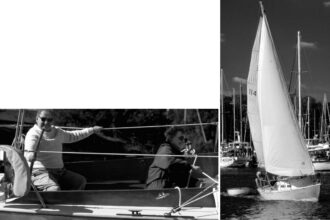
The Yagers are looking forward to doing more sailing aboard their Fantasia 35, Tesseract. Theirs is hull No. 28 out of a production run of 77. As is so often the case, they knew at once that this was the boat for them in spite of its badly neglected condition. Don and Mary had renamed their previous boats, complete with appropriate ceremonies. However, they decided to keep the name Tesseract. The dictionary defines “tesseract” as the four-dimensional equivalent of a cube. Madeleine L’Engle uses the concept a bit differently in her children’s book, A Wrinkle in Time. Here the word refers to a means to move through space and time. This fit well with Don and Mary’s sense of the role this boat would play in their lives, so they kept the name.
They began the process of reconditioning the boat while sailing her on Lake Coeur d’Alene. However, it is hard to be a well-known local sailmaker, sailing a distinctive boat and still have a quiet day on the water. As Mary put it, “It was time to go to the coast.” They moved Tesseract to Blaine, Washington. At some point, Don and Mary want to relocate their business to the coast as well. They can visualize a time when Yager Sails and Canvas will become their day job and they will spend a lot more time cruising.
Thank you to Sailrite Enterprises, Inc., for providing free access to back issues of Good Old Boat through intellectual property rights. Sailrite.com