A long-term cruising sailor comes clean
Issue 80 : Sept/Oct 2011
When we made our escape from the house, careers, and land nine years ago, certain domestic chores followed us on board our Creekmore, Eurisko. We still had to feed, educate, clean up after, and clothe our three growing boys. Since we were cruising on a budget and working only a few months a year, we found inexpensive (though frequently time-consuming) ways to meet these basic needs: we bake our own bread, home-school the children, and avoid Laundromats by washing our clothes on board.
There are many methods of doing laundry on a boat. The most ridiculous one I have seen is a full-sized household washer on the deck of a 48-foot sailboat. This was not just a floating home; this couple regularly traveled a thousand miles a year in the Caribbean with their washing machine tied to the mast.
Only slightly more practical are combination washer/dryers designed for use in a boat or RV. Innovative Washing sells a variety of these machines, starting at around $1,000. They operate on 110 volts and require more than 10 gallons of water per load. The smallest one is 34 x 24 x 22 inches and takes 1 hour and 45 minutes to wash and 1 hour and 25 minutes to dry a 3 1/2 -pound load. (For reference, a full-sized washer load is 22 pounds.) Even if these appliances were free, we could not afford the space, electricity, or water to use one.
A more sensible option for sailors on our end of the spectrum is the Wonder Wash plastic hand-powered washer sold at Cleanairgardening.com for $50. We have a friend who uses his often and with great results. It is an 11-inch diameter barrel on a 14 x 17-inch stand. Add detergent, 5 pounds of clothes, and 1 1/2 gallons of warm water. Close the lid and use the handle to spin the barrel at a rate of 1 revolution per second for 2 minutes. The agitation and warm water create pressure which is said to help remove dirt. Drain, repeat with rinse water, drain, wring, and hang clothes to dry.
This method requires a bit of labor, but the washer is small, portable, requires no electricity and, with no metal parts, should last a lifetime.
“Small” and “portable” are relative. What was great for our singlehanding friend on a 50-foot catamaran was not practical for the five of us on a 34-foot monohull. We needed a different solution.
During our first few years of cruising, we endured the expense and hassle of lugging dry bags of laundry to shore, finding a coin laundry, getting correct change in the local currency, and wasting hours watching the clothes wash and dry. Then we remembered an elderly gentleman whom Dave befriended 15 years earlier. Over iced tea during one of their afternoon visits, Mr. Carney finished washing his laundry — with a bucket and a toilet plunger. From these memories, trial and error, and with improvements over the subsequent years, we reached our current laundry routine.
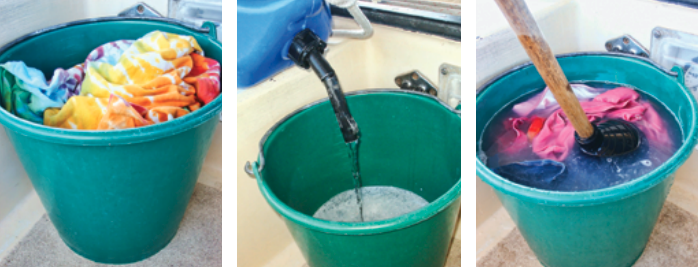
Wash and rinse
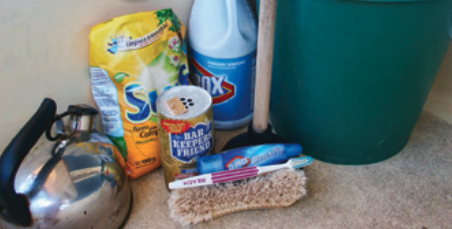
I start by filling our 3-gallon bucket with dry clothes. This determines a load. Seven T-shirts is an average-sized load. (The one pictured is three T-shirts, three tank tops, three pairs of shorts, and three swimsuits.)
After removing the clothes, I add water — including a teapot of boiling water if I want a hot-water wash. For a warm wash or rinse cycle in the tropics, I leave the water jugs or the bucket of soaking laundry in the sun.
Next I add detergent and bleach, if desired. A word of warning about detergent: add only enough to make the clothes feel a bit slippery. If you see suds or the water feels soapy, you have added too much and it will require more water to rinse them. Adding bleach seems to lessen the amount of detergent you need. When available, we use a powder detergent made specifically for hand washing clothes in cold water. We have only found this inCentral America, but it may be available elsewhere.
I use the plunger to stir and dissolve the detergent, then add clothes and more water until the bucket is full. Be sure not to overload the bucket with clothes — leave room for the plunger and for the clothes to be agitated in the water.
I “plunge” the clothes while making sure the load gets adequate circulation — so the shirt on the bottom doesn’t stay on the bottom, for example. The agitation and the suction of the plunger force dirt out of the clothes.
I have seen people wash clothes in a bucket using their hands instead of a plunger. Neither my back, from the bending, nor my hands, from being in soapy water for that long, would tolerate this method.
After five minutes of plunging, I inspect the clothes for remaining dirt and stains, using a laundry brush on the bigger messes (such as the boys’ shorts) and a toothbrush on more delicate fabrics. After spot cleaning them, I plunge the clothes for an additional 5 minutes.
If there is room on the line for this load, I rinse it immediately. Otherwise, I have left clothes to soak for as long as overnight.
To remove rust stains, I make a paste of Bar Keepers Friend (oxalic acid), rub it on the stain, leave it overnight, and then wash as normal.
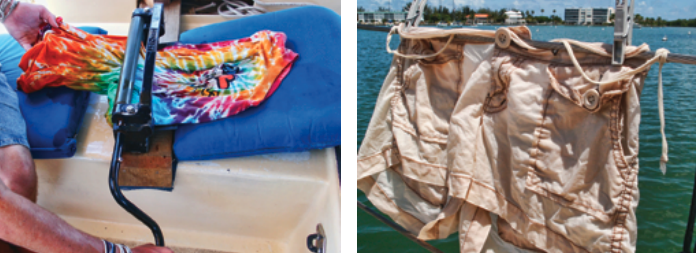
Wring, rinse, wring again
Until quite recently, our wringing method was hands-on. We wrapped the clothes around the tiller and twisted. While this did remove most of the water, it also occasionally distorted the shape of the clothes, and after a few loads it irritated an old injury in my finger.
In defiance of our “keep it simple rule,” we bought an old-fashioned hand-cranked clothes wringer. (This act of rebellion was only made possible by the empty locker we have not yet filled since the older two boys went off to college.) Not only does the wringer not stretch out clothes, it also removes much more water (and, consequently, dirt as well). Our clothes are cleaner now and require half the time to dry.
Our first method of rinsing clothes was to return them to the bucket after wringing out the wash water, fill the bucket with rinse water, and plunge again. The water was cloudy with soap, the clothes were slippery, and they never fully dried. As a result, they often mildewed in the lockers. We now rinse each piece individually with only as much water as necessary, pouring out the water and using fresh water after each one. We have found that the clothes feel cleaner and dry completely and we actually use less water this way.
A note on water conservation: we have read and heard about a clothes-washing method touted as requiring less fresh water — washing in salt water, then rinsing in fresh. Some people use a bucket, others drag their clothes behind them as they sail. The first flaw with this idea is that detergent is not as effective in salt water. Secondly, rinsing all the salt out of clothes requires more fresh water than both washing and rinsing in fresh. We strongly discourage the use of this method.
Trade-wind dry
Once the clothes have been rinsed and wrung again, we hang them to dry. After years of living in the trade winds, we have learned a few tricks for keeping clothes from blowing away.
We attach small items to our lifelines using any tie or strap available (such as those on our boys’ board shorts) as well as clothespins. Swimsuits and underwear we cow hitch around the lifeline (pull it through itself). I have sewn strings on the short edges of bath towels so we can tie them with a clove hitch in addition to using clothespins (see article in the September 2008 issue). For anything that hangs down very far (towels and shirts), I pin the front two edges together to prevent them from flipping up in the wind and possibly popping off the clothespins holding them to the lifelines. We secure shirts or shorts around the lifeline with any available buttons or snaps as added windproofing.
For drying sheets or more laundry than will fit on the lifelines, we tie a line from the mast to the cutter stay at eye level and use it as an additional clothesline. We have seen boaters string a similar line athwartships from shroud to shroud. At anchor, this gives the clothes the full power of the wind head on. Beware, though: if it is very windy, lots of clothes forward of the mast will cause the boat to yaw at anchor. When lying beam to the wind because of current or gusts, this added windage may even cause you to drag anchor, as we can attest.
Inclement weather or overzealous washing late in the afternoon occasionally leaves me with clothes that are not dry by sunset. I do not leave laundry on the line overnight: it gets wetter with the dew, it’s noisy, it adds windage, and makes dealing with anchors during a midnight squall much more difficult. After one smelly incident, however, I no longer simply make a pile of damp clothes; they will sour overnight. Instead, I hang them under the awning or in the cabin below, draped or hanging anywhere that allows them to air out.
Tea and laundry
Like most of our money-saving efforts, bucket washing laundry is time-consuming. We choose a sunny, dry, breezy day when we would normally be lounging in the cockpit anyway. Over a cup of tea, while enjoying the scenery and each other’s company, we plunge, wring, and hang. As our reward, our clothes are cleaner, smell better, and do not wear out as quickly as they would if they were subjected to washing machines and dryers. Best of all, we can do laundry wherever we may be without ever leaving home.
Connie McBride posts her news and views on her website, www.simplysailingonline.com.
Thank you to Sailrite Enterprises, Inc., for providing free access to back issues of Good Old Boat through intellectual property rights. Sailrite.com