Biodiesel fuel is the chief suspect
Issue 71 : Mar/Apr 2010
After a six-year trial, discussed at some length in the July 2005 issue of Good Old Boat, I have decided to suspend using biodiesel blends in our 1996-vintage Yanmar 3GM30F diesel engine. Twice during this time, I have experienced significant fuel contamination in the engine oil due to leakage in the mechanical fuel pump (sometimes called the lift pump). The pump I just replaced had been in use for only two years and 370 engine hours.
My initial diagnosis of fuel contamination in the oil, back in 2007, was based on three factors:
- A steadily increasing level of engine oil on the dipstick (the engine appeared to be “making oil”)
- A drop in oil pressure, especially at idle with a warm engine
- Laboratory analysis of the engine oil
For historical reasons, I use Blackstone Laboratories in Fort Wayne, Indiana. It measured a fuel concentration of 5.5 percent in the oil sample I took just before changing the lift pump for the first time. I did not submit an oil sample before changing the lift pump for the second time since I was confident the lab would again report a significant level of fuel in the oil. I will send in an oil sample after about 30 engine hours with the new lift pump, just to be sure that the fuel contamination problem has been solved now that I am using straight fossil diesel.
When I first experienced fuel contamination in the engine, I discussed the problem with the local Yanmar dealer, Shoreline Marine, in Port Townsend, Washington. He confirmed my suspicion that the most likely source of fuel contamination was the lift pump. He went on to say that the other two possible sources were the high-pressure injection pump or leakage past the piston rings. The latter was rare and usually associated with tired engines having noticeable blow-by or a bad injector. Fuel leakage from the high-pressure pump was also relatively rare. Since the lift pump was the most likely source, and was also the cheapest fix by far, it was a good starting point. Changing the lift pump did fix the problem — at least for a couple of years.
In July 2009, while cruising in remote regions along the coast of British Columbia, my wife and I again saw signs of fuel contamination in the engine oil. We managed the problem by replacing two quarts of oil every 30 hours or so until getting safely home. This kept the contamination problem sufficiently in check to avoid damage to the engine. I again suspected the lift pump but was puzzled as to why it would be leaking after so little usage. When I replaced the lift pump for the first time, I knew that the original pump would have been designed before bio-fuels were even a consideration. However, I had hoped that by 2007, Yanmar would have reviewed the design and construction of any replacement components to assure compatibility with biodiesel blends.
Tracing the cause
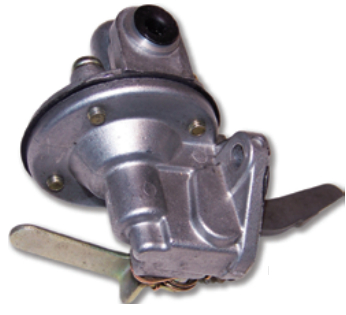
Once back in our home slip, I removed the suspect lift pump and tested it using a method described in my Seloc Marine Yanmar manual (see “Pump test,” below). The test confirmed leakage past the diaphragm. I asked the Yanmar dealer about the expected life for the lift pump on a Yanmar 3GM30. He confirmed that these pumps normally have a long service life and that my experience was very unusual. The only exceptional factor that he or I could identify was my use of biodiesel blends.
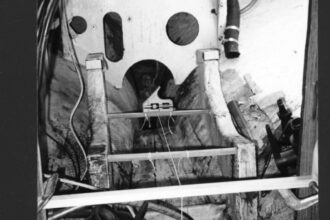
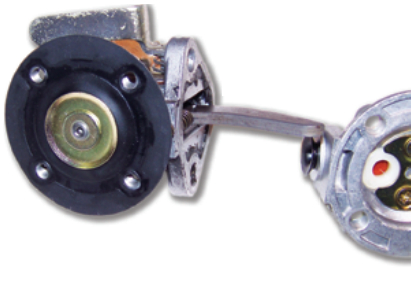
After replacing the lift pump, I disassembled the old one. These pumps would look familiar to anyone who worked on automobile engines in their formative years.
The diaphragm on the failed pump looked normal to my eyes. However, there is a metal disk visible at the center of the diaphragm where a connection is made to a spring and then to the activating lever on the backside of the diaphragm. This connection must be well sealed, mechanically or adhesively, to prevent fuel from leaking past it and into the engine oil. I suspect that the leakage in the failed pump was occurring at this point, but have no way to confirm it. My concern about biodiesel causing or accelerating leakage past this seal is circumstantial and rests on the fact that biodiesel is a stronger solvent than fossil diesel.
How it all began
I began using biodiesel blends, usually 20- to 30-percent biodiesel, for reasons I’ll discuss shortly. (See also my article on biodiesel fuels in the July 2005 issue.) By conventional usage, a B20 blend means 20-percent biodiesel with the balance being #2 diesel. Early on, B20 seems to have become the most widely used blend.
It is not convenient for boaters on the Olympic Peninsula, where we sail, to use biodiesel. No nearby fuel docks sell biodiesel or biodiesel blends. (Unlike some states, Washington has no mandate for adding small amounts of biodiesel to the existing sources of diesel.) Initially, I purchased straight biodiesel in 5-gallon jugs from a chandlery in the area and added enough to the fuel tank to make a 20- to 30-percent blend. Later, I used the B99 pump at a heating-oil company. Before starting out on an extended cruise, I would have a full tank with at least a 30-percent blend. After a few refills en route with conventional diesel, this would dilute down to just a few percent biodiesel.
My primary short-term motivation was to reduce or eliminate the characteristic diesel-engine exhaust odor because some members of my family are very sensitive to petrochemical fumes. Using blends with at least 20-percent biodiesel did have the desired effect. We also saw a dramatic drop in the sooty mustache on the transom, which was a visible confirmation of the reduction in particulate emissions associated with using biodiesel blends.
The longer-term benefits I anticipated included a cleaner fuel system and reduced engine wear. A cleaner fuel system is expected because biodiesel will dissolve away the deposits left by fossil diesel on the walls of fuel tanks and fuel lines. This will initially cause reduced fuel filter life when switching over to biodiesel as old deposits are cleared out. I did initially experience shorter filter life after switching to biodiesel blends. I also experienced one fuel-line failure after the switch. However, when I subsequently had to remove the fuel tank to clean its compartment (see my article in the November 2009 issue, “Aftermath of a fire on board”), I found the interior of the fuel tank to be pristine — completely free of any deposits.
The lubricity factor
Most recreational sailors will never be able to conclusively say whether or not our engines have suffered from the known loss of diesel-fuel lubricity that occurred with the change to low-sulfur fuels or whether or not we correspondingly benefited from the restored fuel lubricity that comes with biodiesel use. Because of my concern about fuel lubricity now that I have stopped using biodiesel, I have started using a fuel additive sold by Stanadyne. I have confidence in this product because Stanadyne is a major supplier of the high-pressure injection pumps used on large diesel engines in trucks and buses. It was among the first companies to notice the increased field-failure rates for these components after the switch to low-sulfur fuel. This fuel additive was part of its effort to prevent premature failure of its products when used with low-sulfur diesel.
Biodiesel and cabin heaters
I want to close with a cautionary note about the use of biodiesel blends in small marine heaters or furnaces. While biodiesel does burn cleanly and well in diesel engines and large fuel-oil furnaces (such as home or commercial heating furnaces), it does not work well in all the different types of diesel heaters commonly used aboard boats. Stephen Hulsizer wrote in the November 2005 issue “Mail buoy” about his experience using biodiesel in a Faball/Balmar/Sigmar bulkhead-mounted heater. (Note: An active conversation among readers about biodiesel continued in the magazine and newsletter until August 2006. –Eds.) In this style of heater, liquid fuel is pumped into the bottom of a pot-like combustion chamber where it evaporates and mixes with combustion air. Stephen found that, after switching to B20, his heater “would fill with hard carbon deposits after only one night of use . . .”
Shortly after reading his letter, I had to service our boat’s Wallas 30D furnace. Surrounding the fuel-injection tube I found a hard carbon cake that had nearly shut off the fuel supply. The combustion process in my Wallas 30D is rather similar to pot-burner heaters such as Stephen’s Sigmar in that liquid fuel is pumped onto a woven ceramic-fiber mat where it evaporates before being mixed with fan-forced combustion air. Our Wallas is fed from a day tank. After cleaning the furnace, I switched over to filling its day tank with kerosene or #2 diesel.
Subsequent discussions with Espar and Webasto dealers raised concerns about using biodiesel blends in these heaters. I understood from the Webasto dealer that, in their products, liquid fuel is pumped into a mesh to promote rapid evaporation before subsequent mixing with combustion air. He noted that using biodiesel blends caused rapid carbon buildup on this mesh and on a nearby ignition detector.
Ben Hempstead (“Mail buoy,” July 2006) reported a good experience using B20 in his Espar Hydronic D10W. It had performed well for more than 300 hours over a four-year period. He also noted that this diesel heater uses a “spray-injection system.”
My view on burning biodiesel is that complete combustion occurs when it is finely atomized, as by the injectors in a diesel engine, or delivered in the somewhat coarser spray patterns in large furnaces. However, at the other end of the spectrum, burning the vapor over a pool of liquid tends to generate substantial carbon deposits. Pot burners (such as Sigmar and Dickinson), my Wallas 30D, and Webasto cabin heaters operate at this end of the spectrum.
The Espar heaters may inject fuel in sufficiently fine droplet sizes to be compatible with biodiesel. However, this may vary with the size of the burner and the power level at which it is operating, that is to say, with the rate at which fuel is being injected. The smaller Espar Airtronic models might not be as tolerant of biodiesel as Ben Hempstead’s Hydronic D10W.
I still find the benefits of using a biodiesel blend in our diesel engine attractive and would like to be able to continue its use. But, before doing so, I would have to be confident I had found a long-term fix for the fuel-oil contamination problem.
Durkee Richards learned to sail in the Sea Scouts on the Columbia River. His first date with Mary Jeanne, his sail-mate, was on a 15-foot 6-inch Snipe. They spent nearly 40 years in the Midwest where they cruised Lake Superior on chartered boats until they bought their J/32, Sirius, in 1999. After Durkee retired, they moved to the Olympic Peninsula and are now exploring the waters of Puget Sound and British Columbia.
Thank you to Sailrite Enterprises, Inc., for providing free access to back issues of Good Old Boat through intellectual property rights. Sailrite.com