A designer compares four classic coastal cruisers
Issue 43 : Jul/Aug 2005
The Bristol 29.9 and three similar yachts examined here were designed during the 1970s as coastal cruisers and club racers. I feel confident in saying that any one of the four will have given its owners much enjoyment over the years and, having raced against Catalina 30s, I will add that the serious racers amongst the skippers will have gained their share of silver.
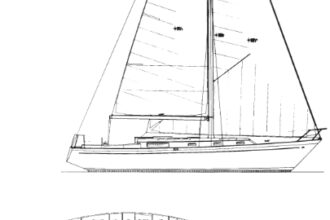
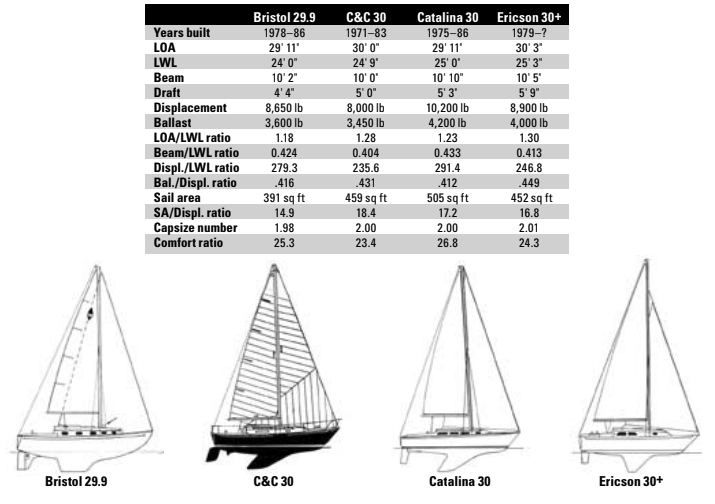
The Bristol 29.9, with the shoalest draft and the lowest sail area/displacement ratio of the four, will prove to be the most modest of these yachts when it comes to around-the-buoy racing performance. However, it would definitely get my nod for coastal cruising and, in particular, heavy weather sailing, due to the hefty skeg-hung rudder and the strong keel-stepped mast. These are both features that I like to see on yachts intended primarily for family cruising.
The designer, Halsey Herreshoff, is very familiar with the lobster pot-choked waters of his native New England and, wisely, incorporated a propeller aperture into the generous skeg. This will eliminate a lot of the problems and the hard four-letter words that often come as the result of tangling a spade rudder or an exposed propeller in a difficult-to-see pot line. A 44-foot sloop of my design was doing very well in its first race in Maine waters many years ago, until it picked up a lobster pot and dragged it for several miles. The owner was very unhappy, but I can just imagine the blue streak that the poor lobsterman let rip when he found his pot and its contents missing.
Looking at the figures, we can see that these boats have many similarities. All sport moderate displacement with excellent ballast ratios and generous beam. The result should be good initial stability and all-around performance. The Bristol’s modest sail area puts it out of the running as a hot club racer, while the unusually deep draft of the Ericson 30+ indicates that Bruce King intended it to be a very serious contender to windward. I must add that the 30+ did have a 4-foot draft option for those who preferred gunkholing to racing, and it would be interesting to know the percentage of buyers who preferred the shoal model over the deep.
High capsize numbers
All of these yachts have a rather high capsize screening number as a result of their beam/displacement combination. That would tend to indicate that they are not the best choice for ocean passagemaking and would be more at home in coastal waters. Having said this, I must add that hundreds of much less seaworthy yachts, from open sailboats to dugout canoes, have made long bluewater voyages, and many of these have survived storms, even hurricanes, that would make you think twice before going to sea again. Still, the main purpose of these four yachts is to provide comfortable family cruising and occasional racing in coastal waters. This they offer in spades.
Thank you to Sailrite Enterprises, Inc., for providing free access to back issues of Good Old Boat through intellectual property rights. Sailrite.com