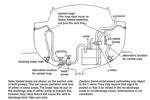
Plumbing parts ensure it’s waterproof
Issue 98: Sept/Oct 2014
When I unpacked my bright shiny new anchor windlass 30 years ago, I was impressed by the very capable-looking foot switch. Because I couldn’t figure out exactly where to bore the hole in my foredeck to install it, I rigged a temporary switch-on-a-wire hoping the optimum location would eventually reveal itself. When we started using the windlass, it became obvious that the pendant switch was much better than the deck switch anyway because it allowed the operator to move freely about the foredeck while dealing with anchor-raising chores.
This worked well for some years until I came across a fine-looking commercially made pendant switch at a marine flea market and installed it on the boat. It lasted a few months before its innards corroded. The second one lasted just about as long.
“If you want it done right, do it yourself!” With my mother’s words echoing in my noggin, I visited the plumbing department of my local hardware store (I wanted it waterproof, remember) and cobbled up my own switch that has worked perfectly for 15 years (so far).
I made a second pendant switch as a spare. I’m a true believer in spares! With 15 years on the first one, it was time to share my good fortune with others.
My plan is to install my new spare in parallel with the original one we use all the time (I use lanolin to protect the connectors where they mate up). I stow it in the forepeak ready for instant use when the old one fails.

The parts and where they came from
From a hardware store:
- 3 PVC fittings and PVC glue
- Teflon tape
From an electrical supply store:
- 10-foot length of 3/12 (3-conductor/12 gauge) SJ (sun- and water-resistant) utility cord
- “Strain relief” (aka packing gland to sailors)
- Copper-based anti-corrosion goop
Ordered online:
- Switch, an SPDT (single-pole double-throw) momentary both ways with center off
- Rubber boot for the switch
- Shrink tubing
Norm Johnson and his mate, Jan Smith, live aboard Bandersnatch a 63-foot motorsailer without masts that Norm built in his “spare time.” After Norm retired from the Merchant Marine in 1996, he and Jan began following the seasons up and down the East Coast from Key West to Halifax. They dock only to take on fuel and water. They make all their electricity aboard with 11 PV panels, two KISS wind generators, and an 8 KW genset to power all their computers, satellite TV, Sundanzer refrigerator and freezer, and their workshops — Jan is a master bench jeweler.
Thank you to Sailrite Enterprises, Inc., for providing free access to back issues of Good Old Boat through intellectual property rights. Sailrite.com