Repair-centered missions bear unexpected fruit
Issue 111: Nov/Dec 2016
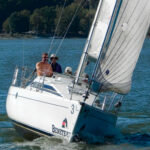
While cruising down the U.S. Pacific coast we have had hardware break, alternators seize, water pumps give out, and all manner of rattles and grumblings from our dear old lady, MonArk. Yet along with these challenges, we’ve found ourselves having some of the most rewarding travel experiences of our lives. I like to think it’s because traveling with our 1979 Dufour 35 gives us a purpose.
While some travelers are gastronomists and others are anthropologists or history buffs, we are boat fixers. Instead of visiting Alcatraz, Hearst Castle, and Disneyland, we spent our time (and money) in hardware stores and the shops of welders and machinists. In our photos, instead of hugging Mickey, I’m cradling our alternator so we can remember how to rewire it. Yet our broken boat makes the best traveling companion because she constantly causes us to step out of our comfort zone, learn new things, meet new people, and take part in the communities we visit.
Consider our experience in Morro Bay, California. There we bought a 1964 Singer sewing machine and, upon getting it back to the boat, discovered it did not work. I couldn’t make saloon cushions without a sewing machine, so we stuffed the 20-pound machine into a backpack and embarked on a two-hour bus trip inland to Paso Robles, where rumor had it there was a sewing machine expert who could help us.
The #9 bus took us to within walking distance of the repair shop, a lovely garage workspace in a quaint neighborhood. Paul deftly pulled our sewing machine apart and put it back together, oiled and running beautifully. He then gave us a ride back to the bus stop. During that short ride we learned that Paul is also an ordained Buddhist and has married more than 500 people.
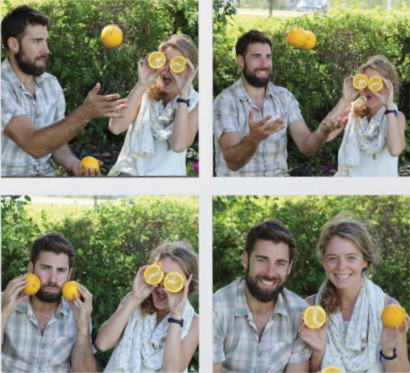
On the way home, we stopped in San Luis Obispo to look for a roll of camp foam. Walking along the streets in the late afternoon sun, I noticed splashes of orange amidst the city greenery. “Oranges!” I exclaimed. “Oranges and lemons!”
This was a big deal. We don’t see tropical fruit trees growing beside the road in Canada. When no one was looking, I plucked an orange. We kept walking, delightedly pilfering from the city’s shrubbery.
When we came to a towering avocado tree on a busy downtown sidewalk, in front of a Lululemon store, we succumbed to a sort of horticultural hysteria and began hucking our possessions upward in a bid to knock down a few fruit. I wondered what the Lululemon customers must have thought of us, two Canadians with a sewing machine throwing a roll of camp foam at a defenseless avocado tree. Not our most enlightened moment.
After getting spattered with green mush from a couple of avocado bombs, we admitted defeat and caught the last bus home.
We reflected that we would not have had this day if I hadn’t needed a sewing machine to replace our mildewed saloon cushions. It seems our boat is always nudging us past the shiny veneer of “Top 10” restaurants and “Must-see” museums and into the real heart of a place, a place where we are welcomed as participants in the hum of everyday activity, not just curious outsiders looking in. It’s a liberating way to travel and we find ourselves growing more curious, playful, and uninhibited by the day, thanks to our good old (sometimes broken) boat.
Fiona McGlynn started sailing dinghies at age 6 in British Columbia’s Deep Cove, North Vancouver, where she spent most of her time bobbing in the water because she enjoyed capsize drills more than sailing itself. In 2015, Fiona and her partner, Robin Urquhart, left Vancouver in their Dufour 35, MonArk, and plan to sail to the South Pacific. Read about their (mis)adventures and “boatsteading” tips at www.happymonarch.com.
Thank you to Sailrite Enterprises, Inc., for providing free access to back issues of Good Old Boat through intellectual property rights. Sailrite.com