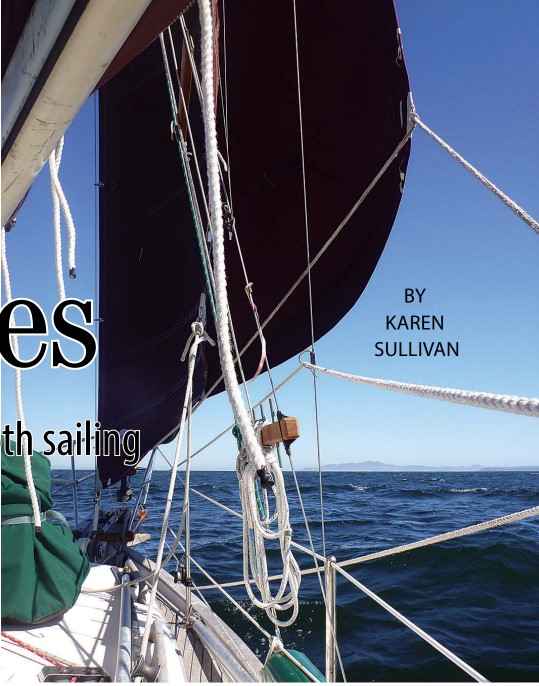
When solo, planning is the key to smooth sailing
Issue 100: Jan/Feb 2015
This is the third in Karen Sullivan’s series of articles about prepping a boat and sailor for singlehanding. In the March and May 2015 issues she’ll describe anchoring techniques.
“To reef a course . . . you must clew it up as for furling . . . except that the clews are not hauled chock up. Lay out on the yard and haul out the earings, and knot the points as for the first reef of a topsail, seeing them clear of the topsail sheets . . .”
That is just the beginning of reefing instructions in The Seaman’s Friend, Richard Henry Dana Jr.’s 1879 treatise on practical seamanship. We have to be thankful that sails and rigs have evolved since those days. This article will focus on sail changes for Marconi-rigged boats of a size that lend themselves to being sailed solo.
The most important piece of advice I can give a solo sailor is to visualize, step-by-step, what you plan to do before you begin to do it. If you can clearly see the tasks lined up ahead, you can anticipate what may happen when you do them in the conditions you face at the time. The second most important thing is to figure out how to best rig your boat for safety, and the third is to rig it so you can conserve energy when sailing it. By keeping exhaustion at bay, you lessen the risk of making poor decisions.
Extra lifelines
Lin and Larry Pardey have for years advocated chest-high lifelines, and they work. They don’t have to be fancy, just strong. A stainless-steel D-ring lashed to a shroud at chest level can guide the lifeline from a solid attachment point outside the cockpit forward to the bow pulpit without interfering with sail trim. When you have to go forward, it’s nice to have the extra security of a line you can easily reach and attach your safety harness to without having to bend down or trip over a jackline at your feet.
Headsail management
Of all the places to be when it’s rough, a bucking wet foredeck is my least favorite. What can be done to minimize time spent up there wrestling headsails?
Strong, well-designed roller-furling systems are available today, along with specially made genoa jibs with padded luffs that allow them to self-stow and still set properly when partially rolled up. Before they came on the scene, there were hanked-on sails, and many people still prefer them. But hanks require trips to the foredeck, unless you’ve customized your rig.
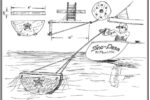
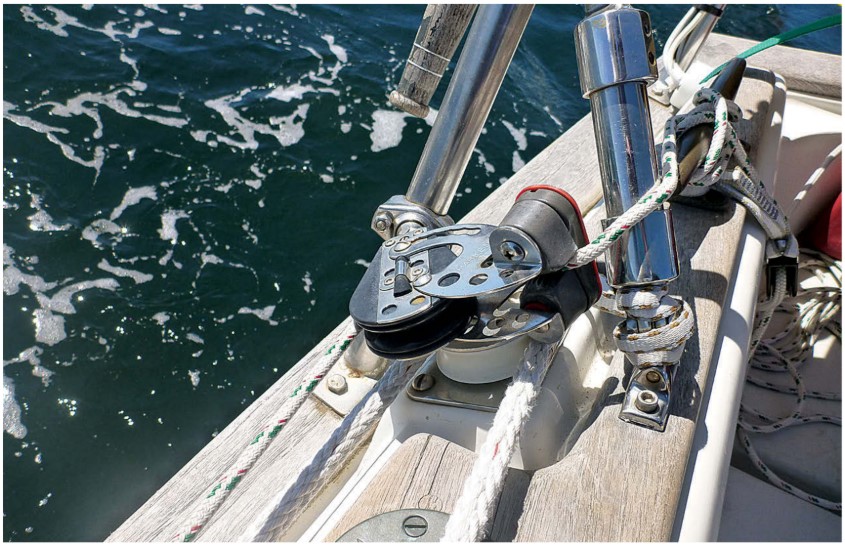
A downhaul is a small-diameter line that’s attached to the head of a hanked-on sail and leads down the stay to a block near the tack and then aft. With a long bowsprit, a downhaul is essential. To lower the headsail after releasing the halyard, just pull in the downhaul from the more secure place you’ve led it to, such as the sidedeck near the cockpit. The beauty of a downhaul is that it eliminates the risk of losing your balance while reaching for the sail on the foredeck. It also secures the sail’s head and its halyard temporarily, so by tightening the sheet you have control over all three corners of the sail. This gets the sail out of the way for, say, anchoring or docking, by stretching the sail near the lifeline and keeping the clew from washing overboard. If you’ve attached some sail ties there, you can secure the sail and it’ll be ready the next time you need it.
With a roller-furling genoa, it’s important to be able to deploy, adjust, or furl it with ease. Fair leads and well-located fittings repay handsomely in reduced effort.
Mast-track maintenance
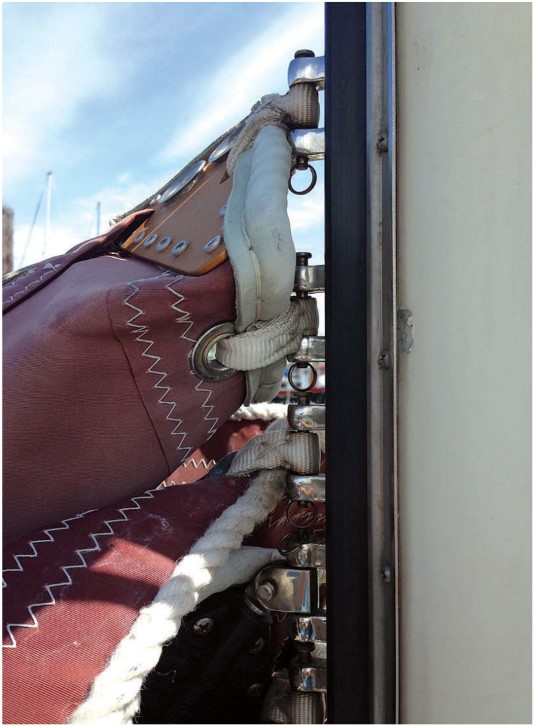
Whether your mainsail is fitted with slugs in a mast groove or metal slides that go on an external track, the ability to raise or lower it easily in a seaway is a safety issue. You should not have to turn the boat directly into the wind every time you need to raise, reef, or lower the main. For example, on a beam reach you should be able to ease the mainsheet to take just enough wind pressure off the sail for you to make your adjustments. This reduces flogging and pitching.
If your mainsail’s slugs or slides are subject to friction or tend to jam, examine them for defects and wear, and clean and lubricate the track. Consider installing one of the new mast-track systems that make raising and lowering the main much easier.
Heave-to for a breather
A good tactic for a singlehander who needs to make decisions or sail changes is to heave-to, which will stop the boat and reduce the motion while you get things sorted out. Though every boat seems to heave-to a little differently, it’s done by putting the boat into a tack and leaving the headsail backwinded and the helm hard over. Once you learn how your boat heaves-to, it’s amazing how much quieter things get when you do it. Heaving-to gives you time to think.
Once when I was out sailing solo in Resurrection Bay in Seward, Alaska, my engine’s raw-water impeller failed just as I was getting ready to come in to harbor on a busy summer day. I hove-to and thought about what to do, then sailed downwind to the dock through crowds of fishing and tour boats. I was delighted at how precisely I could control my boat speed by rolling the genoa in and out like a window shade. I’m now a fan of roller furling, but with the caveat that the system must be high quality and the headsail specifically designed for reefing.
Main boom preventer
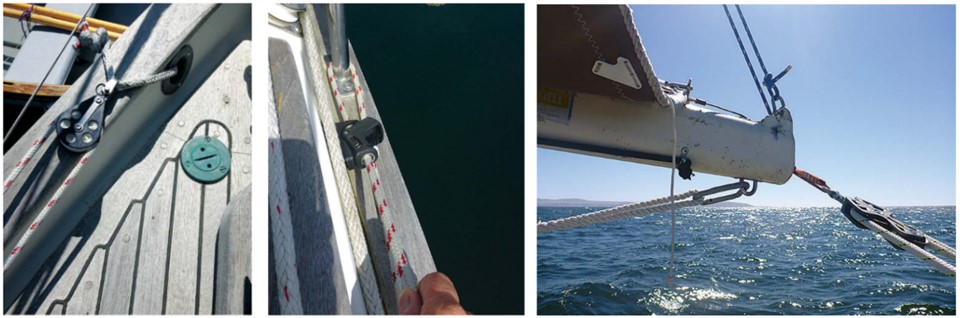
A preventer is essential when running downwind in a seaway, as it keeps the main boom from swinging wildly around. You need one on each side, with an attachment point on the boom that you can reach from the cockpit when you pull it amidships.
Lead your preventers forward outside the shrouds, through a hawse or turning block at the bow, then aft along the sidedeck to where you can control them from the cockpit. Inexpensive climbing-grade carabiners work well for clipping a preventer to the main boom, but they must be kept lubricated if they’re not stainless steel. In big seas, preventers will not only prevent accidental jibes but will also keep the boom under control while you trim the mainsail.
Tricks for all sailors
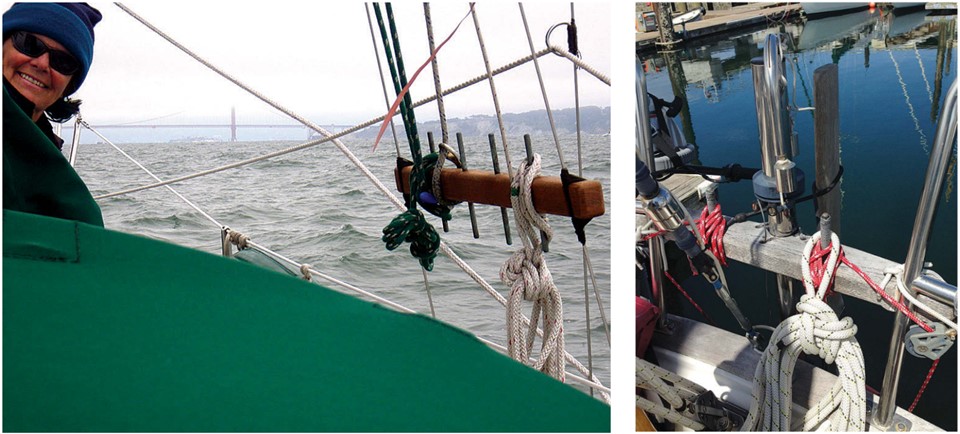
Assign a cleat or attachment point for each halyard and running rigging line and try to avoid having multiple lines on one cleat. A nice way to accomplish this is with a pinrail lashed between the lower shrouds and belaying pins made of relatively inexpensive bronze rod. Pinrails have other uses: they take halyards away from the mast, where they slap when it’s windy, and provide a place to lean against for balance on the sidedeck. To prevent jams and lost halyard coils aloft when lowering sails, secure the bitter ends of each of your halyards to their assigned belaying pins.
Color-coded halyards and reefing lines are helpful at any time, but especially at night, and a good headlamp frees both hands in the dark.
Contrasting-colored whippings that mark correct settings on halyards and reefing lines can save a lot of guesswork.
Spare halyards, pre-rigged and ready to go, mean you can avoid a trip up the mast until you reach harbor.
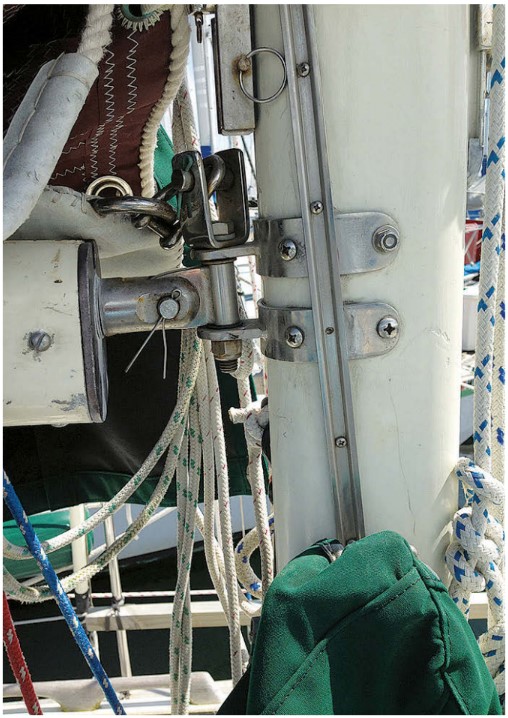
If you go offshore, it’s wise to have a separate track on the mast for your storm trysail. You can then store the trysail on its own track, bagged and ready to use at the base of the mast. If you have to remove the mainsail from its track to rig the trysail, there’s a chance you might not use it.
Visualizing every step you’ll take in advance of a sail change is the best insurance against surprises. Once your boat is set up for efficient sailing, mental preparation and an attitude of safety first are the most important aspects of making solo sail changes.
Karen Sullivan sailed with her partner, Jim Heumann, from Port Townsend, Washington, to New Zealand in their Dana 24 from 2011 to 2013. Before that she cruised alone in Alaska’s Prince William Sound and soloed down the Inside Passage in her previous Dana. A long time ago she sailed between Maine and the Caribbean in various boats. She is at work on a book about their Pacific crossing. Read more at: http://karenandjimsexcellentadventure.blogspot.com.
Thank you to Sailrite Enterprises, Inc., for providing free access to back issues of Good Old Boat through intellectual property rights. Sailrite.com