How a gutsy sailor founded a well-known magazine
Issue 45 : Nov/Dec 2005
“The safe enjoyment of cruising under sail.” That phrase, which concluded the first editorial in the first issue of Cruising World, became the magazine’s motto when publisher and editor Murray Davis founded the publication 30 years ago. From the beginning, the magazine emphasized the joy of sailing — not sailing that focused on competition and speed, but a more laidback kind, be it a short trip around the next headland or a long voyage on blue water. One might compare Murray’s view of cruising to today’s interest in “slow food,” food that’s cooked and savored unhurriedly, unlike take-out fare bought on the run. As Murray wrote in his semi-British, somewhat formal subscription advertisement during Cruising World’s first year: “The world is moving too fast for many people. They want to stop for a bit so that they can stand off and take a breather. Cruising offers a better opportunity to do that than most leisure activities.”
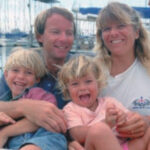
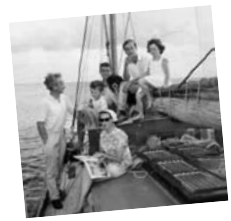
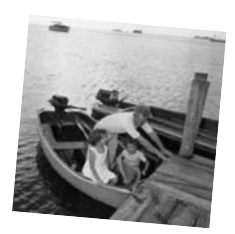
Murray’s words were founded on personal experience. In 1957, he and his wife, Barbara, traversed western Europe’s inland waterways to the Mediterranean, then crossed the Atlantic to Trinidad. A decade later, he again sailed across the Atlantic on his 46-foot, bluff-bowed wooden yawl, Klang II, and then jointly with Barbara, daughter, Kate, and son, Paul, sailed the former working boat from the Caribbean to Newport, Rhode Island.
Not to the manor born
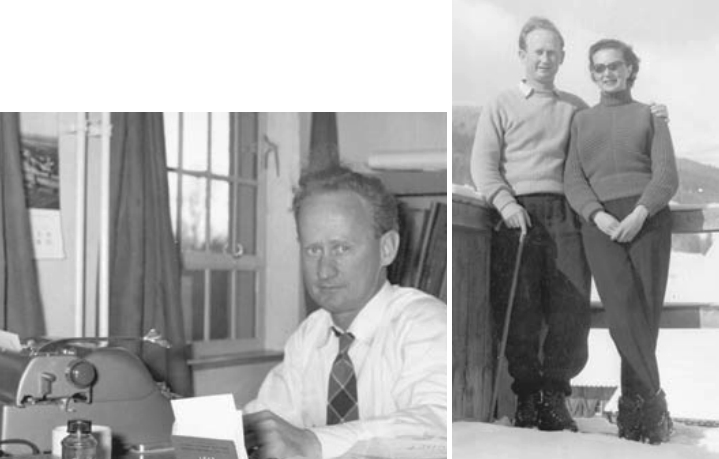
Cruising under sail was an acquired taste for Murray: he grew up in inland Australia, 180 miles from Melbourne, in what he calls a “dry, pastoral region.” Murray’s father was a baker and his mom a “do-gooder.” Murray recalls rows of trees she’d planted in the town of Berrigan, where he was born in 1928. In his teens, Murray went to the Marconi School of Wireless Communications and qualified as a commercial radio operator when he learned to transmit Morse at 20 words per minute.
He was just a bit too young to serve in World War II. “I lucked out, I guess,” he told me in his mild voice. “Although I didn’t think so at the time. I’d wanted to be a fighter pilot and, while I learned to fly, I never got my ticket.” Instead, at age 18, Murray went to sea. The war had just ended and ship’s radio officers were scarce. Murray had his pick of jobs, and between 1948 and 1953 he traveled the world, sailing on Australian, British, American, and French ships to South America, Hong Kong, the East Indies, Calcutta, Alexandria, Odessa, and Montreal. One day, however, he visited friends from radio school who had moved to London. Looking for a career change, he enrolled in a two-year journalism program at Regent Street Polytechnic, a first step that would ultimately lead him to become a magazine publisher. “I wanted to write,” says Murray, “and they taught me to be a reporter.”
After earning his diploma and gaining writing experience at the Molesey and Ditton News near London, he used his radio operator’s license to tramp back to Australia and became the boating editor for the Melbourne Age, which Murray calls a “substantial newspaper.” Although his nautical experience had been on ships rather than yachts, Murray was interested in boating and spent time “hanging around boatyards.”
Information officer
But traveling still obsessed him and he returned to Europe — Germany this time — when a former Polytechnic writing instructor hired him to become the information officer with the British, Dutch, and Belgian Units of the Second Allied Tactical Air Force. Although a civilian, he held the rank of squadron leader, wrote features, and did public relations “selling the NATO concept to Europeans,” which allowed him to wander from Norway to the Med. He also continued contributing articles to Australian newspapers.
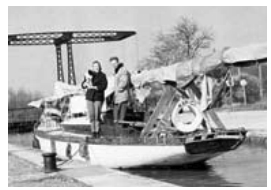
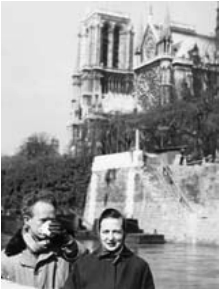
Along the way, he met Barbara Muriel Keefe, a formidable woman who’d served in the British military. She was an expert sailor and taught Murray the skill on a lake near Cologne. Murray took to both Barbara and to sailing, and in 1957 the couple married and honeymooned on a converted 8-Meter yacht, cruising from Copenhagen through the Baltic, down the European inland waterway system to the Mediterranean, and across the Atlantic to Trinidad. The Davises also spent time at the Sorbonne, where Murray learned to speak French and developed a strong affection for Paris. To support them, Murray freelanced for newspapers and magazines.
In 1960, the pair moved to Melbourne, where Murray resumed his work with the Age, writing a weekly boating feature and editing the editorial page. He and Barbara became parents to Kate and Paul. Murray also raced and served as crew during the demanding Sydney-Hobart Race. He enjoyed the sport and had no fears of the turbulent water. “Having sailed in the merchant marine all those years, the sea never frightened me,” he says, smiling. He also wrote a definitive tome entitled Australian Ocean Racing, published simultaneously in Australia, Britain, and the United States.
Time for change
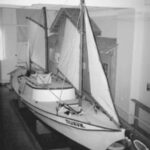
But writing about boating and a sporadic race wasn’t nearly as much fun as being afloat. Barbara, who had an adventurous soul, agreed it was time for a change. So, in 1966, the couple packed up the kids and went to England to buy a 42-year-old Falmouth quay punt, Klang II, named after a Malaysian town by a nostalgic British colonel. The boat had a pedigree: she had taken part in the evacuation of the Allied troops from Dunkirk early in World War II. “Klang was old,” says Murray, “but she was in reasonable shape. We planned to cross the Atlantic with the family.” But a late-season storm in the Bay of Biscay was sufficient to make him afraid for his children, so Murray found three Aussie mates to brave the ocean. Barbara, Kate, and Paul joined him in the Caribbean, and the family cruised up through the Intracoastal Waterway to Newport in time for the 1967 America’s Cup.
Murray covered the race, particularly Australia’s entry, Dame Pattie, for several Australian papers. He sold freelance stories to several U.S. publications as well: Soundings and National Fisherman. “I wrote all the time,” explains Murray. “Whatever I could sell. I even wrote about Trinidad politics and contributed to The New York Times, the London Sunday Express, and Yachting Monthly.” He then took a job as Boating’s associate editor and, with his family, remained in Newport, one of the world’s most fervent sailing towns.
In 1970, Murray joined a newly founded magazine, Sail, as its first editor. He worked for publisher Bernard Goldhirsh who, according to Murray, “was a good boss because he left me alone.” He recalls that starting the magazine was “a slow grind. We competed with Yachting, which was well established and covered both power and sail. We were carving a niche solely for sail. Bernie didn’t want to spend a lot of money, so we went to boat shows to become known. We fought to build circulation.”
Brought prices down
Fortunately, interest in sailing was exploding. The introduction of resin-impregnated fiberglass allowed the production-line fabrication of yachts, bringing down prices sufficiently to permit average people to buy a boat. No longer was sailing the “other sport of kings.” In June 1973, Time magazine ran a lifestyle story entitled “Cruising: The Good Life Afl oat,” covering the relatively new phenomenon of vagabond sailors cruising their Westsail double-enders around the world. Cruising under sail was becoming a cultural movement.
Murray notes that, during his three years of editing Sail, only 10 percent of the magazine’s readers ever raced, but most of the magazine’s ads focused on racers in bragging mode. Few sailors cared about racing or IOR (International Offshore Rule) boats. They preferred spending their time on the water in a less aggressive manner. Racing was too much like work. Later, Murray wrote that “cruising under sail is something that takes us out of ourselves and away from everyday cares.” How this discovery led to his departure from Sail and the founding of a new, competing magazine is somewhat nebulous. Was it a readers’ survey or Murray’s intuition that revealed sailors’ interest in cruising rather than racing? When asked this question, Murray remains his enigmatic self, saying only that commuting to Boston [where Sail was published] from Newport was wearying: “Bernie was doing other things, like starting Inc. magazine. We never were friends but respected each other’s abilities.”
Past and present Cruising World staff tell various tales about the schism, but they resemble the stories of containers floating around the world’s oceans. Are there dozens of buoyant steel boxes lying in wait to destroy sailboats, or have one or two container sightings grown into legions through retelling? Veteran sailor Hal Roth’s yarn of the founding of Cruising World reveals a common theme. “Murray asked Goldhirsh for a piece of the action and was refused,” Hal told me with great confidence. “Murray said he’d quit and start his own magazine. Sail said they’d eat him alive.” So was Bernie uninterested in expanding? Did Murray want to fly on his own? Did Murray abscond with Sail’s mailing list? Everyone has an opinion, but most will never know for sure.
First issue
What is certain is that in early 1974, Murray and Barbara borrowed $20,000 to pay the printer and put together the first Cruising World issue in the attic of their Newport house. Noreen Barnhart typed the copy. The newsstand price was $1. Son Paul, a teenager at the time, remembers running all over Newport delivering complimentary copies. “Everyone kept telling me it wouldn’t work,” says Murray, his clear blue eyes laughing. “But Barb was always up for a new adventure. She played a major role in the business.” The couple attended the Annapolis Boat Show, sold some subscriptions and ads, and connected with the sailing community. It was enough for them to project an expansion to six issues in 1975. “Join the cruising majority,” said the full-page subscription ads in Cruising World in its first year of publication. A subscription cost $9.
The couple moved the publishing venture away from the attic office, down the hill to Thames Street, near the harbor. Later they bought a ramshackle, Federalist-style, three-story clapboard building down the street, No. 524. In the 1970s, the area verged on slum and had its share of drunks and disorderlies. Narrow, crinkly streets with granite cobblestone paving snaked around the building. It’s where Cruising World grew up. Today it’s a trendy, gentrified area with upscale restaurants, bookstores, and coffeehouses. (The ground floor where Cruising World was designed is now home to the Peaceable Market, “Great Food and Restaurant.”)
Murray and Barbara seldom had to recruit staff. Most of their writers/editors drifted through the front door. “My employees found me, rather than my finding them,” says Murray. “I’m essentially a shy man.” Everyone who worked with Murray — and the editors/publishers he mentored are ubiquitous — has tales about Murray’s intuitive appreciation of the sailing world.
Somewhat vague
“He could feel things, feel the market,” says George Day, who served as Cruising World’s editor for seven years and now publishes Blue Water Sailing. “Murray may have seemed somewhat vague,” adds Nim Marsh, who joined Cruising World in 1976, held numerous editorial positions, and still contributes today. “He wasn’t the warm and fuzzy type. He was into his own head, always thinking. But he was completely focused on the people who were out there sailing. People like Earl Hinz, Lin and Larry Pardey, Francis Chichester, Blondie Hasler, David Lewis, and Eric Hiscock. These were Murray’s peers.”
Herb McCormick, Cruising World’s editor today, remembers Murray in a similar manner. “He was economical with words and feelings,” says Herb. “It was what he did, not what he said, that taught us.” Herb describes the decade when Cruising World started as one full of ferment and entrepreneurism. Murray and the others who started magazines were sailors before they became business people. “These men weren’t looking for a magazine gimmick — they loved boats, people, sailing, the whole thing. But they saw a vacuum. A hole in the market. This was the time that WoodenBoat, Sail, Inc., and the first ski magazines also started. It was a passion. Now everything has been gobbled up; magazines acquire each other.”
Betsy Hitz Gooding, who started typing mailing labels for Cruising World in 1974 but later became its managing editor, reiterates that Murray changed marine writing by inviting actual cruisers to contribute. “Murray and Barbara knew about the grassroots,” she says. “It was about going sailing with the dog aboard. The stories were fresh, real, not overedited. Magazines like Yachting relied on staff writers, people behind a desk, while Murray wanted to hear from people who sailed. Their tales inspired thousands. And working with these pioneers gave me the confidence to sail around the world myself.”
Interesting people
“Yes, he was a clever editor,” adds Hal Roth. “Smart enough to surround himself with people in the sailing game, people who were truly interesting.” Publishing these sailors also affected them favorably and added to their fame. Many lived on pinched budgets so their writings helped them survive. Some of these sailors, like the Pardeys, became well-known in part after Murray began publishing them.
Nim Marsh explains that Murray continued to dream up projects to increase Cruising World’s circulation. One time he ran an “exploded view” of a 12-Meter, assuming his readers would like to know how it was constructed. He offered to put readers together with yacht brokers, either to sell their boat or find a used one. He published a double-page painting of Joshua Slocum on Spray. By the September/October 1975 issue, the magazine began selling books. Selections included Miles Smeeton’s tales, Sensible Cruising Designs by L. Francis Herreshoff, Surveying Small Craft by Ian Nicholson, and From a Bare Hull by Ferenc Maté. Murray wanted Cruising World to be a clearinghouse of information and to share that information without being preachy or authoritative.
In 1976, he sent Nim Marsh to wait on a foggy Newport dock to interview the first Observer Single Handed Transatlantic Race (OSTAR) racer to arrive from Plymouth, England. The subsequent lengthy article described that year’s race, with its 125 qualifying entries, which was won by Frenchman Eric Tabarly. The race was a difficult one: rough weather led to many withdrawals and two deaths. In the editorial of the July/August 1976 special summer issue, Murray explained his goal in supporting the race was “to improve all aspects of cruising-boat design with data collected by singlehanders racing across the Atlantic.”
Just a couple
In his view, OSTAR racers and general cruisers had short-handedness in common, as most cruising sailboats are managed by just a couple. Murray tried to influence designers to focus more on serious cruising yachts instead of racers and the so-called racer/cruiser. That’s also why, in September 1976, Hal Roth weighed in with an article entitled “Racing Rules are Stifling Cruising Yacht Design.”
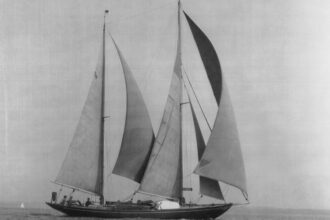
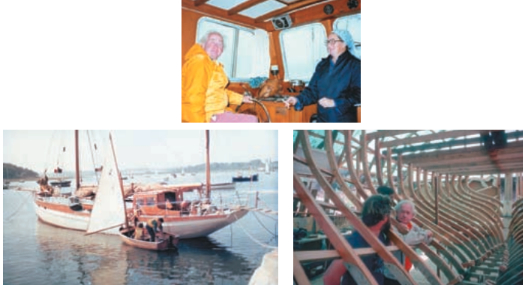
Murray was also convinced that cruisers, by nature, are interested in everything around them. So he added a section called Shoreline, covering anything that might broaden a cruiser’s perspective: an endangered bird, a colorful port captain, a new eddy, even a poem about life aboard. “The cruising world is what you want to make of it,” he wrote in his June 1975 editorial. To keep their hand in the sailing world, the Davises bought a 25-footer for the staff to use, a centerconsole Mako 23 for use as a photo boat, and a 40-foot Ushant motorsailer for themselves.
Murray and Barbara formed a tight team. While Murray pursued sailors and contributors, Barbara applied her business sense to keeping the magazine solvent. In the early years, the couple perpetually worried about paying for the next issue. The printer had to be paid before anyone else. “Fortunately,” says Murray, “we had the respect of the printer and the salesmen had empathy.”
He mentions that the readers also helped because they pre-paid their subscriptions. To keep cash flowing, Barb was the disciplinarian. Dan Spurr, another veteran sailor and marine writer who served as senior editor at Cruising World, recounts that one of Barbara’s economies was never to accept collect calls from contributors — until one day when, out and about, she herself called the office collect. The receptionist, well trained, refused to accept the charges. Barbara was furious and the receptionist was forced to find other employment.
Seasick potatoes
Barbara also was in charge of the People & Food column in the magazine. The recipes were often unique and occasionally comical: “Seasick mashed potatoes” and “Banana flambé nautique.” Betsy Hitz Gooding remembers Barbara’s booming voice and acerbic wit, while George Day mentions Barbara’s “wicked sense of humor and ability to spot talent.” Herb McCormick talks about how exciting it was to see people like Walter Cronkite, Tristan Jones, and Robin Knox-Johnston walk in the front door. All the old staff members talk about having enough time to edit the flood of unsolicited manuscripts that flowed in over the transom or to write a good story. Everyone also recalls the golden retriever, Hank, who skulked under Murray’s desk and would sortie from time to time to bite the staffers in the ankle. And everybody fondly remembers the Friday afternoon beer and wine parties when the week’s work was done. “We all loved working with Murray and Barbara,” Dan Spurr reminisces.
Cruising World grew into a smashing success within three or four years of its launch, spurring Murray to attempt other ventures. In 1980 he began publishing Trawler Cruiser Yacht, predicting that trawlers were an emerging market. George Day was its managing editor. Murray was right about trawlers being the next big thing, but he was a bit early. “We renamed it Motor Yacht after a couple of years,” says George. “But it didn’t do well. We needed more money to make it successful. Eventually Murray sold the mailing list to Jeff Hammond, who renamed the magazine Power & Motoryacht and sold it later for $42 million. Murray, although he has a poetic nature, always knew what was going on.”
Marine publisher
A book-publishing house was next. Murray hired Jim Gilbert to run Seven Seas Press and became a moderately successful marine publisher (International Marine bought the imprint in 1986). His love for Paris remanifested itself in his support of a newsletter titled Letter from Paris, written and edited by Warren Trabant. Eventually it, too, folded.
Other influential people joined Cruising World. Veteran newspaperman Dale Nouse became editor and imposed more journalistic discipline on the crew. Bill Roche became design director in 1978 and has never left.
Life changed dramatically for the Davises when Cruising World was acquired a decade after its founding. In the way that today’s large software companies buy out small, competitive, or promising entrepreneurs, big publishing houses began adding smaller, specialty magazines to their stables. In the case of Cruising World, The New York Times conglomerate came calling and paid a whopping $9 million for the magazine. “It was a jubilant day when we signed the contract,” says Murray with a giant smile. “We had two kids in school. For the first time ever, we built a house. Before, we’d always rented.” Unfortunately, the Davises didn’t live there for long.
Maybe it was the glue of the magazine that kept them together, because after its sale the couple agreed to a divorce, splitting the money evenly. Afterward, Murray went to Australia for a while. In the following years, he traveled, bought an apartment in London, and spent time in his beloved Paris. He dabbled in real estate and, after visiting Bali, developed a fascination with Southeast Asian art. He has collected Indonesian paintings and marine artifacts, as well as antiques. He also met Constance Metcalf, who ran a store specializing in antique lighting. Murray purchased items from her shop and, after a lengthy courtship, the couple married in 1996. Both of them paint as a “later-life avocation.”
Small strokes
Over the last several years, Murray has suffered several small strokes, which have impaired his mobility and, sometimes, his memory. He and Constance are remodeling a house in Newport that will allow easy wheelchair access. But he was greatly honored to be fêted at the 30-year Cruising World anniversary, which was celebrated at the 2004 Annapolis Boat Show. “It was a great evening. They mentioned my name,” he says in his usual modest way.
After traveling and making a life of her own, including running a horse farm with daughter, Kate, the years also caught up with Barbara. Her health declined significantly, and she now resides in a nursing home in Portsmouth, Rhode Island.
Though fortune took them in different directions in their later years, Murray and Barbara Davis each share proudly in the legacy that is Cruising World. The builders, designers, and wanderlust sailors who craved cruising under sail found in its pages the illustration and confirmation of their callings, and in a very real way, they made one another.
Murray and Barbara Davis left two legacies: first, a cruising magazine that, 30 years later, still inspires sailors to explore life on the water, be it close to home or circumnavigating the world. The publication looks glossier than it did, but it still adheres to its early tenets of providing real experience and advice, with good writing from practical sailors.
Second, Cruising World trained, mentored, and encouraged a generation of editors, writers, authors, and magazine entrepreneurs. Many of today’s marine publications have Cruising World veterans on the masthead. Not a few nautical flyleaves bear the name of an author who learned the craft at Cruising World.
Influential names
Just a few names will illustrate the depth of influence Cruising World has had on nautical publications. George Day, one-time editor, went sailing first with his family, then founded Blue Water Sailing. Betsy Hitz Gooding also left her managing-editor post to sail around the world and penned Sitting Ducks.
Herb McCormick took advantage of all the sailing/racing opportunities that came his way, wrote books, and is Cruising World’s executive editor today. Bernadette Brennan (now Bernon) began as receptionist, rose to executive editor, started cruising five years ago, and still contributes to the magazine.
Dan Spurr, who gave up a job in hospital administration to join Murray at half the salary, became a Cruising World senior editor until he, too, hopped onto a boat and began cruising. He then edited Practical Sailor for more than a decade, wrote a flock of books, and most recently serves as research editor for Good Old Boat and editor-at-large for Professional BoatBuilder. And in 1988, Jim Gilbert founded another specialty magazine called ShowBoats International, a publication devoted to the super-rich and their luxury megayachts.
These men and women went on to become well-respected nautical writers. But they were also infused with a certain kind of spirit. Jim Gilbert reveals that he often thinks about the way Murray approached magazine publishing: “He was always curious about the people portrayed, what they were feeling. He wanted the writing to be personal, meaningful, never abstract. It had to connect the magazine with the readers. That’s what made him happiest.”
George Day agrees. “Working at Cruising World gave you a wonderful sense of life being lived to the full, working hard and playing hard,” he explains. “Murray’s work articulated the cruising life and gave many the courage to try it. His vision showed that ‘the safe enjoyment of cruising under sail’ was both possible and accessible.”
Thank you to Sailrite Enterprises, Inc., for providing free access to back issues of Good Old Boat through intellectual property rights. Sailrite.com