They block out heat, light, and prying eyes
Issue 90: May/June 2013
When searching for our current boat, we developed a list of “must haves.” In addition to opening ports, we wanted more than one or two overhead hatches. Our Caliber 35 has 11 opening ports and five hatches. Even with the cross-ventilation from these openings, however, the temperature rises when the sun shines through the hatches. Since we plan to take the boat south, we needed to address this.
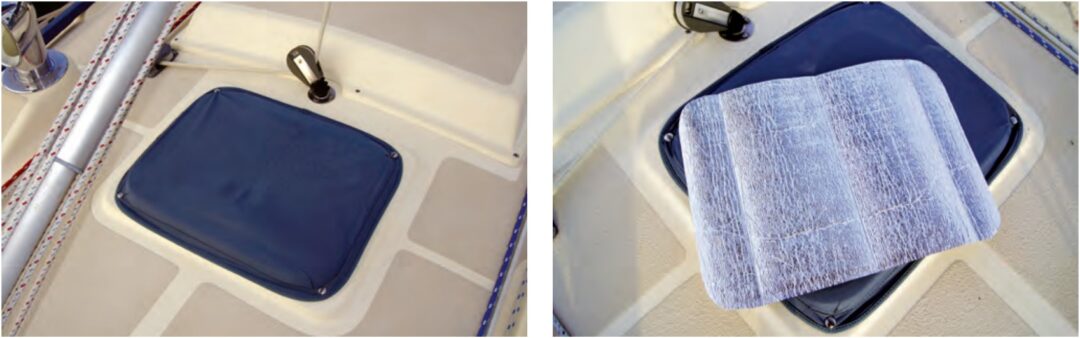
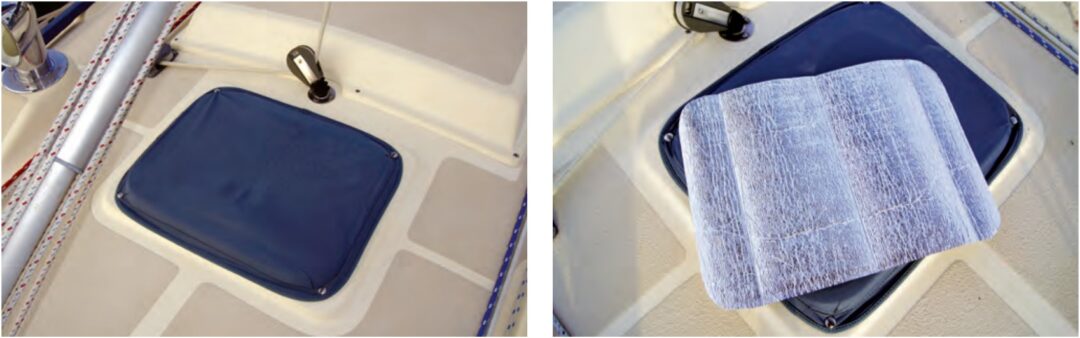
Our first line of defense was to fabricate and install external acrylic fabric (Sunbrella) hatch covers. These work very well, are easily installed with snap fasteners and, in addition to reducing the interior temperature, address several other issues. They add privacy and, by blocking out much of the sunlight, slow the crazing of the hatch lenses and fading of the interior fabrics caused by UV light.
While the fabric hatch covers are effective, we felt that we could do better. I went to the auto department of a big-box store and picked up a foldable windshield sun screen for less than $5. When fitted in a vehicle’s windshield, this lightweight, silver-backed material reflects sunlight and helps keep the vehicle’s interior cooler. I cut the sun screen to fit each of the hatch openings and placed the pieces between the hatches and their screens. Had the hatches not been fitted with screens, I could have laid the sun screen beneath the exterior fabric covers. I tested both installations and both worked equally well.
What an improvement! The temperature reduction was significant: more than 20 degrees. I’m sure the air conditioner works more efficiently now. Best of all, because I cut the sun screen to fit snugly, early morning sunlight no longer peeks through the V-berth hatch to wake us up.
Gregg Nestor, a contributing editor with Good Old Boat, has had a lifelong interest in all things aquatic. He and his wife, Joyce, are currently refitting, upgrading, and sailing a 1994 Caliber 35.
Thank you to Sailrite Enterprises, Inc., for providing free access to back issues of Good Old Boat through intellectual property rights. Sailrite.com