A modern adaptation of an old tradition
Issue 70 : Jan/Feb 2010
On sailing ships, an opened cask, or butt, of water was often placed near the galley scuttle. This “scuttlebutt” was where the crew could get a drink of water, and the term came to mean “gossip” because the crew would exchange gossip while hanging around the butt, the precursor of today’s office water cooler.
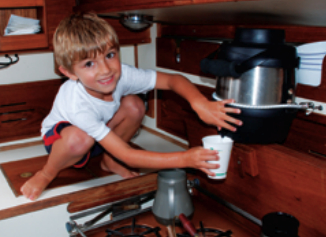
We have a scuttlebutt on Ariel, our Cape Dory 36. It’s a 2-gallon insulated jug with a faucet filled with fresh drinking water and fastened to an accessible spot in the galley. An ordinary picnic jug works fine.
We keep the scuttlebutt filled with good water from a series of 1-gallon plastic milk jugs that we fill whenever we get the chance to replenish our drinking-water supply. To ensure the water that goes into these plastic jugs is clean and tastes good, we pass it first through a filter made for refrigerator ice and drinking-water dispensers.
These filters, which can be purchased for less than $10 at most hardware and appliance stores, have one-way push-in female connectors at each end that accept 1/4-inch polyethylene tubing (the typical line to an icemaker). At the outlet end of the filter, we use a short piece of tubing — long enough to conveniently go into a 1-gallon jug.
At the inlet end of the filter, we attach a length of tubing that also has a garden hose fitting. This enables us to attach the tubing/filter/tubing combination to a hose or hydrant typically found in a marina. The water that comes out of this filter is pure and tasteless.
We never use the water from the boat’s water tanks for drinking. This practice lets us carry a higher concentration of chlorine in the tanks than we would want to drink, ensuring that nasty things don’t grow in the tanks. (Note: Too much chlorine can be hard on some plumbing fittings and ruinous when used in metal tanks. –Eds.)
We made Ariel’s water filter in a few minutes from materials purchased at our local Lowe’s store for less than $20.
Here’s what you need:
- An adapter that will attach to your garden hose or hydrant at one end and 1/4-inch polyethylene tubing at the other.
- 1/4-inch polyethylene tubing of the type used to connect a refrigerator icemaker to the house water supply.
- A refrigerator filter, preferably with push-in-and-lock connections for 1/4-inch tubing.
If you can’t find these items locally, try http://www.freshwatersystems.com
David VanDenburgh started sailing on New York’s Finger Lakes. He has a master’s license and skippered a medical missionary vessel that brought volunteer medical aid to Pacific islanders. He and his son (also David) and their families sail Ariel, a Cape Dory 36, on Lake Michigan.
Thank you to Sailrite Enterprises, Inc., for providing free access to back issues of Good Old Boat through intellectual property rights. Sailrite.com