A Com-Pac 23 owner improves livability in a tight space
Issue 14: Sept/Oct 2000
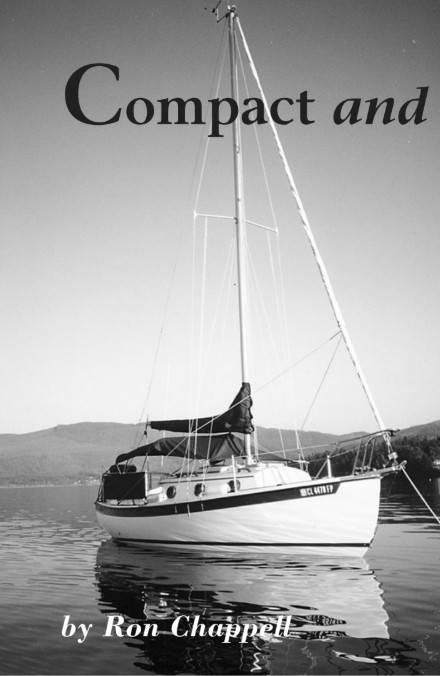
Posing during the day as airline pilots, cowboys, librarians, and the guy next door, a diverse group of worshipers gathers during the wee hours at a pre-determined Web site. Veneration runs rampant as they spur one another to new heights of fealty. Virtues are extolled, shortcomings made light of, and newcomers ensnared in their cunning web. A religious sect you ask? Well, yes, in a quaint way. They are Com-Pac Yacht owners, and I defy you to find a more devout following of a sailboat marque.
Hutchins Yachts, in Clearwater, Fla., knew exactly what they were doing when they first built Clarkie Mills’ little 16-foot traditional cruiser. Designed for retired Florida sailors, it was meant to be a safe, easily handled coastal cruiser that almost anyone could afford. It succeeded beyond anyone’s expectations, becoming popular among young families also. Here is the diabolical part: Hutchins intentionally built excellent little boats, then proceeded to lavish service on their customers, going well out of their way to keep buyers happy . . . unheard-of business tactics at the time. This allowed Hutchins to weather the lean years when many others failed and, at the same time, to build a customer base of near cult status.
The 16 would soon be outgrown. So Hutchins built a 23-footer, also designed by Mills. Larger boats would follow, all the way up to a 37. Com-Pac owners never had to leave the fold; when they got two-footitis there was a brand-new Com-Pac that looked exactly like their previous model (which they loved) yet was bigger and better and more yachtlike.
But why, you ask, would anyone buy a boat that looks like a Josh Slocum weekender? It even has old-fashioned bronze portlights, a shippy little sheerline, a transom-hung rudder, a spoon bow, and (Lord help us!) a teak bowsprit . . . not to mention rumors that concrete makes up part of its ballast (as it did in Slocum’s Spray).
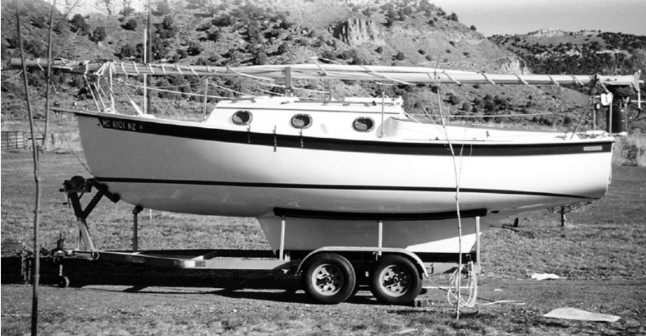
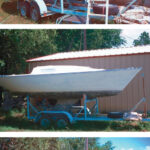
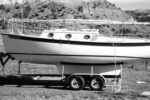
No Mas! (Spanish for That’s enough! or No more!) came to us from the Great Lakes in excellent freshwater condition. A 1990 23D, her interior was a major selling point. However, there were things inherent in the design that spoke to me of madness and chaos. Slide-out galleys? No manual bilge pump? A sink that drains to the bilge? What was the Master thinking? In the end, anarchy ruled and, under cover of darkness with nary a word to other owners, an extensive renovation ensued, covering a span of six months — putting things “right” as it were, and letting the chips fall where they may.
First to go were the slide-out galley units, one in each quarter berth. This bit of blasphemy opened up these areas to a usable size and got rid of the mess of water hoses and fittings coiled in the starboard side and the ubiquitous loose cannon of a camp stove on the port side. Now we’ll need a proper built-in galley, we reasoned, to prepare the day’s catch, if nothing else.
After much pondering, we came up with a plan for a built-in teak unit featuring a Princess propane, single-burner stove. I thought of going with the two-burner model until I learned the cost rivaled the new GE gas range in our home. One burner is plenty, we agreed. The boat already had a propane barbecue that could handle most of our cooking. And it came replete with a 2 1/2-gallon tank that was readily adaptable as a further fuel source for the galley stove. I found the price of the optional sea-rail for this stove somewhat amusing and decided to build my own from 1/4-inch brass rod, hand formed, silver soldered, and polished to a high luster.
We decided to recycle the original stainless-steel sink, as it was still like new (not surprising, as it’s only big enough to wash one hand at a time). We installed a brass hand pump coupled to a new bladder-type 26-gallon Plastimo water tank located in the previously unusable section of the aft port settee locker. Not only did this double the capacity of our old 11-gallon tank, but it also counter-balanced the twin battery set-up on the starboard side. The sink had drained into the bilge under the diesel engine. Our new installation was high enough to allow a short through-hull drain above the waterline.
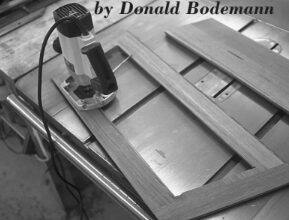
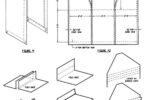
A cutting-board sink cover and a small fold-down side table completed our new galley. We made up and installed sliding Lexan doors on the cubby above the cabinet. The entire unit takes up 27 inches of settee space, leaving a usable sitting area for one or a 5 foot 1 inch quarterberth suitable for a child or tons of additional storage. We used the original rattan locker door on the front of the cabinet that tied it in to the rest of the interior, helping make it look “factory.” Our teak trim pieces were pre-milled standard stock and required only cutting to fit, final sanding, and finishing.
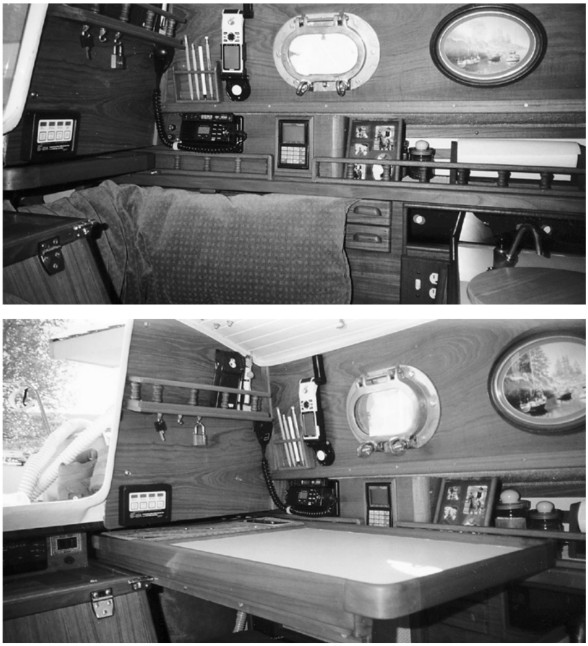
The other thing we insist on, even in a small boat, is a dedicated nav station with all electronics concentrated in one area and no wires strung about the cabin, please. A full-size chart table goes without saying. Back to the drawing board. After much gnashing of teeth and pulling of hair, we found room for a small electronics cabinet aft of the galley, above the port settee, where it provided additional structural integrity as well. An excellent little Apelco loran (which I refuse to give up until these new-fangled GPS units prove themselves) lives there alongside a Standard VHF and the upstart GPS, which is hooked into the 12-volt system.
The remote control/warning panel for the propane system is mounted close at hand on the aft bulkhead below the binocular rack. The heavy teak and Formica chart table, a slide-out, is positioned against the top of the quarterberth and takes up only 2 inches. The table features five locking positions and a built-in instrument case. A fold-up seat is hinged to the companionway step and provides a comfortable place to sit while doing … whatever it is one does at the nav station these days. Holes left in settee backs, from moving the electronics, were filled with small teak drawers that were time and labor intensive but have proven to be as handy as the pocket on a shirt.
The V-berth cushions were like new. The saloon cushions, however, were beginning to show some wear, not to mention being created of a color scheme that did nothing for my stomach at sea. Since the first mate was familiar with sewing, we decided to try our hand at doing our own upholstery. One thing we did want was divided cushions that would allow easier access to the settee lockers. Also, we felt the original foam to be a bit thin. The solution was a one-inch, high-density foam overlay for the now shorter cushions and a bolt of upholstery material from the mill-end bin at the fabric store. The interior decorator who waited on us danced us through the entire process. He insisted time and again that we keep everything tight, tight, tight. This is not a project for the fainthearted, as I nearly fainted several times trying to get the foam back into the new covers. While the project turned out quite well in my estimation, I would think twice about doing it again. One good tip is to buy “body pillows” at Wal-Mart for about eight bucks each and cover them in your chosen material for really comfortable backrests and bolsters. They also make good pillows for the V-berth.
The 23D features a Yanmar 1GM10 and a marine head system with a three-way-diverter valve controlling the holding tank, deck outlet, and through-hull outlet.
Com-Pac did not spend a lot of time on the head compartment, which is basically formed of exterior-grade plywood with several coats of battleship-gray paint. Rough in finish, it was nearly impossible to clean. We lined this compartment, including the base, with sheets of white polyplastic panel cut to fit and applied with adhesive and stainless screws. This is much brighter and easier to keep up with. We also installed a pump in the waste line in order to send everything to its chosen destination with a little more authority than the head alone could muster.
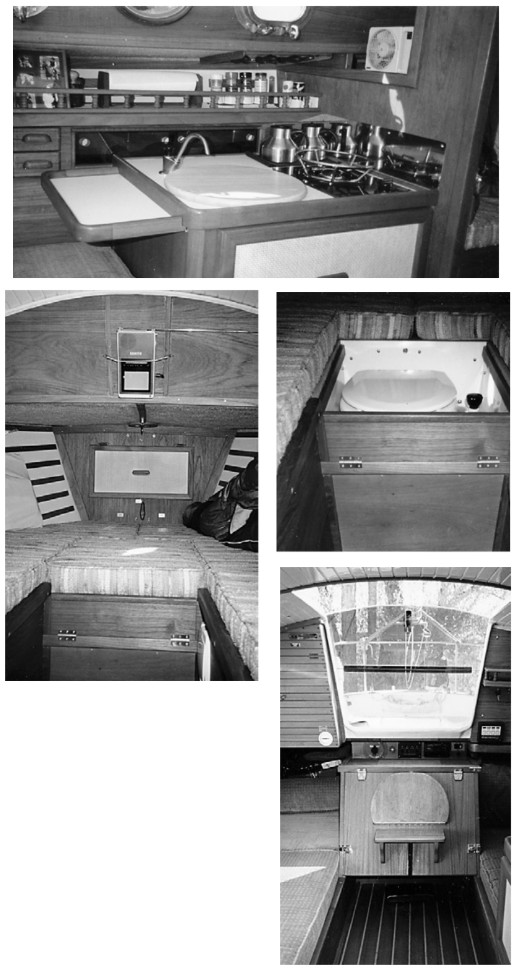
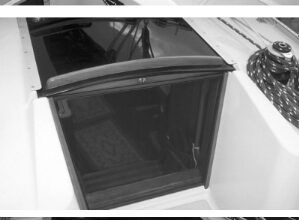
left and middle right, and the pull-down seat at the companionway, lower right.
All outboard 23s come with a manual bilge pump in the cockpit. I’m not sure what Hutchins’ thinking was, but on the 23D they factory-install only an electric pump. No boat this size, in my opinion, should be without a manual pump in the cockpit, and I prefer to have one in the cabin as well. There is no such thing as too many bilge pumps. We now have a pump in the cockpit, giving the boat three pumps on board, two of which are dedicated to the bilge, and a third that could be in short order. Overkill? Only if you never need them.
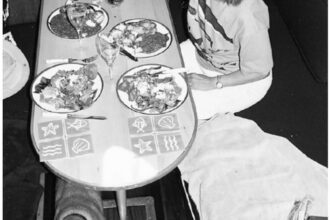
We felt the factory dining table was way more trouble than it was worth. We opted for a cockpit table, as the boat has a Bimini, side curtains, and a forward rain fly. In truly inclement weather, the chart table and fold-out galley sidebar do nicely.
We have divided the chain locker into two compartments and installed an additional hawse pipe on the foredeck, allowing instant access to two separate anchor rodes, each consisting of 40 feet of chain and 200 feet of line. The 16-pound CQR resides on the bow roller when at sea, and there is a Danforth in the aft locker if needed, though I would much prefer a Bruce for the waters we sail.
How does she sail? While she is no dog, she is not particularly quick either. But, if I had wanted quick I would have bought a used Porsche. Her PHRF rating is about 260, making her about 10 seconds a mile faster than a Catalina 22 and about 20 seconds faster than an O’Day 22. At 3,300 pounds dry, she outweighs most in her class. What she does do is instill a great confidence, giving the impression of a much larger boat. I have found her capable of handling conditions beyond most her size. Bottom line: she’s fun to sail!
For those looking for something to weenie around in for a weekend, the 23D is a great little boat right out of the box. If, however, you tend to sail in remote waters such as Baja California and British Columbia, as we do, and for extended periods of time (three weeks to several months), then some upgrading may be in order, though, I admit, in our case we may have gone overboard. Sailboats, after all, are dream machines, escape pods, if you will, each cut to its master’s fancy. For my part, whether she’s sitting here in the front yard on her trailer, or rail-under in the Straits of Juan de Fuca, my CP23 blows me away.
Ron and Terrel are rancher/sailors landlocked in Colorado where they raise Suffolk sheep and border collies. They sail their Com-Pac 23 in the northwest in the summer and the Sea of Cortez in winter.
Thank you to Sailrite Enterprises, Inc., for providing free access to back issues of Good Old Boat through intellectual property rights. Sailrite.com