Issue 15 : Nov/Dec 2000
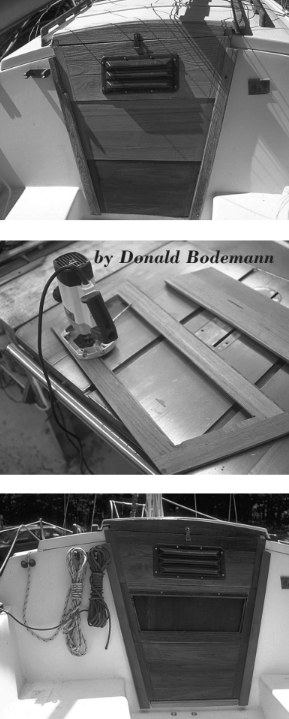
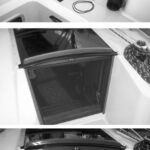
Have you ever wandered through a boatyard or marina and noticed how many nice boats have ugly hatchboards? It seems at least half are made out of plywood. Some still have the original boards and have been painted umpteen times. They look like they were ripped off the back of someone’s garage. Of course, new boats have nice boards with teak frames and smoked Plexi inserts, but where can you find those for your older model sailboat? If you do find them, can you afford them? I did, in fact, find a nice set of vertical (saloon type) doors offered by Cruising Concepts but decided to go with a homemade set.
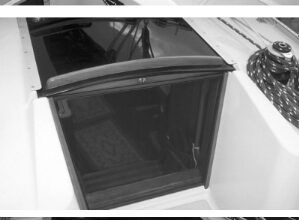
I chose to use mahogany in place of teak. It’s cheaper and easier to find, but it has similar characteristics, which make it a good wood for a boat. I like the idea of a smoked Plexiglaswindow, which offers some privacy but still lets some light in. Another thing that was important was the ability to remove the Plexiglas and have a screened window remaining.
My first attempt at hatchboards was for our 1972 Catalina 22. I used the old hatchboards as templates and framed out two horizontal “drop in” windows. I drilled and installed dowels to reinforce the corners. I then routed a step in the exterior for the Plexiglas. The bottom unit was not screened, and I screwed the Plexiglas to the frame with small stainless-steel wood screws. The top window Plexiglas was held in place by plastic cams that rotated. I was not too worried about security, because even though someone could rotate the cams and lift out the Plexiglas window, they would then have to cut through the screen and squeeze themselves through a rather small opening. I’ve always said, “Locks are for honest people. If someone wants to break into my boat, unremovable windows will not stop them.”
The screening turned out to be fairly simple. I ran the boards through the table saw with the blade up just enough to cut a groove. If the groove wasn’t wide enough I’d move the fence a little and take a second cut. The screen material was cut a little oversized and then laid on top of the frame. I then pushed surgical tubing down on the screen and into the slot. This procedure seemed to work quite well and, if done carefully, can give a nice tight screen. Be sure to keep the weave horizontal and vertical. I liked the way these hatchboards worked so well that I made the same type for our 1980 Cherubini Hunter 27. We cruised for 10 days one summer on Long Island Sound, and the ventilation through the new boards was a godsend. Whether you make the drop-in board type or the vertical “saloon” type, I can think of few things that will dress up an older boat more and be accomplished in only a few sessions in the wood shop, than a nice set of hatchboards.
Don is a certified ASE Master Auto Technician and an amateur musician (bass and 6-string guitar) who also designs, builds, and flies giant-scale radio-controlled model airplanes and has a private pilot license. Flying got expensive, so he bought a Sunfish, then an O’Day 17, then a Catalina 22. Cheryl, his wife, is happiest when the rail is in the water. Their current project boat is a 1977 Cherubini-designed Hunter 33.
Thank you to Sailrite Enterprises, Inc., for providing free access to back issues of Good Old Boat through intellectual property rights. Sailrite.com