Issue 13 : Jul/Aug 2000
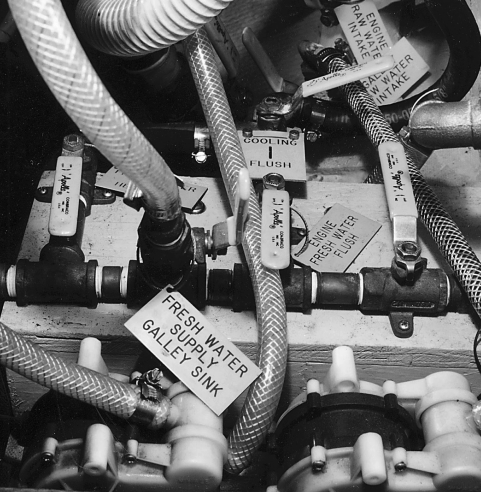
Shortly after purchasing my 1979 Ericson Independence in 1995, I began to think that I didn’t want my Yanmar diesel to sit idle full of salt water. The boat had spent its life in fresh water on Lake Michigan, and now I was bathing it in Pacific salt water in Marina del Rey, California.
I contacted Yanmar America and my local Yanmar distributor with my idea of a freshwater flush for the engine. No one saw any glaring problems with the concept. My plan was to devise a system that could be used anywhere that would not depend upon fresh water from a garden hose at dockside and instead would use the onboard fresh water supply for flushing the engine.
I have since converted my engine from raw water cooling to fresh, and the result has been to reduce the amount of fresh water necessary to completely remove the salt water from the cooling system. The raw water configuration took approximately five gallons to flush the engine water jacket. Since converting to freshwater cooling, it only takes two to three quarts to flush the heat exchanger.
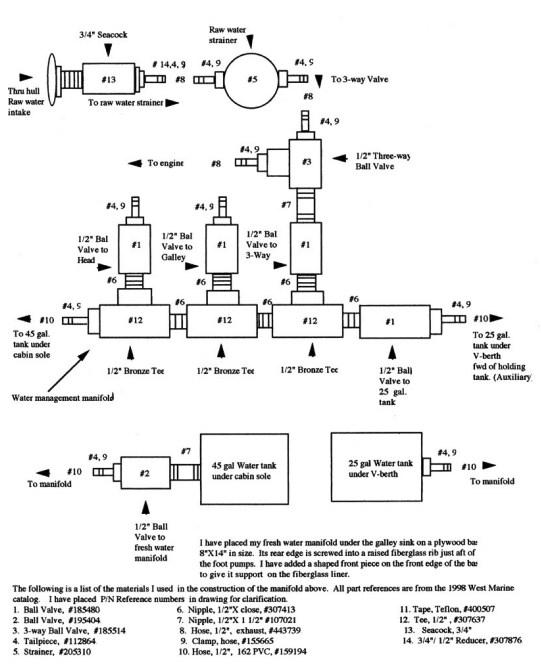
My procedure is to turn the handle on the three-way valve while the engine is at idle. This cuts off the saltwater intake and replaces it with fresh water from my onboard water tank. After approximately 30 seconds, I stop the engine and re-manifold back to saltwater intake, leaving the engine ready for its next use and the entire engine cooling system sitting salt-free.
The beauty of this system is that it can be used on any engine and will surely prolong its life. By adding additional valves to the manifold, you can neatly and efficiently control all the fresh water in the whole boat from one location.
Editor’s note: It is important for sailors considering this type of system to examine the characteristics of the three-way valve (#3 in the drawing) that they choose to use for selecting fresh or salt water to be routed to the engine. The valve must be designed so flow from the raw (salt) water system to the boat’s freshwater system is never possible whatever the position (including intermediate positions) of the valve. Such an unintended reverse flow might contaminate the freshwater tanks and, depending on their elevation, backfill them with sea water. Check the characteristics of the valve before you use it, even if you think you are using the one specified in this article.
It is also important to clarify that the freshwater connection to the head (#1 left) is to the sink, not the flushing water for the commode. The flushing water for the commode must have a separate seawater intake that is not shared by any other device. The design of most head-flushing pumps will allow waste contamination of the flushing water since they share the same cylinder in a double action pump, and even a perfectly functioning check valve allows some backflow as it closes. In fact, the backflow is what causes the check valve to close. Flushing water should be completely separate from all other systems.
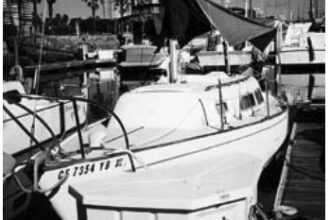
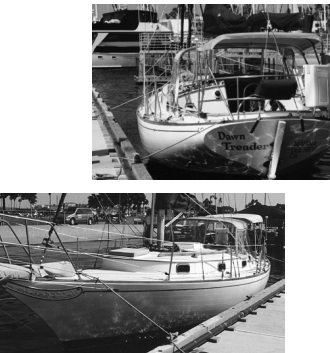
Glyn is a recently retired aerospace photographer who has owned his 1979 Ericson Independence 31, the Dawn Treader, for five years. Since purchasing his first sailboat in the early 1980s, he has created a number of innovative systems to make his boats as user-friendly, efficient, safe, and “shippy” as possible. Glyn is researching the whereabouts of the other Ericson Independence 31s, like his Dawn Treader, below, all manufactured about 20 years ago. Out of a total of 74 hulls made, he has located 66 boats.
Thank you to Sailrite Enterprises, Inc., for providing free access to back issues of Good Old Boat through intellectual property rights. Sailrite.com