How to choose new cushion coverings for an older boat
Issue 37 : Jul/Aug 2004
Like many older sailboats out there, Coquette, our “new to us” 1975 Van de Stadt Agulhas, is in dire need of new interior cushions. For the past few months I have been visiting fabric stores and upholstery supply stores, doing research, and calling on what I learned in several textile classes I took back in my college days. Even though I enjoy sewing, I want to choose a fabric that will last, one I will be pleased with in years to come even when styles change, and one that will hold up well with the constant use cushions get onboard a liveaboard sailboat.
Aboard Coquette, our boat cushions are roughly used. They’re moved and thrown around to get to storage compartments. Our salty, wet bodies or dirty, sweaty bodies sit on them. They may be exposed to engine oil, sealants, and epoxy. They are slept on. At times, intense sun beats down on them. And last of all, they are closed up in the damp, hot, and musty interior of our boat when we lock up. Finding a fabric that will be comfortable to sit on, pleasing to look at, and sturdy enough to hold up to years of abuse is my mission. Sounds like too much to ask of a fabric, doesn’t it? With all the fabric and fiber choices available, it really isn’t. It just takes some informed decision-making.
Some of the considerations that need to be addressed when shopping for the best upholstery fabric for interior cushions include: fiber type and its absorbency, abrasion resistance, care requirements, flammability, resilience, resistance to UV radiation, and colorfastness. To this, add the fabric itself and its dimensional stability, any finishes that are on the fabric, as well as the color, texture, and pattern of the fabric.
Fiber types
The choice of fiber type is probably the most important consideration. There are many different fibers on the market. For many people, natural fibers have no place aboard a boat. They just don’t perform as well as synthetics. Natural fibers tend to soak up moisture, mildewing in the damp environment of a boat. On the other hand, some people prefer to have natural fibers around them for personal or ecological reasons. Some of the most common natural fibers used for upholstery are included here for those who prefer them. Just be aware that because natural fibers are “natural,” they will have a much shorter lifespan than a synthetic fabric.
In the explanations below I have noted if a particular fiber has a tendency to pill. Pilling is the breaking or loosening of parts of fibers (or whole fibers) and their movement to the surface of the fabric. With abrasion, these loose fibers tend to ball up and make small “pills” that are unsightly and uncomfortable to sit on.
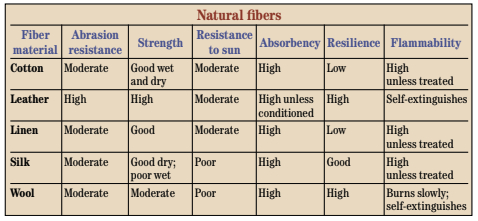
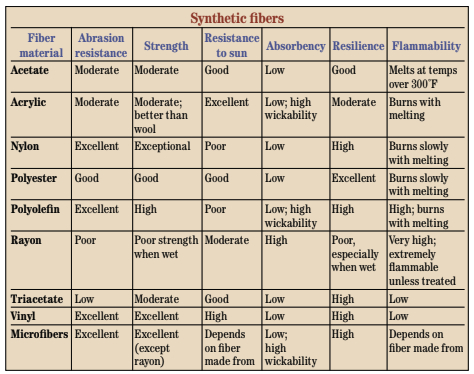
I have also included comparison tables so you can see how the different fiber types rank according to the following characteristics: abrasion resistance, strength, resistance to sunlight, absorbency, resilience, and flammability.
Natural fibers
Cotton: Cotton comes from the seed bolls of the cotton plant. Generally, it has a soft and comfortable feel. Cotton is naturally resistant to moths and easy to handle and sew. It has fair to poor dimensional stability and resistance to mildew. It takes dyes well and is easy to care for because it is usually hand- and machine-washable and dryable. Many boaters cover their cushions with cotton slipcovers that can be easily taken off and cleaned. The tighter the weave or higher the thread count, the more abrasion-resistant the fabric. Look for fabrics that are made of combed cotton. These have longer and smoother fibers that will stand up better to abrasion.
Leather: Though not a fiber type, leather is often used in upholstery. Made from the hide of cows, leather has a supple and pliable feel. It is quite durable but requires special conditioners and treatments to make it easy to care for and fire retardant. Leather used for upholstery should also be treated with anti-mold agents and bactericides.
Linen: Made from the fibrous stem of the flax plant, linen generally has a comfortable, crisp feel. Twice as strong as cotton, it has no static or pilling problems. Linen has good dimensional stability and resistance to moths but fair to poor resistance to mildew. It tends to wrinkle easily. Linen can be machine washed and dried.
Silk: This is an animal fiber created by silkworms. It has a luxurious feel. It is the thinnest of all natural fibers. Silk has good dimensional stability, but it loses its strength when wet. Silk has little problem with static and no pilling problem. Silk fabric can be hand-washed, but some dyes may bleed.
Wool: Made from the fleece of sheep, wool has a soft feel but can be a little itchy. It is a good insulator, but moths are attracted to it. Wool can be laundered using gentle action, cool water, and mild detergent, though usually it is dry-cleaned or hand-washed.
When choosing to have wool aboard a boat, choose only very high-quality wool so there is a minimum amount of dander in the fibers. Dander tends to attract mold and mildew spores. Keep the wool well ventilated and clean. When it comes time to store wool, mothproof it.
Manufactured fibers
Acetate: Made from cellulose, acetate has a crisp, soft feel. It is often made into taffeta and brocade. It is shrink-resistant and moth- and mildew-resistant. It is relatively fast-drying and dyes well. Some types are hand-washable, but most are only dry-cleanable. Acetate is resistant to pilling and rarely has static problems. Acetate fibers will melt with temperatures over 300° F. Nail polish, paint remover, and some perfumes will dis- solve the fibers.
Acrylic: This fiber feels similar to wool, but is much easier to care for. It is a lightweight fiber with good dimensional stability. It has excellent wicking properties and dyes very well. It is resistant to moths, mildew, oils, and chemicals. Static and pilling can be a problem, but it is quick-drying and usually machine-washable and dryable.
Nylon: Nylon is the strongest of the man-made fibers. It can have differing qualities of feel; some feel crisp, others feel soft and luxurious. Nylon dries quickly, resists damage from oil and many chemicals, and has good dimensional stability. It is hand- and machine-washable and dryable. Pilling and static can be a problem.
Polyester: Polyester has differing qualities of feel; some feel crisp, others are soft and luxurious. It is resistant to most chemicals but has fair to poor resistance to oily stains. Polyester has good dimensional stability. It tends to have static and pilling problems. Blending polyester with dry clean-only fibers can enhance the washability of the fabric blend. Polyester is quick drying, and it is hand-and machine-washable and dryable.
Polyolefin: Also called Olefin or Polypropylene, polyolefin is a petroleum product. It has the lightest weight of all fibers. It even floats. It is stain-, static-, and odor-resistant. It has high insulating characteristics and resists deterioration from chemicals, mildew, perspiration, and rot. It also has high wicking properties. Colors are incorporated during the fiber-forming stage, creating a more colorfast fabric. Spills can be readily wiped up. Static and pilling can be a problem, but polyolefin is non-allergenic. It is extremely sensitive to heat, so ironing, washing, and drying need to be done at a low temperature. It resists waterborne stains and is fast-drying.
Rayon: Made from wood-pulp cellulose, rayon was the first of the man-made fibers. It dyes and prints well and has no static or pilling problems. It has fair to poor mildew resistance and dimensional stability. When rayon is wet, it actually loses 30 to 50 percent of its strength. Rayon fabric can shrink appreciably if you are washing a dry clean-only fabric. Some types are washable or dry-cleanable. Since laundering directions can vary so greatly, read the label on the fabric roll.
Triacetate: Triacetate is similar to acetate but can withstand higher temperatures. It has a luxurious feel with no problems with pilling. It can have a static problem. Triacetate has good dimensional stability. It is machine washable and dryable.
Vinyl: While not really a fiber, vinyl has been a favorite interior cushion fabric in the boating industry. New types are softer, more supple, and much more like leather or woven fabrics then ever before. Being a waterproof fabric, vinyl will not absorb fluids. It has excellent anti-microbial properties and is resistant to mold, mildew, insects, chemicals, and oils. It is easy to care for; usually you only need to sponge it off or use a stiff brush to clean. Vinyl does not breathe, so moisture can build up uncomfortably between bare skin and the fabric when temperatures rise.
Microfibers: Microfibers are ultrafine fibers used to produce ultra-fine yarns to make fabrics with a soft, supple feel. Some feel like suede or leather. They are not a separate fiber type and can be made of nylon, polyester, acrylic, and rayon fibers woven so tightly that the fabrics they produce aren’t penetrated by wind, rain, or cold. Microfiber fabrics have excellent insulating qualities. Ultrasuede is the designer name for the first microfiber fabric, but there are many other brands available. They are usually machine-washable and dryable.
Fiber blends
Blending of fibers is done to improve the physical properties of the fabric and to enhance a fabric’s aesthetic properties. Blending can create a fabric that is easier to care for or change how a fabric performs, like making it stronger against abrasion or less sensitive to ultraviolet rays. Proportions are chosen to bring out the best characteristics of each fiber chosen. Blending can be done with either natural fibers or synthetic in a multitude of combinations and percentages.
Yarn
With any fiber type you choose, if the yarn is fancy or complex, snagging and breakage can result from abrasion. Try to choose a fabric whose yarns are fairly consistent in its width without fancy loops or complex gatherings.
Absorbency vs. wicking
How an upholstery fabric reacts to the application of moisture is a very important consideration for boaters. After all, it is impossible to keep boats totally dry in a marine environment. Absorbency is the ability for the fiber to take water into itself; the moisture actually goes into the fiber. Some fabrics look as though they are absorbing moisture but in reality are only allowing the moisture to travel along the surface of the fibers. This is called wicking. Fabrics with good wicking properties dry faster than those that are absorbent. Wicking is definitely a plus for keeping your boat’s interior drier.
Other considerations
When shopping for an upholstery fabric, look for ones that are firmly woven. Hold samples up to the light. Is the fabric compact? How much light can be seen through it? Is the fabric closely woven? Take a look at the raw edges of the fabric. Pull at the threads to find out if the fabric unravels easily. If it does, then the yarns may shift or pull away easily from your seams as the cushions get used. Stretch the fabric diagonally. If it stretches and recovers completely, it will hold its shape well. Grabbing the fabric sample in your fist and holding it firmly for a minute or two will give you an idea of how easily the fabric will wrinkle.
Look for a fabric that has all yarns about the same size. Called a balanced weave, it will be a fabric that will wear better than one with a combination of thin yarns in one direction and heavy yarns in the other. In general, a twill weave will show less soil and resist wear more than a plain weave of similar quality. A twill weave is a staggered weave where two to three warp threads are over and one to two warp threads are under respective filling threads. It has more threads per inch, which produces a heavier cloth than a plain weave, so it will resist wear longer. This type of weave will have diagonal right-to-left or left-to-right ridges to the fabric. The diagonal quality of the fabric makes it more pliable and less liable to show soil than a plain weave. The only drawback is that it will unravel easily.
Satins, damasks, brocades, and other flat-surfaced fabrics are not abrasion-resistant since they have long yarns on top of the fabric that are subject to wear. Fabrics with a pile, such as velvets and friezes, have excellent abrasion resistance if they are made with firm yarns and have a deep and close pile held to the ground cloth. Pile fabrics with uncut loops mat less easily than those with cut loops.
Sometimes upholstery fabrics have a latex backing applied to them. This coating adds stability to the fabric and helps prevent soil from sifting through the fabric to the cushion underneath. Applied to loosely woven fabrics, this backing can prevent threads from slipping and shifting at the seams and make them easier to handle while cutting and sewing.
Color application
Fabrics that are pigment-printed (printed after the fabric is woven) can show color loss from abrasion. Bring fine sandpaper or an emery board with you to the store when shopping for fabrics and rub your sample 20 or so times with it to see how easily the color will rub off through abrasion (pick an end corner to test). Solution-dyed fabrics (man-made fibers that are dyed in solution before the yarn is extruded) have very high color retention.
Colorfastness
Colorfastness is the ability of a fabric to resist a change in color due to the effects of sunlight, abrasion, chemicals, and cleaning agents. Ultraviolet light from the sun can cause fading of colors and the deterioration of fabric. Because furniture is fixed aboard a boat, it is impossible to move it out of the sun if the cushions happen to be near portlights or hatches. So it is important to protect fabric from the sun, either with window treatments on portlights and hatches or through choosing fabrics that are resistant to solar radiation damage.
Color loss can also occur during cleaning. Test fabrics for color loss before cleaning by applying any cleaning agents in an unobtrusive area. Use a clean, white cloth so that you can see if any color is transferred.
Stain-resistant finishes
There are three main types of stain-resistant finishes applied to fabric. They usually only allow water-based stains to be blotted up easily and quickly. These finishes may retain oily stains.
Scotchgard, made by the 3M Company, is a fluorochemical finish that can be applied at the mill where the fabric is processed or by the consumer if an upholstery fabric does not already have a finish like this. It can be purchased in spray cans at hardware stores or applied by professional upholstery cleaners.
Scotchgard can be applied to new, unsoiled fabric with no problems. Before applying it to older upholstery fabric, make sure the fabric is thoroughly cleaned and that all residues from cleaning agents are removed from the fabric.
Teflon, by DuPont, is the newest fluorochemical finish that can be either applied to fabric at the mill or applied to cushions by a professional upholstery cleaner. Water will not dissolve the stain-resistant chemical but upholstery-cleaning agents will; reapply Teflon after each cleaning.
Zepel, by DuPont, is a fluorochemical finish that is applied only at the mill where the fabric is processed.
If the fabric you are considering has one of these finishes, find out if the finish is covered by a warranty, how long the warranty lasts, and exactly what it covers.
Colors, pattern, texture
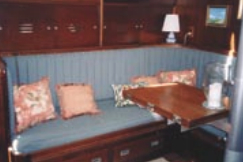
When deciding on a color scheme for your boat’s interior, take into account the color of any wood or other colors onboard that won’t be changed. In general, light colors can create a bright, airy feel and create an illusion of spaciousness. Dark colors absorb more light and create a more intimate space. Warm colors like reds, oranges, and browns create a dramatic or energetic feel, if they are intense, or a warm or friendly feel, if subdued. They can even make you feel warmer — something to consider in a cool climate. Cool colors — like blues, greens, violets, or grays — create a feel of relaxation and peace, if they are softer shades, and a fresh, dramatic feel, if they are intense. Cool colors tend to be quite popular in tropical climates, where they can help you feel cooler.
Textures and patterns add interest and character to your boat’s decor. Choose them according to the style you like and the type of atmosphere you want to create, but be careful. Complex patterns with several colors and diagonal, zigzag, or crisscrossing lines may be overwhelming in the small spaces of most boat interiors. These patterns also create a sense of motion and are very busy to the eye, something you don’t want if any of your crew tends to get seasick.
Vertical lines can create a sense of height; horizontal lines can create a sense of breadth. Patterns change how you see proportion. In general, remember the scale and proportion rule when choosing any pattern for your upholstery fabric: the larger your space, the larger the print/pattern; the smaller your space, the smaller the print/pattern. Also, the choice of colors affects how you see a pattern. High-contrast colors create an energetic feel to your space, while colors close in value create a more subdued feel.
Textures also have an effect on patterns as well as the look of the space. Rough textures will absorb light; smooth textures will reflect light. It is a good idea to bring fabric swatches (the larger the sample the better — maybe a square-foot piece) that appeal to you to the boat to see what happens when both natural light and your boat’s interior lighting hit it. Live with your samples for a while to see how everyone aboard likes them.
Shopping
In a perfect world, all fabrics would be labeled, and that information would be easily found in the same location on the fabric in each store. But, sadly, that’s not the case. Here’s a rundown of where to look for fiber content, washing directions, and (if you are lucky) test results for fabrics.
Home-sewing fabric stores generally have upholstery fabrics on long rolls. Look for the informational label at the end of the roll or attached to the fabric itself with a safety pin. Some fabrics may be folded in half and wound on a cardboard structure. In this case, the type of fabric should be on a label attached to the top of the cardboard (usually hidden under the first layer of fabric). If the fabric is folded up without a cardboard structure and piled on a large table with no information on the fabric with it, I take that to mean that the fabric is set up for quick sale and may be second-rate fabric sold without information. Your guess is as good as mine as to how it will perform. If the fabric table says “upholstery fabric,” but there is no information on each bolt, I would look elsewhere. You’ll spend too much time and energy sewing (or too much money paying someone to sew) to risk buying something that won’t hold up.
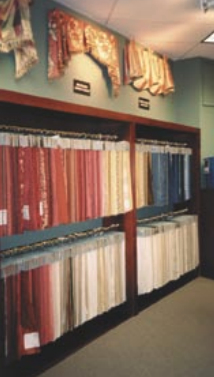
Upholstery-fabric stores usually have more choices and better information than home-sewing centers. Fabrics may be on long cardboard rolls or folded on tables. Or there may be fabric samples in books or on hangars. The books of fabric will have information about the fabric on the back of each sample as well as in the back of each book. As in the home-sewing stores, fabric on long rolls should have their labels on the rolls themselves or pinned to the fabric. If you are not finding information on a fabric that you like, ask the manager or a knowledgeable clerk if there is any information about who produced the fabric, what it’s made of, and how it should be cleaned. If there is no information available, don’t buy it. These fabrics may be poor quality with dyes that may not be colorfast and weaves that may be misaligned.
Our decision
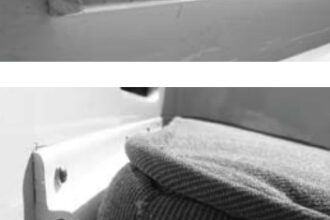
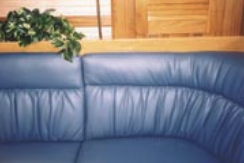
After many days of looking in stores and discussing the possibilities, we chose a black raspberry color of a microfiber fabric made of polyester for the tops and sides of our cushions and a vinyl of almost the same color for the bottoms. We chose vinyl for the bottoms of our cushions because of its superior stain- and moisture-resistance. In fact, we almost decided on all-vinyl cushions. There are wonderful color choices available; they have such supple, leather-like qualities these days; and nothing beats vinyl for durability in a marine environment. But the thought of sticky, sweaty seats in summer was too much for me. And I didn’t feel like making cotton slipcovers to cover them in the summer after I had spent so much time sewing new cushions. I love the feel of velour, velvet, or suede-like fabrics. By using a microfiber fabric, I will get that soft comfortable feel in any weather with almost the same abrasion resistance and almost the same ease of cleaning that a vinyl fabric has.
May the interior fabric you choose for your boat perform for years — and bring you much comfort as well as service!
Thank you to Sailrite Enterprises, Inc., for providing free access to back issues of Good Old Boat through intellectual property rights. Sailrite.com