An old-time rope trick saves the docklines
Issue 93 : Nov/Dec 2013
Not until our family spent our third winter aboard while cruising on Ganymede — our home-finished Cape George 31 cutter — did we have occasion to spend the whole chilly season at a dock. The marina was not as sheltered as we might have desired, and a few months of rocking against the finger pier during winter storms took its toll on fenders and docklines. In spite of our best efforts at creating a fair lead, one of the docklines chafed terribly against a stern cleat and had to be replaced. As any good old boater knows, decent nylon lines are expensive. For us, at least, seasonal replacement is out of the question.
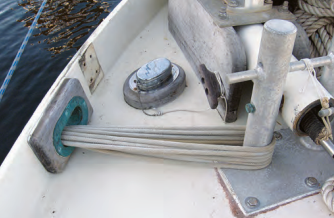
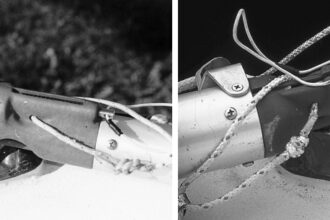
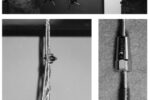
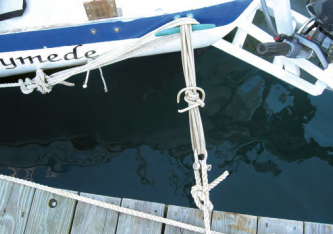
When tying up Ganymede for a second winter alongside a pier, I tried something that, to me at least, is new. In the depths of the sail locker, as well as here and there in various other places, we have hundreds of feet of older Dacron line in short lengths. These are old sheets and halyards, mostly, leftovers from previous boats or retired from primary duty. They’re faded and fuzzy but too good to throw away outright. Taking the longest of these, I made a selvagee — a coil of many strands’ thickness — long enough to reach from the foredeck bitt out through the hawsehole, whose edge is one of the greatest sources of chafe. An oversized shackle at the end of the selvagee made a perfect spot for attaching docklines.
The selvagee worked so well that I rove several more for the stern line and springlines. All the primary chafe points now have sacrificial rope going through them, rope whose many thin strands are able not only to take tight corners better than a thick dockline, but — being made of Dacron — won’t saw back and forth against the edges like the more stretchy nylon would. I watched my expendable selvagees closely as winter wore on with an eye to refreshing them from the seemingly inexhaustible supply of small stuff jumbled in the bottom of the sail locker. That winter I was able to rest secure knowing that my primary docklines were safe from undue strain and chafe.
Ben Zartman lives with his wife, Danielle, and three young daughters aboard Ganymede, the 30-foot Cape George Cutter he built from a bare hull. They spent the summer exploring Newfoundland, making the most of it before the approaching autumn turned them south and west again. Follow them on their blog at www.zartmancruising.com.
Thank you to Sailrite Enterprises, Inc., for providing free access to back issues of Good Old Boat through intellectual property rights. Sailrite.com