Here’s a quick fix for a serious anchor winch failure
Issue 40 : Jan/Feb 2005
The typical foot-operated anchor winch switch lives just a membrane away from a very hostile environment. This membrane is the neoprene pressure pad domed above the switch. The environment is the foredeck where wet and muddy chain cable is a constant fact of life.
All things considered, switch failure should be more from a moist and salty atmosphere than from anything else. Yet, with plastic-bodied units, this is rarely so. As long as hairline cracks in the neoprene are monitored carefully and the pad is replaced before it fails, the simple mechanics of this type of switch survive very well. Heat, not moisture, produces the malfunctioning that eventually results in total failure.
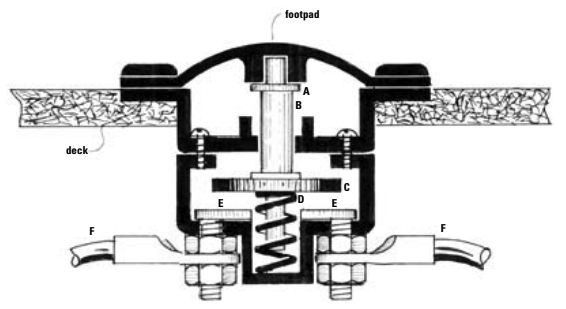
What happens is this: when the anchor switch is depressed (turned on) for lengthy periods of cable hauling, one terminal overheats and starts sinking into its plastic base. Some of this plastic also smears across the terminal’s contact surface, which initially produces intermittent operation.
This is Stage One of inevitable total failure because over the months, as the terminal sinks farther into its plastic base, it loses contact entirely with the contact disc when it is pushed down to bridge across the two terminals. As a result, the switch cannot work, regardless of how many times it is stomped on.
That this failure might happen under dramatic and threatening circumstances hardly needs to be mentioned, making the premature replacement of any suspect switch a very sensible option. At the very least, a spare should be carried in anticipation of failure.
Opt for short bursts
The life of a plastic-bodied switch is prolonged by avoiding long, continuous periods of operation, opting instead for short bursts with many breaks in between. Where circumstances deny this (and they mostly do over the long term), be alert for the first sign of trouble and replace the switch immediately. If, however, total failure is immediate and no spare is carried, the following temporary remedial treatment usually works well.
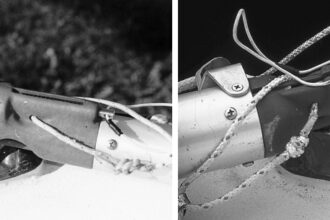
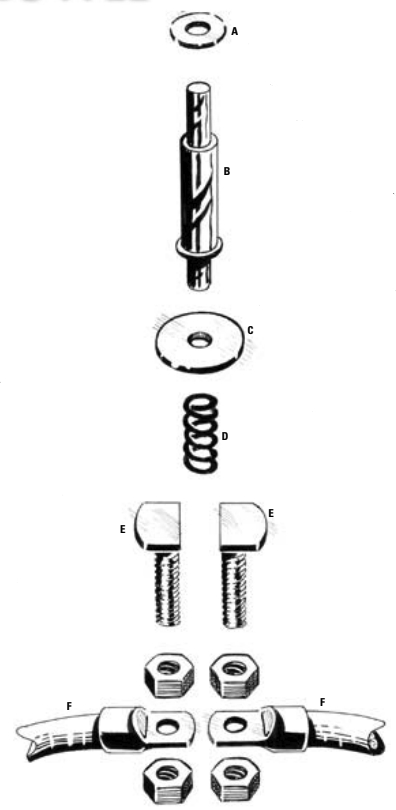
When you remove the footpad, you expose the top of the spindle (plunger). It protrudes from a lower, separate plastic body that is released by undoing two self-tappers whose heads are usually obvious. Before releasing, take the power cables off their terminals and have someone belowdecks to catch the body when it drops.
With the lower body freed, the wayward terminal can now be removed. Clean it thoroughly and clear its plastic bed of all debris to produce a fresh, level-as-possible seat. Then replace the terminal in its seat with a shim (or thin washer) beneath its head to raise it to the neighbor’s electrical contact plane.
With the switch reassembled after this type of repair its life expectancy might run into many months, but it should be seen as a temporary measure only. The whole unit should be replaced as soon as possible. It may also be time to reassess your anchor winch switch needs.
A terminal running hot like this suggests two things: first, that plastic bodies cannot be trusted and, second, that your chosen switch may be too small for the winch. If size — and therefore satisfactory amperage transfer between terminals — is in doubt, buy a larger unit. If that is not possible, consider using a smaller foot switch whose function is to operate a solenoid, not the winch directly. Regardless of the exact nature of a winch switch problem, or whether it can be permanently cured or not, the fact is that intermittent operation in the early stages of failure can try a person’s patience to the extreme — especially when it fails at a dramatic moment. This can lead to distraction and that can be followed by serious injury when accidents happen. Typically, there is the temptation to hand-haul the chain every time the switch goes dead. If your foot remains planted on the switch and if the switch suddenly pops into life, fingers can be pulped in the gypsy.
Except on very small craft, where hand-hauling is a viable option without any winch involvement at all, it pays to use the manual handle and forget the electric side of the winch. Intermittent current can be worse than no current. But better than any emergency system is a healthy switch, and this state of affairs is best addressed by very early intervention.
Thank you to Sailrite Enterprises, Inc., for providing free access to back issues of Good Old Boat through intellectual property rights. Sailrite.com