One sun, one mirror, and you’ve got The Best Darned Lifesaver, Period
Issue 40 : Jan/Feb 2005
Gather around, fellow sailors, and hear this tale about a simple little device that was revered by World War II pilots and seamen. It is still carried by military fliers. It needs no satellite or batteries to work. It can be used heavily without running down. And yet it is virtually unknown to pleasure boaters. No boat should ever leave port without at least one aboard.
My mind was wandering as I sailed the Mary Lu Too south on the Mississippi Sound. I was likely daydreaming of approaching the Cape of the Eleven Thousand Virgins, mentally deciding if I would then turn starboard for the Strait of Magellan or run on to the Strait of Le Maire with that other Staten Island to my port, then turn southwesterly to Horn Island with its 1,391-foot Mount Fitzroy rising above the cape.
I should have been laying a more prosaic southerly course to pass between Ship Island and Horn Island, just offshore of my home port of Ocean Springs, Mississippi. I wanted to leave the islands behind me and venture into the Gulf of Mexico where predicted 10- to 20-knot southerlies, with waves running 2 to 4 feet, promised sailing about as exciting as I could get in a day’s solo sail.
I was still learning my old 28-foot, home-built cutter: how she sailed, how she rode, how she hove to, and when she needed to be reefed. But on that day she had a different agenda she would teach me most forcefully.
As my mind’s eye spotted Cape Virgin’s Monte Dinero, Mary Lu Too’s keel did more than spot the gradually sloping sand bottom while approaching the north side of Horn Island. My nice 6 knots ground to an even stop, and my heel to port was now permanent, even after I dropped all three sails. Hard aground.
Firmly stuck
I tried the usual remedies: walked a kedge well astern; tensioned the nylon rode, stretching it close to the breaking point with a tackle; put the engine in reverse; and rocked the boat from outside. But no joy. I even tried the old remedy of swinging the boom far off to port and hung on it, trying to reduce Mary Lu Too’s draft. Still no joy. The very moderate tide was flooding, but any measurable rise was many hours off. The rise of the Gulf Coast’s tropic tide — only one high and low tide each day — doubled the times between low and high.
This was in those pre-VHF, pre-cell phone days, and no one else was out enjoying the early spring day. I spotted a Navy helo out of Pensacola, flying west over the barrier islands toward New Orleans. I grabbed my Best Darned Lifesaver, Period, and nearly blinded one of the pilots with a bright beam of light.
As the helo came to a hover, I wrote AGROUND, CALL COAST GUARD (phone number) FOR A TOW on the back of an old chart with a heavy black marker. The pilot moved a bit closer, read it, wrote on his handy knee board, gave me a thumbs up, and continued on.
Time for my peanut-butter-and-jelly lunch, hot tea from the thermos, and a cob pipe as I waited. It wasn’t long before the 40-footer out of Gulfport approached me . . . very cautiously. With his shallower draft, the coxswain maneuvered alongside, came aboard with a heavy line that he looped around the mast and cabin, thence aft to his tow cable.
You look familiar
As he started to fill out the necessary paperwork, he looked at me closely. “Don’t I know you?” he asked.
“Yes, I issued you your new ID card last week,” I replied.
“Oh, yeah, Lieutenant Butler. Glad to return the favor, sir,” he said. The Coast Guard was, and still is, a small world, smaller than the New York City Police Department but a bit more widespread. I had recently returned from a two-year tour of duty in the Philippine Islands.
“We got a phone call from the Keesler Air Force Base tower that took a message from a passing chopper. How did you wave him down?”
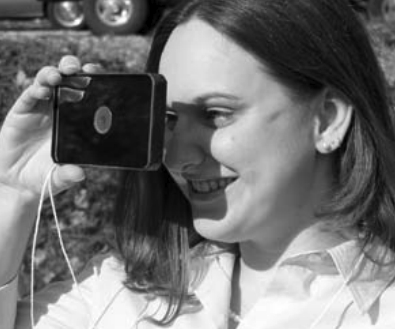
I showed him my Best Darned Lifesaver, Period: a standard GI signal mirror.
“Oh yeah,” he said. “You fly boys always carry those, don’t you, sir?” I answered that I wouldn’t leave home without it whether flying or sailing.
While I held the tiller steady amidships, the 40-footer took a strain, and the Mary Lu Too slid back into deeper water. I unfastened the towing loop around my mast and cabin, tossed it overboard for him to retrieve, gave him a hearty thanks, and waved goodbye.
No batteries
Did I exaggerate? Is the lowly and ancient signal mirror The Best Darned Lifesaver, Period? Maybe not in all situations, but what other signaling devices are not subject to battery or chemical exhaustion, have an indefinite shelf life, are inexpensive, are easy to carry, have such enviable records of facilitating rescues, and have a more interesting and extensive history?
True, most will not work in the dark, but a good mirror will still have some effectiveness on thinly overcast days, even in bright moonlight. If you can just see a faint shadow, the mirror is worth trying. There are even a few mirrors that have a reflective back that will return a searchlight or flashlight’s beam at night.
OK, what is available? Defender’s Orion Signal Kits each show a signal mirror, but the last one of those I bought had a mirror only somewhat better than a Cracker Jack toy. The 3 x 4 stainless-steel mirror in the BoatU.S. catalog is better, and the mirror in the West Marine catalog might be better too. But how can you tell, since size and material are not specified? The claim “U.S. Coast Guard-Approved” doesn’t tell you as much as you’d like to know either. The Coast Guard established specifications in 1944, based upon what aviators and life rafts were being equipped with at that time: glass and metal mirrors having a reflecting area of at least 17 square inches; plastics hadn’t reached today’s remarkable state of development.
Except for one excellent plastic mirror receiving a special dispensation, that bureaucratic logjam leaves out some fine plastic mirrors, but my preference, with one exception, is still the old GI 3 x 5 glass mirror.
Three factors
Three factors determine the effective usefulness of a signal mirror: the light-gathering ability, the ability to reflect a large portion of the light gathered, and the ability to aim that light where you want it.
Size: A credit card has almost 7 square inches; a CD disk has more than 8 square inches. My favorite GI mirror has just about 14 square inches, counting the rounded edges, the lanyard hole, and the aiming hole in the middle.
A credit card? Four people were rescued in 1991 after drifting 100 miles in the Gulf Stream from where their plane had crash landed. They used a credit card as a make-shift signal mirror.
Reflectivity: Hold a credit card or CD disk by the edges and try to bend it a bit: easy. But when the surface is not perfectly flat, the sun’s rays are dispersed, not directed. Try as you might, you can’t bend my old GI 3 x 5 glass signal mirror.
On a bright sunny day, try a cosmetic mirror (a high-quality, 4- to 6-inch diameter mirror), a CD, and a credit card. Take them outdoors and aim them at a wall, up sun and shadowed, and note the light spots you make. Bend the CD and credit card and note the loss of spot. Try to bend the mirror and note that it continues to make a nice bright spot.
Reflectivity not only concerns the perfect flatness of the reflecting surface but also the efficiency of that surface in reflecting the maximum amount of the sun’s rays. Nothing can beat a good glass mirror. A top-quality plastic mirror will reflect less of the sun’s energy but can still be very good to excellent.
Tests conducted with a digital light meter indicate a wide range of quality in plastic mirrors, from a low of reflecting just 11 percent as much light as a glass mirror to a high of 95 percent. For the price of a moderate dinner out for two, you can go from a cheap plastic toy to an excellent precision instrument.
Marring and scratching the plastic mirror’s surface will further reduce reflectivity. Some plastic mirrors have a hard coating to protect the surface; others may have a protective cover. Even a glass mirror may be scratched, but cheap plastics are much more subject to scratching, and each scratch line will disperse, not reflect, light.
Stainless steel is poorer still. Have you ever tried to comb your hair in your reflection in that stainless-steel mirror in a highway rest stop? Worse, some cheap steel-plated mirrors will corrode in salt water.
Aiming: You probably didn’t have too much trouble aiming the mirror at that nearby wall, but could you aim it at a search plane 20 miles away? Any mirror or other shiny surface can be roughly aimed by reflecting sunlight through a V on one’s outstretched hand. Sight over the mirror (or through the CD’s center hole) and through the V at a distant target. Better than guessing, but how much?
The very, very best means of aiming a signal mirror is with the built-in aimer found in the best signal mirrors. This should be an integral part of the mirror, not a pressed-into-place aimer that I found on a cheap plastic mirror included in an otherwise pretty good emergency kit. When pressed into place, it was not quite on the same plane as the mirror, so the aiming spot and the reflected light did not coincide. The aiming bright spot and the sun’s rays diverged.
A good built-in aimer is about an inch in diameter, in the middle of the mirror, and produces a fireball or aiming bright spot. This is generated by retrodirective reflection from small glass spheres on a mesh grid with a center hole. Aim that bright spot at a distant boat or rescue aircraft. If anyone is looking in your direction, he will see it.
If you don’t see any rescue craft, don’t assume there aren’t any looking for you. This is a frequent and fatal mistake. If the plane or boat is downwind from you, you will likely not hear it. If it is a bit distant, you may not even be able to see it with your naked eye, but a person aboard it will still be able to see the sun flashing from your mirror.
Searching questions
Do you already have a signal mirror aboard? Do you know where it is? Is the reflecting surface free of scratches? Does it have a good aimer? Does the aiming bright spot coincide with the sun’s reflection? Have you practiced using it? Can your regular sailing partners and guests make positive responses too? If you don’t have one aboard, what are you waiting for?
In an emergency
- Don’t give up and curl up in your life raft or sit helplessly in your cockpit waiting until you hear or see a rescue craft. Worse yet, don’t wait until someone happens to fly or cruise by, see you, and wonder what you’re doing with your mast lying over the side like that.
- Stand as high as you possibly can. Admittedly, this is not easy in a soft-bottomed life raft, but if you are not alone, one person can signal while another supports him. When the sun is high in the sky, you can signal a full 360 degrees around the horizon. In the worst-case scenario, say if you are low in the water (life raft or sinking boat) and any potential rescue vessel is also relatively low, the curvature of the earth may limit your range to not much more than 6 miles. But you would still be covering a circle of some 100 square miles around you.
- A better scenario: With a practical, 20-mile, surface-to-aircraft spotting range, you could cover more than 1,200 square miles very quickly.
- Even if you are not officially overdue or if you were unable to get out a distress message, some pilot (boat or plane) may get curious about the flash of light on the horizon and come to investigate. Isn’t that a whole lot better than making like a fetus in a life raft or cursing the fates in your cockpit?
Observe these cautions
There are cautions to be observed with signal mirrors. First and foremost, don’t aim it at someone nearby as a prank. The bright light can temporarily blind a person. This is not good if that person is driving a car or an airplane.
If you break a glass signal mirror, guess what those sharp edges can do to you? Of course, in a real down-and-out survival situation, perhaps (only perhaps) a sharp edge would be more valuable than a signaling device.
And if you didn’t first fasten the lanyard to yourself and accidentally dropped it overboard, your valuable mirror would join that multitude of lovely stainless-steel tools you have already consigned to the deep. An excellent plastic signal mirror is available with built-in flotation, a smart idea for mariners.
Some history
In case you think signal mirrors are just a World War II innovation, consider this: one of the Seven Ancient Wonders of the World used a signal mirror. Ptolemy Soter, who became the king of Egypt in 331 B.C., had the Pharos built in the harbor of Alexandria. Completed about 280 B.C., this early lighthouse was more than 400 feet tall, with a base larger than 300 square feet. During the day, the sun’s rays were reflected by convex mirrors, which created a beam visible as far as 33 miles across the Mediterranean Sea.
At night a dung fire at the base made bright flames that were reflected to sea. While it was an operational lighthouse for only 921 years (check that statistic, Coast Guard!), this largest and grandest lighthouse stood for more than 1,600 years. If it were still standing, wouldn’t it make a grand bed-and-breakfast inn?
Fast forward a millennium, more or less. When the Italian traveler, Marco Polo, journeyed to the Far East in the 13th century, the Emperor of China was made aware of his approach by sunlight signals reflected between mountaintops along his route.
In the 19th century, the heliograph was introduced as a modern scientific appliance that was used by the British Army in northern India and Afghanistan. The heliograph also played an important role in vanquishing the Apaches and bringing an end to American Indian uprisings in Arizona in 1886. For that battle, a detachment of 11 soldiers equipped with 34 heliographs, 10 telescopes, and 30 marine glasses established a heliographic system as a communication means for the U.S. Army’s Signal Corps. This is perhaps not as efficient as satellite communications today, but it was light-years ahead of the signal flags used on naval ships and the smoke signals used by the Indians.
Distance covered
Really, how far can a reflected ray of the sun be seen? A GI heliographic mirror just 8 inches square reflected a reliable signal 125 miles in 1890, and in 1895 a record 183-miles distance was established between Mt. Ellen, Utah, and Mt. Uncompahgre, Colorado. (Clear, thin, mountain air certainly helps.)
Coast Guard records indicate that signal mirrors have been spotted from more than 100 miles by rescue aircraft. As a Coast Guard search-and-rescue team, my crew and I have seen signals from 43 nautical miles away.
And here’s another bit of personal history. My wife and I were more recently out on our Beaver Lake in our (her actually — she prefers power to sail) old stern-drive cuddy cruiser. This beautiful manmade lake in northwest Arkansas is noted for many things, not the least being the spectacular sheer stone bluffs, the legacy of when the White River meandered through the area, cutting deep beds overshadowed by bluffs that refused to be eroded away.
I was photographing a beautiful bluff, glowing in the afternoon sun, for an article on the lake. We were drifting in neutral while I shot. Pictures taken, I shifted into forward, gave her a bit of gas . . . nothing!
No time to diagnose troubles then, the seasonal south-westerly was rapidly blowing us toward the sheer bluff, rising some 50 feet above us, with the lake’s bottom 100 feet below us. I hastily cobbled together all the spare line aboard to the anchor, threw it as far into the wind as I could, and hoped for the best.
It held, at least for a while, so I put Mary Lu to work signaling for help so I could get on with the troubleshooting. It took her no time at all to master the signal mirror I had put aboard even before life jackets. As she dutifully swept the horizon to the southwest, west, and northwest of us, I cursed stink boats for having no backup propulsion. The long paddle I had aboard was ineffective with the high freeboard and stout breeze.
Good news! Mary Lu said it looked like a bass boat was heading our way. Some of those Bad Boys will do 80 knots or more, so he was on us in a jiffy.
“What kind of spotlight you got in there? You were nearly blinding us as we were launching our boat at the ramp,” he said. The launching ramp was about 2 miles away to the west.
I held our signal mirror up for them to see. And to marvel about. Once again, a signal mirror had meant the difference between a long wait or sure disaster if the anchor dragged.
Thank you to Sailrite Enterprises, Inc., for providing free access to back issues of Good Old Boat through intellectual property rights. Sailrite.com