Issue 14: Sept/Oct 2000
What can you say about a 40-year-old one-design keelboat that has fleets in places like Fiji, the Philippines, Australia, Canada, and Europe? “Legendary” seems to fit the Thunderbird. At 26 feet overall, displacing about 4,000 pounds, and with accommodations for four, you might not think this is the stuff of legends. The T-bird’s reputation is built upon its ability to sail well in a variety of conditions and what the sailors, who have often built their own boats, have done with them. One story is told about an early Around-Vashon-Island race in which the fleet of local sailboats was struck by 60-mile-an-hour gusts in the middle of the night, forcing some larger boats to retire and even dumping a few rigs. The legend goes that a Thunderbird in this race blazed through it all, main up and spinnaker flying as she boiled off at 12 knots or so. The T-bird won, and the skipper claimed it wasn’t bravado that made him push on, but rather a jammed halyard the crew could not free.
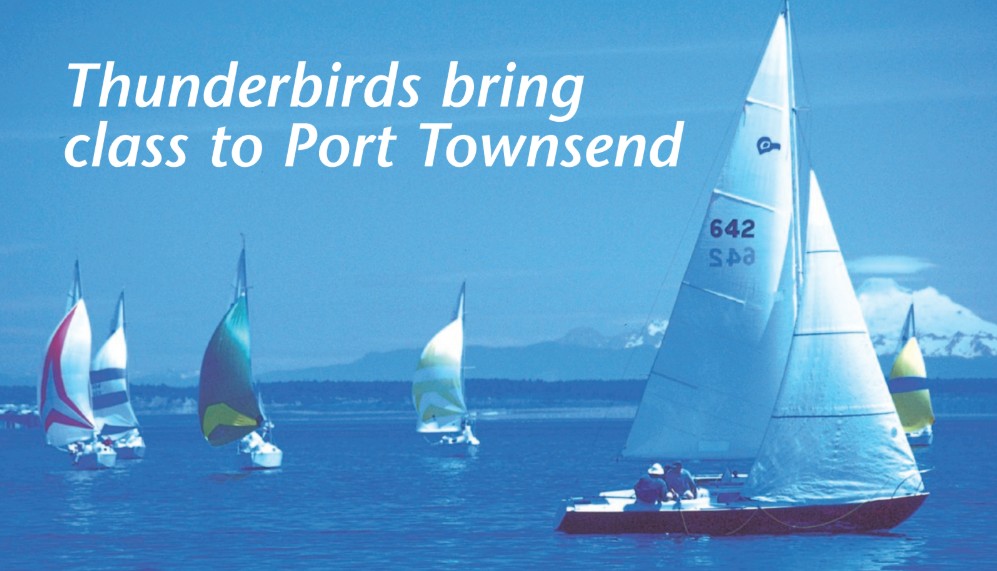
This year’s Northwest Regional Championship Thunderbird Regatta was held in Port Townsend, Wash. Puget Sound is the birthplace of the T-bird so, as one might imagine, local fleet activity is well organized and followed with interest. In the local racing reports the Thunderbirders are always well represented. Thunderbird sailors have created a sustained reputation since the late 1950s as a one-design class stocked with above-average sailors.
Canadian T-bird sailors seem to be particularly adept at spotting and encouraging young talent. The current international champion team of Bob Britten and Hughe Owens aboard Hocus is a good example. By keeping their young talent in Thunderbirds, instead of watching as they are lured away by Js or Melges, says as much for the T-bird as a great sailboat as it does about the well-organized Canadian efforts.
In this year’s regionals, the Canadians’ approach paid off as the shimmering red-hulled Owl, owned by Vitas Stukas, won an overall first and the events trophy. This win added a wonderful detail to T-Bird history: Owl won this event 31 years earlier in 1969.
Owl has a wooden hull with a fiberglass deck and house. Vitas attributed his boat’s speed off the wind to a thinner keel profile and his having moved the keel as far aft as the class would permit. This keel placement helped bring the center of lateral resistance more in line with the fractional rig’s center of effort.
It probably didn’t hurt that Vitas has a Ph.D. in chemistry, has sailed most of his life, and studies foil sections as a hobby, or that his daughter works in one of Canada’s leading hydrodynamic testing facilities. It says a lot about this class that after I sailed against Vitas all weekend long aboard Hocus, he was happy nevertheless to share his proprietary knowledge with me so I might make the boat I am putting together as competitive as possible.
The symmetry of one-design racing places emphasis on the ability of the sailors in the particular conditions of the day. One-design racing in Thunderbirds is no different in this regard than Etchels, Lidos, or Lazers. It is, however, the adjustability of these boats that sets them apart. Running rigging is, in general, left up to the individual. Keel profiles, rig tuning, and bottom fairing are the kind of sailorly details that can give one boat the advantage over another in a race in which three quarters of the boats arrive at the windward mark within 10 seconds of each other. This creates some very exciting starts and mark roundings. Sailors hike out as they beat to windward. The spinnaker hoists and dousings can be fast and furious. The level of athleticism and the caliber of the competition give this event a feel that encourages participants to sail hard.
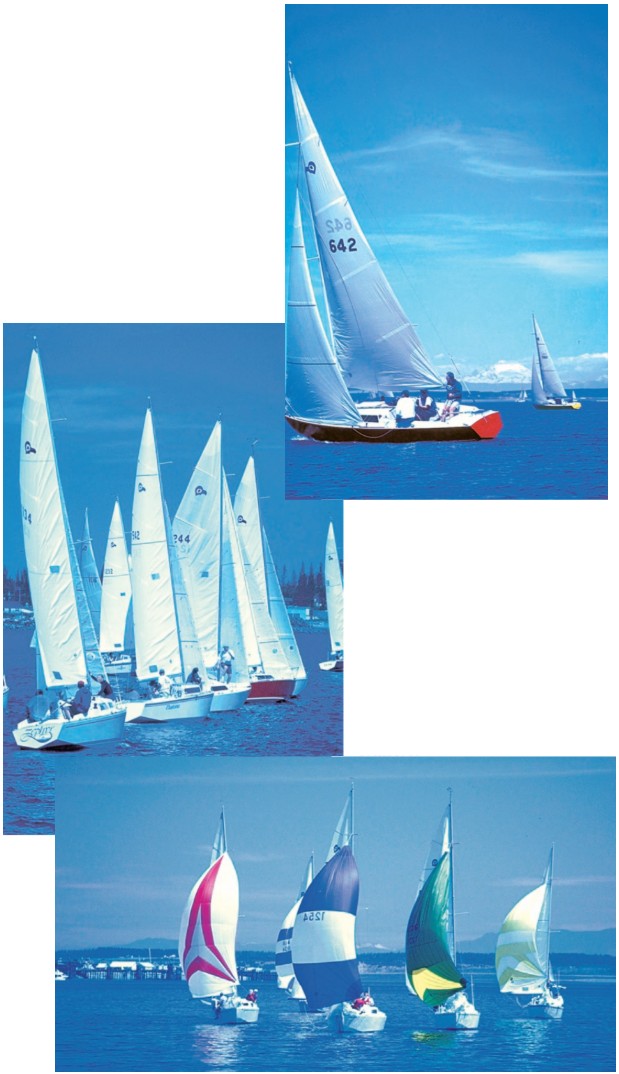
Most of these boats are sailed with crews of four. The range of ages and gender add to the fun-charged atmosphere surrounding the races, especially the Saturday night post-race party.
Eighteen-year-olds and 75-year-olds were united in a spirit of sailing that some may think had seen its last days fade away in the early 1950s. What could do a sailor’s heart more good than a day of close races, a shared meal and engaged discussion, while sipping good beer and watching the sun set on a vibrant fleet of great boats? If ever I am asked what makes for a successful regatta, I will be spared from explanation. I can simply extend an invitation to next year’s race.
Thunderbirds are very accessible to most sailors. Besides being great raceboats, they are perfect for piling in the kids and gear for a week or two of camp cruising in moderate comfort. A beater T-bird can be had for as little as $1,000, and a race-ready competitive boat without sails, for as little as $8,000. If your pockets are really thin, remember these boats race with four crewmembers. I will warn you, though, to be ready to make friends and meet great people wherever you go.
Tony grew up as a liveaboard in California. He discovered the Northwest School of Wooden Boat Building in Port Townsend and fell in love with carpentry and other traditional crafts. He is restoring a Thunderbird for racing.
Thank you to Sailrite Enterprises, Inc., for providing free access to back issues of Good Old Boat through intellectual property rights. Sailrite.com