Neenah-Nodaway Yacht Club celebrates 150 years
Issue 99 : Nov/Dec 2014
Picture the United States 150 years ago as the Civil War was drawing to a bloody conclusion. Long before the Green Bay Packers, sailing was the sport to watch in the state of Wisconsin. One of the earliest places sailing became organized was an area on the northwestern shore of Lake Winnebago, just south of Green Bay, in what is now the City of Neenah. Some accounts speak of thousands of people watching from shore, picnic baskets in tow to make a day of it. Even more spectators were out on the water watching from lake steamers, rowboats, and non-competing sailboats.
The Neenah Yacht Club was formed in 1864 — a year before Abraham Lincoln was assassinated — making it one of the oldest yacht clubs in the country . . . quite a feat for an inland lake so far from the East Coast. Few organizations have 150-year-anniversary bragging rights, so club members have been celebrating throughout 2014 and into 2015.
As a charter member of the Inland Lake Yachting Association, the Neenah Yacht Club hosted many races on Lake Winnebago. Captains and crews came long distances to compete for pride and prizes. Transporting sailboats those distances was not easy and involved railroad cars, horse-drawn wagons, or both. The efforts competitors made are a testimony to the pleasure and excitement to be had from sailing on Lake Winnebago.
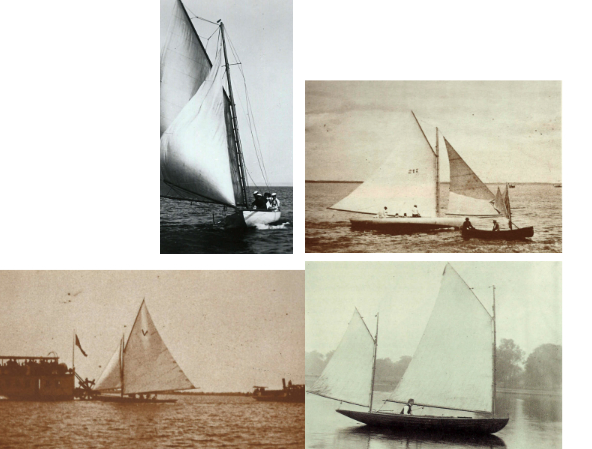
During those early years, the 1860s to 1890s, the Neenah Yacht Club members primarily sailed Sandbaggers, 20- to 30-foot gaff-rigged sloops that used crew and sandbags as movable ballast. In fact, if the final leg of the race was downwind, the bags might even be tossed into the lake! Just before the turn of the century, A Scows came to Lake Winnebago and, in 1900, a Neenah Yacht Club member, Will Davis, won the Class A Scow Inland Lake Championship in his Anita.
In 1894, sailors frustrated with the ever-increasing focus on winning races through boat changes rather than sailing skill formed a second club, the Nodaway Yacht Club. This club had some cutting-edge ideas about sailing that were set forth in its articles of formation:
- To promote pleasure sailing and racing under equal conditions on Lake Winnebago.
- To limit and define the building of new boats to certain class dimensions and club models.
- To establish a standard code of rules and signals for the lake.
- To discourage extravagant expenditure in this revival of yachting, both in the matter of out-building and in the matter of prizes.
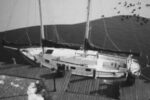
For that first sailing season, six members had received their one-design cat yawls. Within two years the club had a respectable sailing fleet, referred to locally as the Nodaway Class. It was a 21-foot craft with a 15-foot 9-inch waterline and a 5-foot 6-inch beam. It drew just 9 inches with the board up and is thought to have drawn 3 feet 6 inches with the board down. It had a 176-square-foot mainsail, a 74-square-foot mizzen, and a 112-square-foot spinnaker.
In 1905, the two clubs merged to form the Neenah-Nodaway Yacht Club, retaining the formation ideals developed by the Nodaway Yacht Club a decade earlier.
In 1926, a youth program was developed. By 1957, the Fox Valley Sailing School was chartered as an independent organization to develop sailors. The FVSS continues as a certified sailing school for kids, teens, and adults.
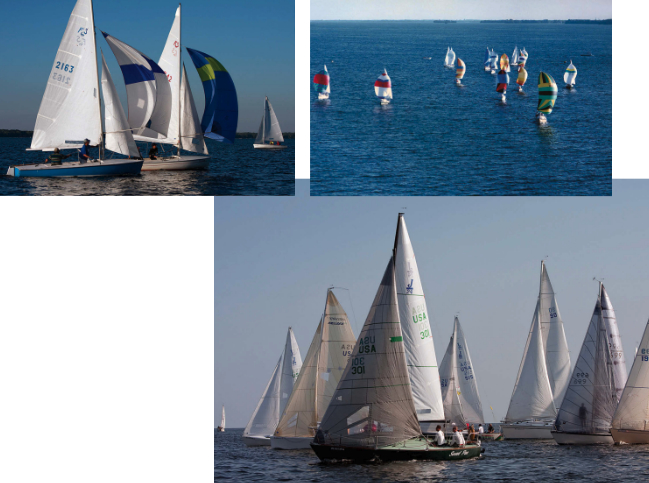
Today the Neenah-Nodaway Yacht Club boasts a respectable mix of keelboats, Flying Scots, and Lasers. The club retains the same goals set down by the Nodaway Yacht Club in 1894. To read more about the club history and view historic sailing photos, visit www.nnyc.org.
Kacee Des Jarlais and Doug Hatch are proud members of the Neenah-Nodaway Yacht Club. This information was drawn from The History of the Neenah-Nodaway Yacht Club by James C. Kimberly, published in 1957.
Thank you to Sailrite Enterprises, Inc., for providing free access to back issues of Good Old Boat through intellectual property rights. Sailrite.com