This nice fat one won’t jam in a block
Issue 52: Jan/Feb 2007
HAVE YOU EVER HAD A JIB SHEET RUN OUT OF ITS BLOCK AND blow overboard on the leeward side? The consequence of this temporary loss of jib control is usually limited to a little embarrassment and the need to collect the loose jib sheet and reroute it through its block.
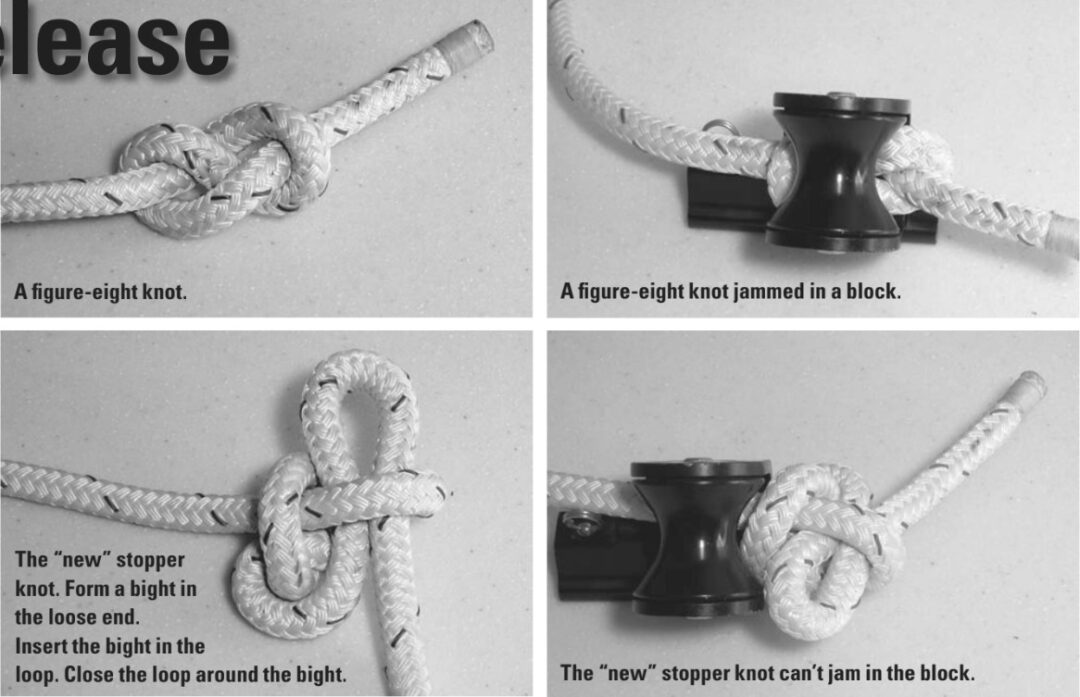
However, if the mainsheet accidentally runs free out of its block, the resulting loss of boom control could be deadly. Most sailors have recognized and solved these problems by tying figure-eight knots in the ends of their sheets.
The figure-eight knot is less effective on the jib sheet. Especially if you use twin-sheet jib-sheet cars, it might not do the job. These cars have the advantage of allowing two sheets be led through the block at the same time, but a figure-eight stopper knot can sometimes pass through the car or, worse yet, jam partway through the car.
Brion Toss’ excellent book, The Rigger’s Apprentice, has a section on stopper knots. It includes a delightful story of the invention of the oysterman’s stopper by Clifford Ashley. Brion included the story “to illustrate that there is still room for innovation, even in the simplest forms of knotting.” He then explained his invention of a variation on the stevedore’s knot that he called the sink stopper. The sink stopper is less prone to jam than either a figure-eight knot or a stevedore’s knot and it is big.
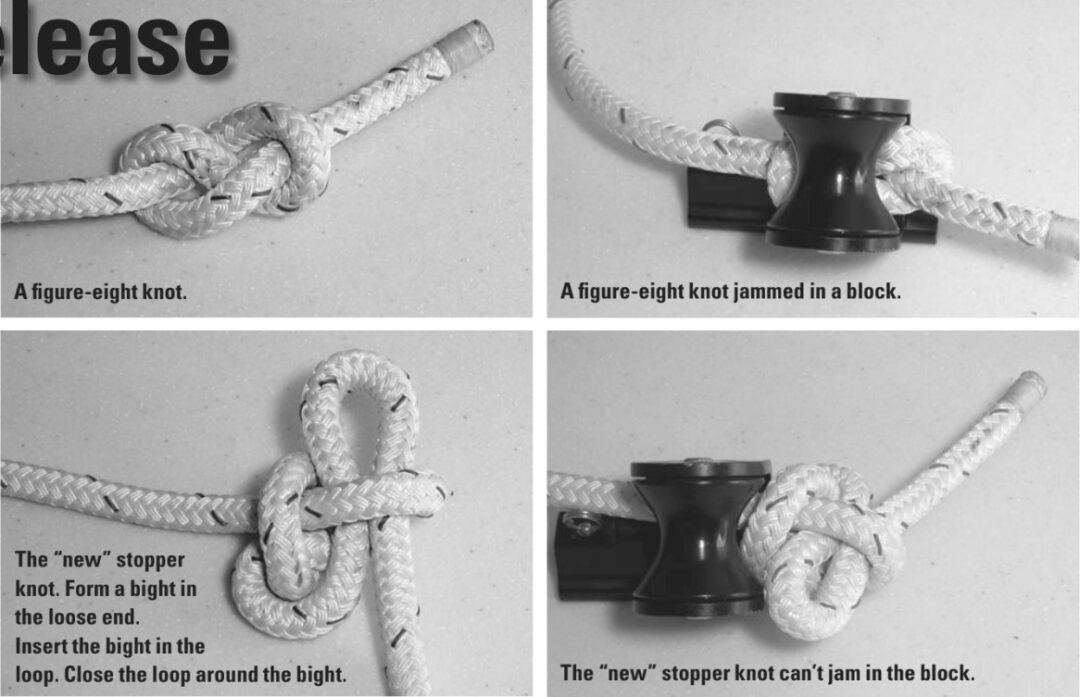
After reading The Rigger’s Apprentice, I began to view knots differently. I began to experiment too. Most of my experiments were total failures. But one of them, a stopper knot, shows promise. Like the sink stopper, it is based on a simple slipknot. Further like the sink stopper, it is easy to tie, has bulk, and seems secure. Best of all, it can be untied in a jiffy. It may not be a new knot at all, but I have not seen it before.
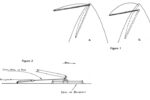
To tie this stop knot, make a simple slipknot. Then make a bight in the loose end and insert the bight into the loop. Pull the slipknot tight to close the loop around the bight.
To untie it, jerk the loose end to pull the bight out of the loop, and the knot will untie itself. Even when pulled really tight, it can be easily “broken” like a bowline and then untied instantly by pulling on the loose end.
Give it a try and let me know what you think. You can send an email message to aultfather@man.com.
Thank you to Sailrite Enterprises, Inc., for providing free access to back issues of Good Old Boat through intellectual property rights. Sailrite.com