How to keep the library where it belongs
Issue 56 : Sept/Oct 2007
I’m a strong advocate of “a place for everything in its place.” This is especially true when stowing things aboard our boat, where space is at a premium.
Last year, after a particularly rough passage, I was distressed to find the saloon sole littered with just about every book and item that had been neatly stowed on the starboard bookshelf. Considering that the shelf is nearly 6 feet long, that was quite a few items. Despite the fact that the shelf is fiddled, the gyrations and excessive heeling we experienced during the trip overcame the restraints of the fiddles. Fortunately, there was no damage, except to my organizational pride. Not wanting a repeat performance, once in port I set about to remedy the situation and make the bookshelf more secure.
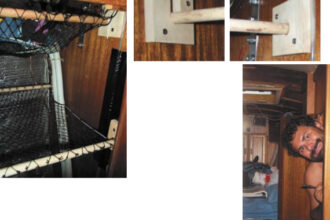
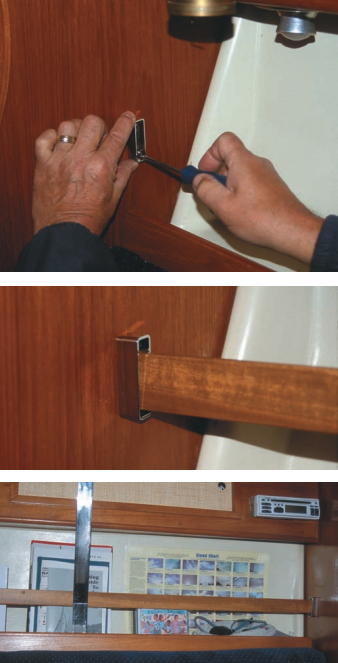
At the local chandlery I purchased a wooden boat-cover bow and a pair of surface-mounted bow sockets. On each of the two bulkheads that flank the bookshelf, I installed one of the sockets. I located them approximately 4 inches above and directly in line with the existing fiddle. I cut the bow to match the length of the bookshelf and snapped it into the sockets.
The boat’s chainplate is situated almost midway along the shelf’s length and, by sliding the bow behind it, I have a convenient restraining point for the bow. This ensures that the bow doesn’t spring out from the weight of shifting books. On a shorter shelf, this three-point configuration probably isn’t necessary, especially if the bow is cut an inch or so longer and arcs slightly inward toward the books when installed.
I had a choice of either a hardwood or a fiberglass bow. Even though the fiberglass bow was more substantial, I chose the wooden one. I believed the bright orange fiberglass bow might have clashed somewhat with the boat’s interior. After a coat of penetrating stain and two coats of satin varnish, the bow closely matches my varnished teak interior and, best of all, it works great. The cost of the project was about $20.
Gregg Nestor, a contributing editor with Good Old Boat, has had a lifelong interest in all things aquatic. Gregg and his wife, Joyce, cruise Lake Erie aboard their Pearson 28-2 and also trailersail an O’Day 222. He has just completed his second book: Twenty Affordable Sailboats to Take You Anywhere.
Thank you to Sailrite Enterprises, Inc., for providing free access to back issues of Good Old Boat through intellectual property rights. Sailrite.com