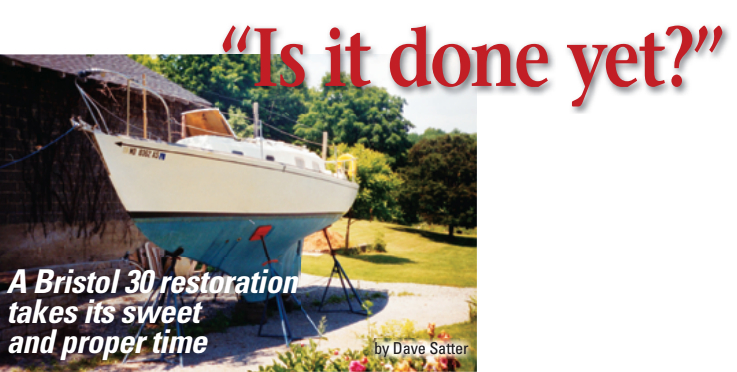
A Bristol 30 restoration takes its sweet and proper time
Issue 73 : Jul/Aug 2010
Every night for four years, when I came in from the yard after working on my 30-foot sailboat, I heard the same question from my family. “Is it done yet?”
How far should one go when fixing up a 30-year-old boat? I should put it in the water and go sailing. That’s what “they” say to do: fix it a little each year and keep sailing. However, what most people do is not for me. I had a dream of the perfect boat in my head. I wanted to make it look just the way I wanted it to be.
I always said I’d have a sailboat by the time I was 40 years old. Along the way came marriage and children. At 38, I was tired of looking online and in magazines at boats for sale. My wife, Sue, was tired of hearing me talk about it also.
“Just go buy one and stop talking about it already,” she’d say. (Sometimes you have to just jump right in and listen to your wife.) I knew what I wanted: traditional lines, full keel, a little teak, and a diesel engine. After looking at a few candidates close to home in northern New Jersey, I spotted what I wanted in a classified ad: a 1973 Bristol 30 sloop in Maryland. I rationalized that I might as well start with a larger boat since I had run out of the time needed to work my way up.
As we were vacationing in Delaware that summer, I ventured a little farther south to get a look at her. After I met the owner, we struck a deal, and I spent my first night aboard Quester on the hard. I didn’t have a survey done as I had already spent $500 on a survey for a boat I didn’t wind up purchasing. Besides, I planned to fix and rebuild everything on this boat anyway. I knew I was taking a chance.
Assessing the project
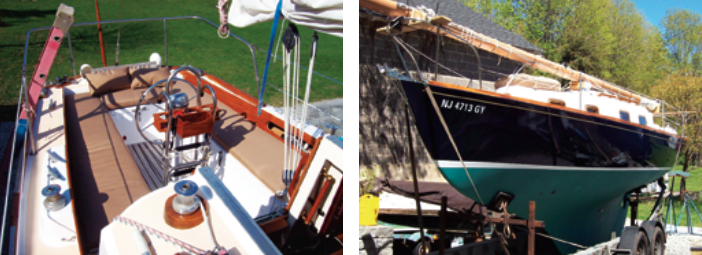
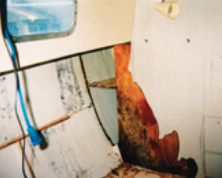
I had the boat trucked to my backyard. Thankfully, she was in good shape for her age. The previous owner kept her clean and in good working order, but the chainplates leaked, so most of the bulkheads were soggy. And everything about the boat said 1973. It needed some updates.
A lot of the interior leaks were caused by the toerails, which were loose and needed to be repaired or replaced. I made and installed new ones that I steamed in a 20-foot long steam box. This was one of the hardest jobs on the boat. I hope never to have to do that again.
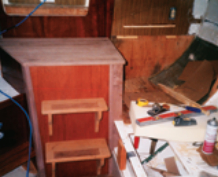
It’s amazing how fast you can take something apart and how long it takes to put it back together. The Bristols have a reputation for being of solid construction. Taking apart and removing even soggy bulkheads was difficult. My goal was to rebuild the interior with lumber I had on hand: walnut, mahogany, and teak.
Along the way, I needed to replace the electrical and plumbing systems. I also wanted to keep things simple with a minimum number of pumps and only 12-volt electricity.
All in all, I figured on a 2005 launch date. My wife could not believe that the boat would be in our driveway for four years. I responded that I was trying to be realistic here because everyone underestimates these things when they start a project like this. Anyway, I didn’t even have a slip or mooring — yet — but I was on the waiting list. It was a very long list.
Working from the bow
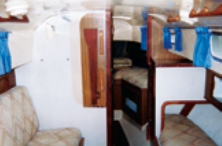
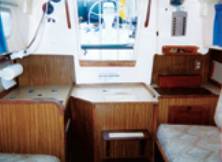
This boat has a traditional layout with opposing saloon berths and the galley across the aft end of the cabin. A V-berth occupies the bow. Aft of it is the head with a hanging locker opposite. The head door closes off the V-berth for privacy.
Starting in the V-berth, I had to cut out someone’s homemade holding tank. This was extremely unpleasant. I then modified the space to accommodate a new 15-gallon holding tank. The hull lining in the V-berth was 1970s blue carpet. I replaced it with walnut ceiling strips that I made individually, varnished, and screwed to oak framing I had epoxied to the hull.
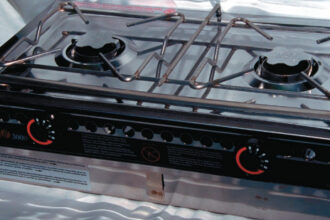
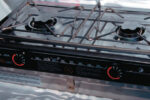
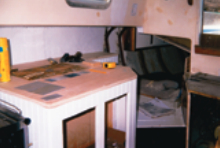
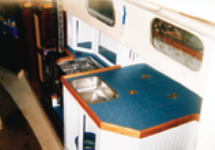
Working my way aft along the starboard side, I made two small lockers with cane doors, one wet and one dry. I moved the galley to the starboard side of the saloon. It’s now larger and is fitted with a Dickenson solid fuel heater, a Force 10 propane stove/oven (the smallest one they make), and a new icebox and sink. For the icebox, I purchased the best Igloo cooler that would fi t and built it into the galley counter, while adding another 3 inches of insulation around it. Making all this took many cardboard mock-ups, much trial and error, and a lot of late nights in the boat.
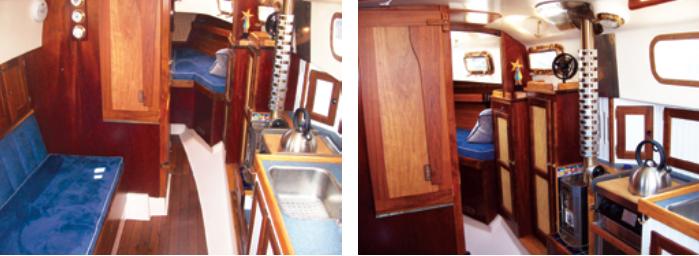
Almost every day one member of the family would say, “Daddy, you’re bleeding again.” It’s amazing how often you bump, scrape, and bruise yourself on a job like this.
So I wouldn’t lose a sleeping berth, I made a large quarter berth by eliminating the starboard cockpit locker and removing the aft bulkhead. I finished its hull side with more ceiling strips and insulation.
Next, I built the engine box and lid, which you stand on as you come down the companionway, and added soundproofing.
On the port side, I added a small chart table above a door that provides access to the fuse panels. I resurfaced the bulkhead forward of the saloon settee with mahogany and added new cabinets and a bookshelf above the settee.
The head got new cabinets that could be protected by a curtain when the shower was in use. I installed a new shower head. The shower draws from a 3-gallon water tank, installed under the galley counter, that gravity feeds a pump under the cabin sole. (See my article in the March 2005 issue.)
I bonded all the cabinetry and bulk – heads, especially those fitted with chainplates, to the hull and deck with 3M 5200 and tabbed these with epoxy and cloth to keep the hull and deck stiff and strong.
Electrical and plumbing
I replaced every electrical component and all the wiring and installed another fuse panel for the pumps I added for the galley, shower, and foredeck washdown. I also put in a few extra 12-volt outlets.
Snaking the wires was a tough job, since the Bristol has a molded-in head-liner. The only chance I had to do this project was in January which, in New Jersey, can be the coldest and snowiest month of the year. At 25 degrees, your fingers and the wire get pretty hard to work with. The Dickenson heater helped a lot at this time; it used natural charcoal and kept a steady, even heat without a large flame. It also kept the coffee warm. (Remember to keep a port light or hatch open for ventilation.)
The deep-cycle batteries that came with the boat lasted for years in my backyard. I started the Volvo MD2B every week or two except in the winter. Once all the electrical wiring was completed for the new light fixtures, pumps, and running lights, I replaced the batteries with two deep-cycle absorbed glass mat (AGM) batteries and voltmeters. I also added a new heavy-duty battery switch and a Blue Sea Maxi fuse block between the batteries and the fuse panels.
The only bilge pump in the boat was a Whale Gusher 10 that needed to be rebuilt. I added a new Rule-Mate 500 to the bilge on a long piece of PVC pipe so it can easily be lifted out of the 3-foot deep bilge for cleaning.
The boat has a water tank under the V-berth and another in the keel. They are connected so the V-berth tank gravity feeds the other. Both are integral with the hull, so I cleaned, sanded, and epoxied them on the inside through their inspection ports. Sounds like fun, doesn’t it? Between the two tanks, this Bristol 30 holds 50 gallons of water.
Under the floorboards, and on top of the water tank in the keel, is a good 6 inches of space where the new pumps for the galley and the shower could be located.
I also added a seawater wash-down pump, which I fitted under the V-berth along with the 15-gallon holding tank for the head. All the through-hulls were bronze. As they were reusable, I fitted them with Groco ball-valve seacocks. The boat originally had traditional tapered-plug seacocks.
Exterior and deck
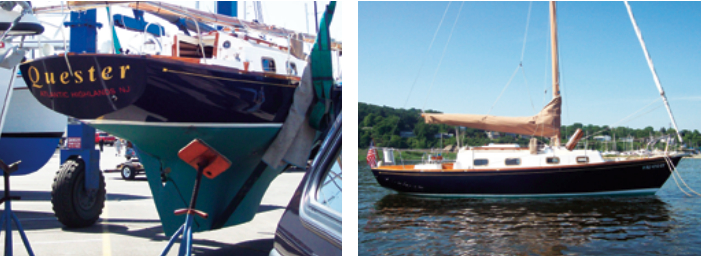
After removing all the deck hardware, I painted the deck and cabintop with Interlux non-skid paint (beige), the
cabin sides with Interlux Brightside (white), and the hull with Interlux two-part Perfection (flag blue).
As long as I was in this deep, I decided to paint the mast and boom too. I moved the mast into my work- shop, sanded it, and primed it with Interlux Vinyl-Lux prime wash (a two-part, self-etching primer), then I applied three coats of Brightside Sundown Buff. This was the first time I ever painted an aluminum mast and it worked out very well. The hardest part was removing and re-installing the hardware.
The boat only had one opening port and that was in the head, so I replaced all four ports in the forward part of the boat with bronze opening ports. It’s a nice touch that gives the boat a traditional look. I replaced the old weathered acrylic panes in the four large deadlights in the main cabin with new polycarbonate.
I re-bedded all the deck hardware, the railings, the anchor roller, and a new mooring bitt with 3M 4200 and installed large backing plates.
Final touches
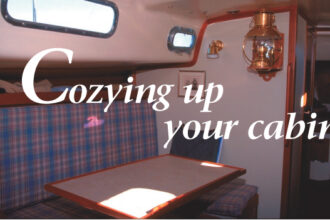
After four years, I finally got the call I’d been waiting for. My name had come up on the list for a mooring at a marina an hour from our house. If I didn’t get the deposit to them immediately, they would move on to the next name on the list. I was able to come up with the money and complete the final touches: cushions and upholstery, cove stripe, and repainting of the boat’s name, Quester.
After going through all the names in my head, I realized the name Quester, which had come with the boat, had served the previous owner well for 18 years. So the name stayed. Quester means a search or pursuit, an adventurous expedition. Of course, I added all the safety gear: carbon monoxide detectors, smoke alarms, fire extinguishers, and so on.
I don’t know if I would take on a project this large again, especially while raising two children and trying to run a small business. It took a lot of my spare time and money. But you know, if you get the dream in your head, you just have to go with it.
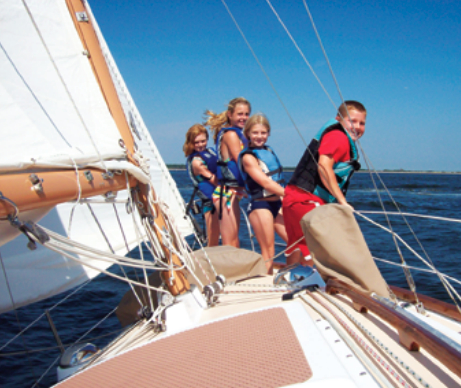
David Satter restores wooden canoes and small boats in northwestern New Jersey. See some of his projects at www.sattersrestoration.com. Quester, in all her new glory, sails out of Atlantic Highlands, Sandy Hook Bay.
Thank you to Sailrite Enterprises, Inc., for providing free access to back issues of Good Old Boat through intellectual property rights. Sailrite.com