Grandchildren keep the wind in the family’s sails
Issue 98: Sept/Oct 2014
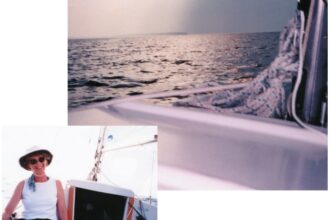
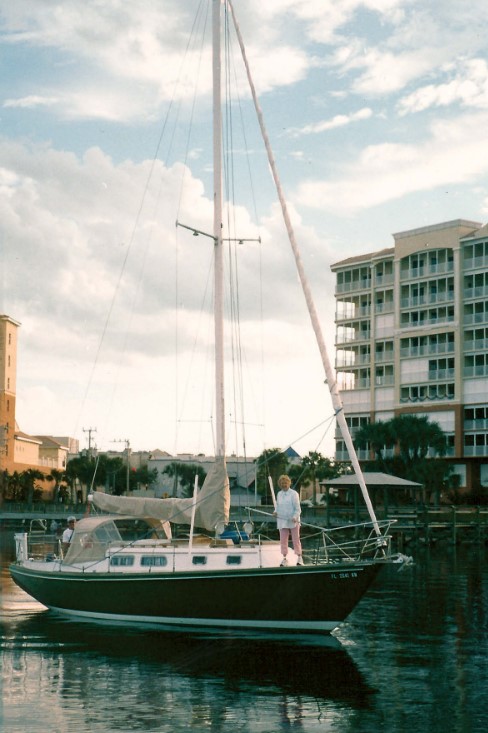
In these my retirement years, I spend many hours messing about on Hornblower, my 1976 Pearson 35. One day, the sea breeze was sweetly sweeping across the Indian River in front of our Florida condo. The sun was making stars on the water’s surface and calling me to embrace it all with a sail down the river. I accepted the invitation and felt the wind cool my face as Hornblower leaned into a comfortable heel in response to the freshening breeze. Joy! Pure joy!
As Hornblower whispered south on a close reach, I thought about my family and our deep attraction to the sea. Our connection to water and boats is like a tree trunk that joins the upper branches to the lower branches. A passion for sailing spread from my generation to my children’s generation, and is now growing in the lives of my grandchildren. My parents were not boaters so I claim it all started with me!
My fascination with sailing began in the summer of 1946. Sailboats dotted the distant horizon to the north of our rented summer cottage on Lake Candlewood in Connecticut. Included with the cottage was a bulky 12-foot rowboat that I spent many hours rowing and in which I could let my 9-year-old imagination take flight. How did those beautiful white sails make a sailboat work? Could they only sail with the wind? My mind could only conceive of the wind pushing the boat . . . anything else didn’t seem possible. I liked the idea that the wind could do the work of my arms pulling those heavy oars. When there was a breeze on the lake, I loaded our one-man rubber life raft into the rowboat and rowed upwind until I was too tired to row anymore. Then I stowed the oars, lifted the life raft up in the air and sailed home. It was a lot of trouble for little reward, but it was all I had to work with, so I repeated the routine time and again while trying to steer with an oar tied to the transom.
A spell is cast
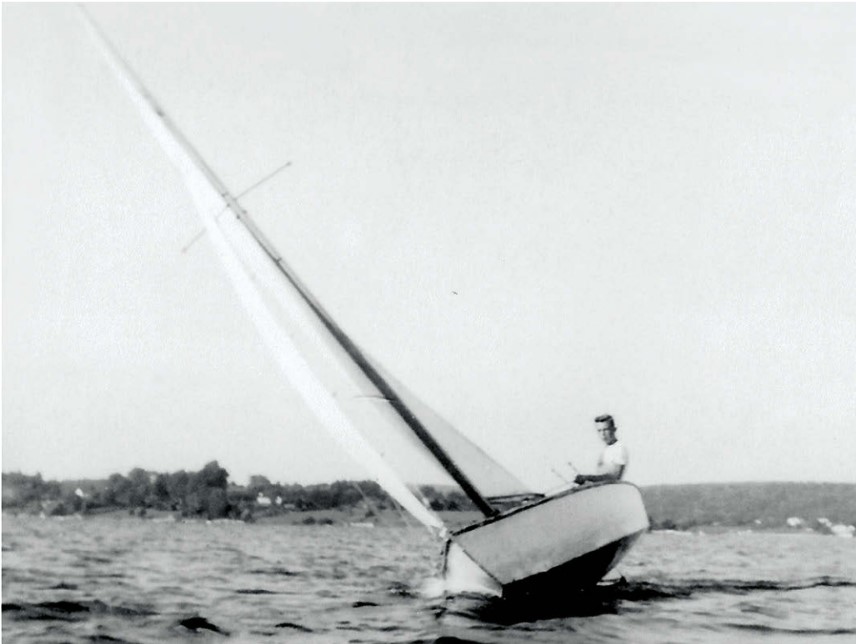
One day, a sailboat headed straight toward our cottage. The boat leaned over on its right side and the sails billowed out into beautiful curves. Wires all around the boat that held up the mast outlined the scene like a triangular picture frame. Teenage boys and girls were in the boat. I could see their faces. They were talking and laughing. As the boat came closer to the cottage, I could hear the water rushing past the hull. The boat seemed to be moving fast, without oars, without a motor, and without wind behind the boat. It was amazing and wonderful to see.
Only a few yards from where I stood, the boy steering the boat pushed the rudder handle away from him and the sails shook and flapped. Kids pulled ropes and untied ropes while changing position in the boat. The boat turned about 90 degrees. All was quiet once more as the sails filled and the boat sailed away. I got a view of the varnished transom gleaming in the sunlight and the curve of the sails delightfully strummed my senses. My eyes remained glued to the boat until it was just a toy on the horizon.
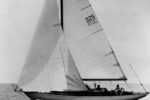
That day stands out in my mind as if it were yesterday. How fitting that, several years later, I learned to sail on that very same boat, a 16-foot Comet.
Passing the baton
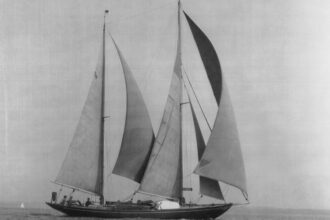
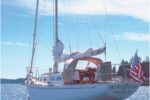
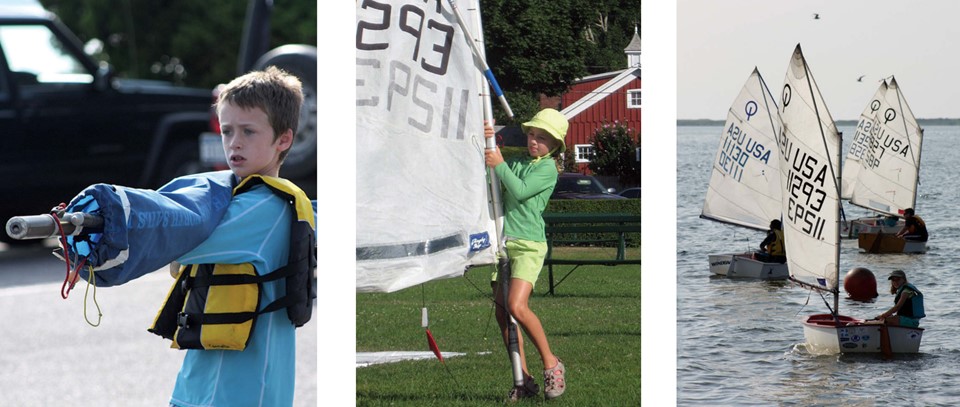
Decades later, on a cool summer evening in 1969, I realized my oldest daughter Maria, age 12, had begun to show not only an interest in sailing but also a spirit of adventure and much aptitude. My good old boat at the time was a 1902 Buzzard Bay 30 designed and built by The Wizard of Bristol himself, Nathanael G. Herreshoff. The boat was aptly named Escapade. That evening was perfect for a relaxing family sail so we rowed out to our mooring in Mount Sinai Harbor on the north shore of Long Island. All eight of us were aboard and getting ready to leave the mooring when I realized I had forgotten to bring the engine key.
“No problem. We’ll just sail around the harbor,” I said. The wind was light, 10 to 12 knots. Not a cloud in the sky. It would be just fine. We raised the sails, fell off the mooring, and sailed around the other moorings and boats in the harbor. My son Paul perched on the bowsprit. Hart and Julia lounged on the sidedeck. My wife, Carol, sat in the cockpit with Maria, Ross, and 19-month-old Sarah. I stood at the helm. It was delightful, until out of nowhere came a roaring wind, no longer on our beam, but close on the bow. We trimmed the sails in tight to avoid sailing south into the marsh. We raced through the mooring field, dodging boats and mooring balls, trying to find a place to come about.
I wanted to change our sailing position so I could reduce the angle of heel. I looked to the bowsprit and the hair on the back of my neck stood straight out as I saw 7-year-old Paul hanging onto the forestay. I yelled to him, “Stay put and hang on tight!” As we approached the west end of the harbor, I shouted, “Coming about!” Maria, the eldest, handled the jibsheet and I let out the main as we turned for a broad reach back through the mooring field to our mooring.
Flying to the east end of the harbor, I weighed my options. I needed Maria on the bow to pick up the mooring if I could time the glide to the ball slow enough for her to grab the pendant line. I told her my plan and she said, “I can do it.”
She worked her way to the bow and got into position to grab the pendant stick. I eased Escapade toward the mooring on a close reach, luffing the main to control our speed. As I closed in on the ball, I turned into the wind and loosed the sheets. Maria grabbed the pendant stick and pulled the pendant line aboard and onto the cleat. She ran to the mast and dropped the jib without a word from me. I ran forward and dropped the main. As we bagged the jib and flaked the main, the wind moderated as quickly as it had blown up. When I looked at Maria I saw a triumphant grin on her face. My first sailor!
When Escapade sold, we bought a house on Long Island. A Sunfish became our new yacht. Maria learned to sail the Sunfish in no time at all. Julia, Sarah, and Kate followed her. My boys — Hart, Paul, and Ross — wanted speed and control on the water and turned to powerboats and clamming instead.
Generation three
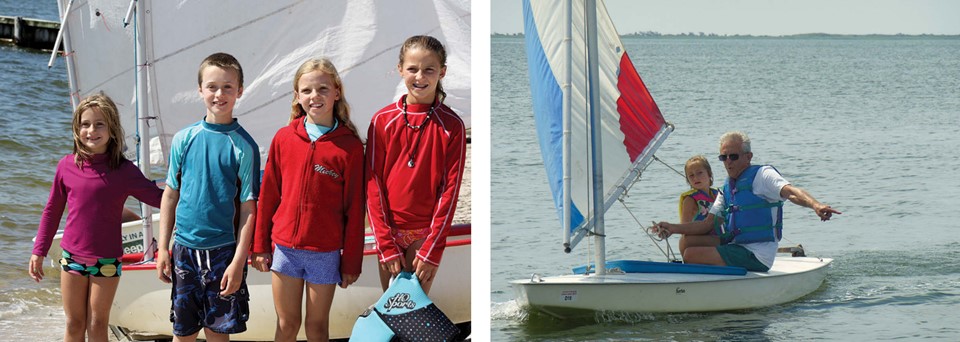
Last summer, as every summer, we returned to Bellport to visit our four youngest grandchildren and their parents. Our two youngest daughters live where they grew up, in Bellport. That is where I taught them to sail almost 30 years ago and where their kids are learning to sail now. Ella was the eldest, then 10. Her sister, Charlotte, was 8. Their cousin, Clayton, was also 8 and Clayton’s sister, Claire, was 6. Charlotte and Clayton sailed together in the morning session, Ella in the afternoon, and Claire eagerly awaited her turn the following summer.
This generation of sailors is enrolled in a sailing school sponsored by the Bellport Yacht Club. At about 8:30 each weekday morning, the village dock comes alive with little kids scrambling to set up their Optis with mast, boom, sail, rudder, and daggerboard. Parents can watch but not help. The instructors, mostly college students, watch over their charges with a very personal touch, calling all their students by their first names.
When we arrived in town in August, our grandkids were in their fifth week of lessons and had a good feel for the sailing routine. The first morning, I was thrilled to see all these little ones showing off their skills and especially touched by my special ones setting up their boats. Charlotte and Clayton, close buddies from birth, helped each other with the two-person tasks and needed no words to accomplish them. Just the very simple acts of Clayton tying a square knot and Charlotte fittting her rudder onto her boat rekindled my simmering emotions.
Now an ancient mariner, I stood glassy-eyed by the spectacle, and felt a special closeness and connection to these little sailors. The instructors were by now on board a couple of Boston Whalers from which they were ready to give helpful reminders or a physical rescue to those in need. The sailors were given the signal to tack off the beach. Away they went, about a dozen of them in a gaggle, looking more like bumper cars than sailboats. Giddy with joy over this new batch of adventurers setting out upon the water, I became aware of Claire at my side. She looked up at me and said, “Grandpa, will you take me on the Sunfish?” I looked down into the bright eyes of this precious granddaughter and saw a bit of myself in her eagerness to climb aboard and face the sea. The tree trunk was sprouting another new branch.
As I think about it now, I wonder whether this generation will be as excited about sailing as I have been throughout my life. Will one of these little ones take me sailing when I can no longer handle the task myself?
Brian Buck, a retired airline pilot, lives in Cocoa, Florida. He and his wife, Carol, sailed the ICW to Florida in a 23-foot Seafarer. He has sailed his co-owned Pearson 35, Hornblower, to Long Island and back to Florida via the ocean route and now sails on the Indian River and occasionally ventures to the Keys. He has refurbished several sailboats, including Hornblower.
Thank you to Sailrite Enterprises, Inc., for providing free access to back issues of Good Old Boat through intellectual property rights. Sailrite.com