Issue 8 : Sept/Oct 1999
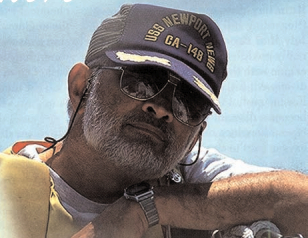
Nothing exceeds like excess. It’s not an original line, but I’ve forgotten where I first heard it. It is interesting to speculate on the origins of excess in our culture and on the effect of excess in our lives.
Some excesses are relative and fairly innocuous. Have as much sugar as you want in your coffee; no one else has to drink it. Other excesses are quite significant. The design of a sailing vessel is a fabric woven of compromises. Any excessive feature is certain to diminish and minimize other features. We can’t have it both ways. Why do we even want to?
It is fairly well accepted that a bluewater boat is a better choice for ocean voyaging than a coastal cruiser. But what is not said is that a coastal cruiser makes a better coastal cruiser than a bluewater boat. Is this heresy? Don’t we want the ultimate in resistance to capsize, the maximum comfort in a heavy sea, the largest possible displacement and length on deck, and the fullest possible keel just to be extra-safe out there?
What are we afraid of? Where do we get these fears? They come in large part as a method of advertising and selling. Find a small, but real, risk. Magnify it. Focus on it. Get members of your audience to visualize themselves threatened by it. Offer them protection from it, and watch them whip out their credit cards. It’s turn-of-the-new-century commerce. A protection racket dolled up with scantily clad maidens. It works very well. If it didn’t, we would not be a nation driving heavy off-the-road vehicles whose main challenges are climbing slippery driveways in suburbia.
I knew a wonderful philosopher once who was very concerned with all of this. He wanted to choose his faith, philosophy, and way of life without basing those choices on fear. He thought about it a lot and worked hard at it. He was fortunate to have lived much of his life in the time before commercial motivation by fear was well-refined. Sure, he had to deal with the depression and a world war where if you lost you really lost, but those were things worth fearing. He picked his boats for other qualities.
We are living in a culture that needs a very simple, single figure of merit. Something by which we can judge a boat to see if it is for us. I submit that smiles are the factor to maximize, not length, displacement, or board feet of topside teak. To judge a vessel properly, look to the body language and facial expressions of the skipper and crew. If they are clearly happy, the vessel will usually look good on them. It will have satisfied its design intent.
This is a call for sanity. There is good advice that says go small, go with what you’ve got, go now. Good advice, but go where? Pecking orders evolve. In some circles you aren’t a player unless you are planning a long cruise or, better yet, have already been on several. Going around the world is best, lesser distances will do. Your boat should be a good pick for crossing the North Atlantic in winter. Very safe.
Fact is, most sailors are not going around the world, most are not even sailing to the Caribbean this winter. Very few will cross the North Atlantic. They are nonetheless very important people. Their lives are filled with very important things, and sailing is just one of them. Like most people, they will run out of time before they run out of anything else.
If you need a good bluewater boat for bluewater work, that is what to choose because it will excel where a coastal cruiser will only make do. For coastal cruising, the coastal cruisers are best. Both will probably get you to the next port because safety on the water has more to do with seamanship than sheer mass or the length of a keel.
Go where? Go sailing. Anywhere.
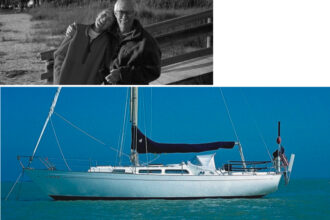
Who was the philosopher? My dad.
Thank you to Sailrite Enterprises, Inc., for providing free access to back issues of Good Old Boat through intellectual property rights. Sailrite.com