Ahoy! Who goes these?
Issue 100: Jan/Feb 2015
AIS, the Automatic Identification System, allows vessels to “see” and identify each other (and for shore stations to “see” vessels). It was developed as a collision-avoidance tool, and in 2002 was made compulsory for all passenger ships, cargo ships of 500 tons or more not engaged in international voyages, and commercial ships of 300 tons or more engaged in international voyages. Smaller commercial craft and recreational vessels are not currently required to use AIS in U.S. waters.
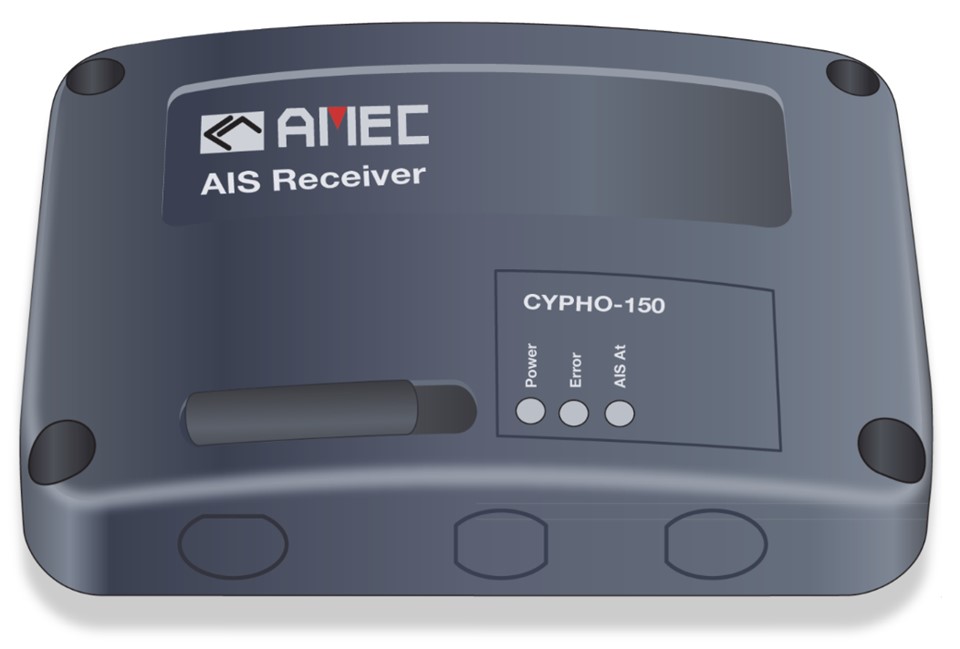
Three classes of AIS exist:
- Class A, primarily used by large commercial, cargo, and passenger vessels, both transmits and receives data. It uses the highest power, giving it the greatest range, and has the shortest interval between reports.
- Class B also transmits and receives and is primarily used on vessels that are not required to have a Class A installation but nevertheless choose to transmit AIS signals as well as receive them. The Class B reporting rate is slower than that of Class A.
- Receive-Only Class is intended for recreational boaters, who are not required to use Classes A or B but want to be able to identify vessels in their vicinity.
How AIS works
AIS operates on VHF-FM marine radio frequencies. Class A and Class B devices integrate a marine-band transceiver, GPS, and a display. The locations of nearby AIS-equipped vessels appear on the display as symbols. “Clicking” on a vessel symbol opens a panel that displays the vessel’s name, type, position, course, speed, call sign, MMSI number, and other information that the transmission makes available.
The MMSI (Maritime Mobile Service Identity) number is a series of nine digits that is sent in digital form and uniquely identifies a vessel or coast station. By means of its MMSI number, a vessel or station can be contacted directly via VHF using Digital Selective Calling (DSC). Every AIS transmitter station (Class A or Class B) is required to have an MMSI number (see “Marine Band 101,” September 2003).
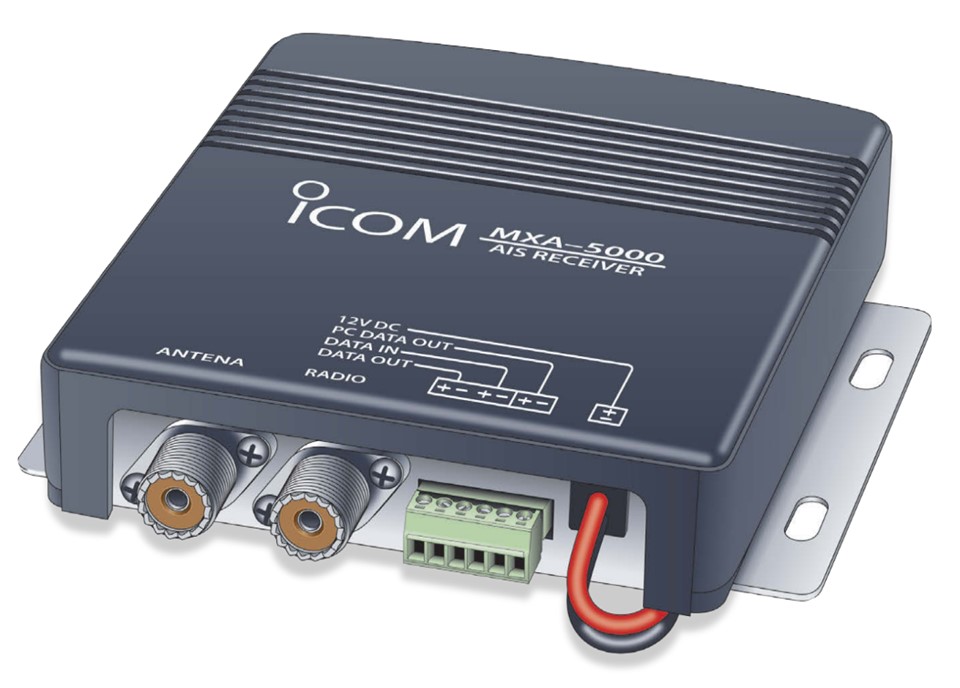
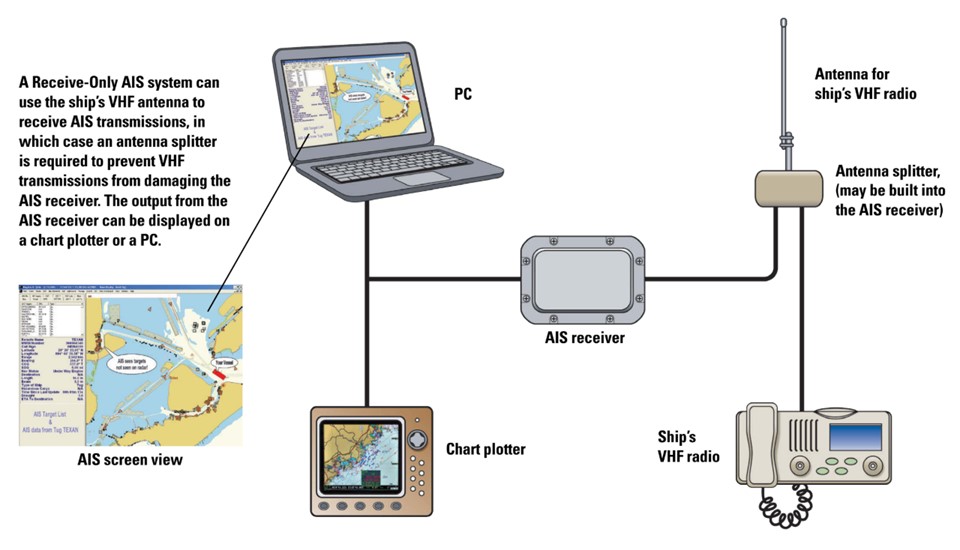
In typical Receive-Only installations, the output of the receiver is fed to an AIS-compatible chart plotter or radar. Most receivers also have USB outputs that can feed a PC or Mac and some receivers can even be powered by the USB cord connected to a laptop.
AIS provides a real-time graphical display and can “see” better through rain squalls, around promontories, and beyond islands than radar systems can. Signal range, as with a VHF radio, depends on factors such as antenna height and antenna gain. However, since an AIS system shows only those vessels that are transmitting AIS signals, it is not a substitute for a visual deck watch or, in low visibility, a radar watch.
User choices
AIS can be useful for the sailor who shares congested waters with large commercial craft where potentially hazardous crossing situations are likely to arise. Recreational vessels can install a Class B device or a Receive-Only device.
Class B AIS equipment includes a VHF transmitter and a dual-channel receiver and requires a built-in GPS. Class B transmission power is lower than Class A. It is restricted to 2 watts, giving a typical range of 5 to 10 miles. The FCC requires that Class B (and Class A) AIS transponders sold in the U.S. be programmed by a qualified technician. If you choose to install a Class B, at the time of purchase you must fill out a programming form with your vessel information so a technician can program it into the AIS.
Some recreational boaters install Class B transponders, but Receive-Only units are much less expensive. They receive and display information from vessels within range that are equipped to transmit AIS signal (Class A and Class B vessels). Those vessels, however, cannot see a Receive-Only equipped boat on their AIS displays.
To get the feel for the information available to an AIS receiver, go to www.marinetraffic.com, where you can monitor the operation of commercial shipping using AIS in real time. Keep in mind that — just as with GPS — AIS can be spoofed by hackers relatively easily.
Installing a Receive-Only AIS is relatively simple. The receiver requires a VHF antenna. This means having either a second, dedicated AIS antenna or using your existing VHF antenna. You can’t connect the AIS receiver directly to your existing antenna — when you transmit on your VHF, it would blow out the AIS receiver. However, this problem can be overcome by putting in a “splitter” switch that automatically allows the existing antenna to be used for either a marine-band VHF radio or for the AIS receiver. Some AIS receivers have a built-in splitter switch, making the installation even simpler.
Don Launer, a Good Old Boat contributing editor, built his two-masted schooner, Delphinus, from a bare hull. He has held a USCG captain’s license for more than 40 years and has written five books. His 101 articles through November 2011 are available for downloading as a collection from the Good Old Boat download website, www.audioseastories.com. Look under Archive eXtractions.
Thank you to Sailrite Enterprises, Inc., for providing free access to back issues of Good Old Boat through intellectual property rights. Sailrite.com