Crucial dials and controls go under cover
Issue 72 : May/Jun 2010
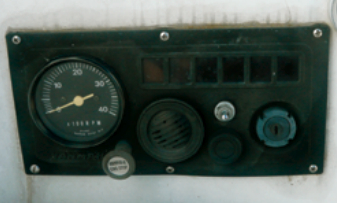
Scrambling around my boat’s cockpit, or watching someone else (especially kids) doing the same, has usually left me wondering when, not if, the engine control panel for the trusty Yanmar 2GM would suffer a fatal kick. Because it was uncovered and vulnerable, one wrong step and the “pull to stop” knob could have been bent or broken, the tachometer could have been cracked, or the ignition key could have been snapped off in the keyhole. Even though the controls had survived 26 years relatively unscathed, I thought it best to push luck no further. I built a simple cover to protect them.
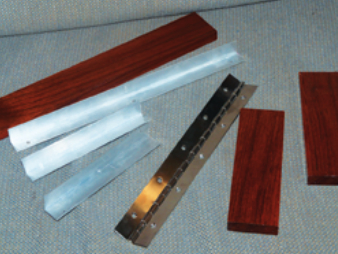
All I needed was 90-degree aluminum angle ($7); a length of 1- x 2-inch teak, though any wood will work if it’s to be stained and varnished, ($30); a small piano hinge ($8); some screws, nuts, and bolts; and a piece of tinted acrylic that I already had, left over from a previous project.
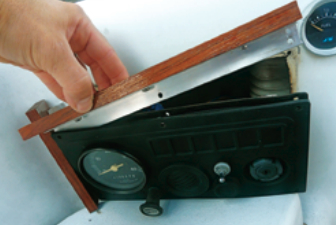
I measured the engine panel and cut the aluminum angle with a hacksaw into three pieces to form a stout frame for the cover. My original plan was to use one horizontal piece at the top and two vertical pieces on the sides to strengthen the structure but, because the fuel gauge is in the way and I couldn’t figure out how to move it, I omitted the right-side piece and hoped for the best. The engine panel itself is attached to the fiberglass cockpit side with six screws. I replaced these with slightly longer screws that would hold the aluminum between the panel and the fiberglass.
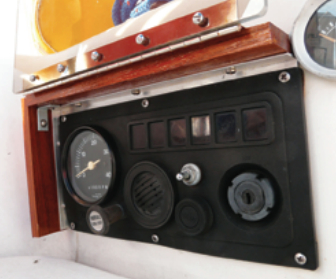
After I’d cut and varnished three pieces of the teak, I promptly threw one of them away due to the aforementioned fuel-gauge problem. I would add that applying the many coats of varnish was the most time-consuming part of the entire project. Once I’d screwed the teak to the aluminum, I installed the frame and added an “L” corner brace between the two pieces of wood for strength.
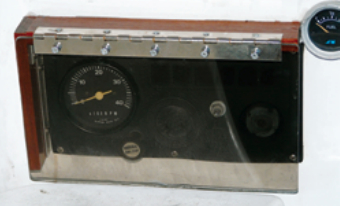
I cut the acrylic rectangle with a RotoZip, then rounded and smoothed its edges and corners with a small palm sander. After I cut the hinge down to size with a hacksaw, the final steps were to bolt the hinge to the acrylic then screw the hinge to the wood. The 2-inch width of the teak provided perfect clearance so the closed cover doesn’t hit the butt of the ignition key. A final feature is that the cover, when it’s open, stays up and out of the way while I start or stop the engine.
Chris Ferro has spent five years, upgrading his first sailboat Vita Brevis, a 1983 Seidelmann 30T. Between projects big and small, he and his wife, Shannon, explore the Chesapeake from their base in Deale, Maryland.
Thank you to Sailrite Enterprises, Inc., for providing free access to back issues of Good Old Boat through intellectual property rights. Sailrite.com