Old hatch + new lens = brighter cabin
Issue 81 : Nov/Dec 2011
Most sailboats have a hatch over the V-berth. The hatch is either solid or it has a lens to admit light. Over time, a hatch lens will become crazed and opaque and cracked, and the cabin beneath, once a small, bright area, will become dark.
Some boatbuilders made their own hatches, as Pearson Yachts did on their early models. Other boatbuilders used hatches from Bomar, Vetus, Lewmar, and others. No matter who made the hatch, the lens is easy to replace.
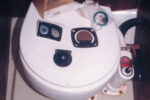
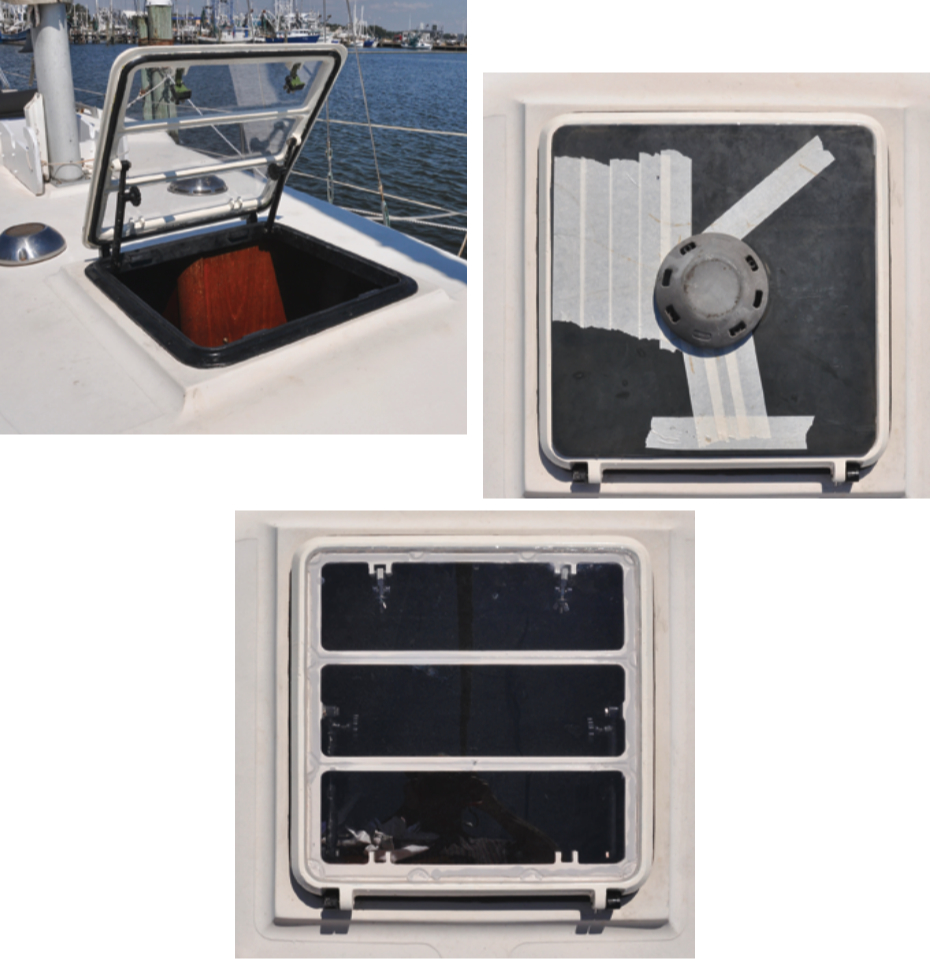
For a number of years, I had been planning to upgrade my boat’s Bomar hatch, but other projects took precedence. Then, one day, I noticed that the hatch had cracked badly, and repairing it became a priority. What had started out as a “smoked” lens was now an opaque sheet of plastic.
I investigated replacing the entire hatch, but the replacement for my Bomar was listed at $1,400. Other quality hatches were similarly priced. One company advertises that it will rebuild your hatch for “less than half” the cost of a new hatch, but that is still a lot of money for my budget.
I called Bomar and asked for directions on how to replace the lens in a hatch. I was told to cut the silicone adhesive out of the old frame with a razor knife and glue in the new lens with new polycarbonate-friendly silicone caulking. I was told the old lens was 5⁄16-inch thick and should be replaced in kind. The advice proved reliable, except for the thickness of the lens, which was actually 3⁄16 inch, not 5⁄16 inch.
I cut the old lens free from the frame and installed a replacement for less than $50. Other manufacturers bed their hatch lenses in a similar fashion. Close examination will show if your hatch is a candidate for a project like mine.
A three-step solution
Step one in the project was to disconnect the hatch arms and drive out the hinge pins to free the hatch lid. All that was left on deck was the hatch base and a gaping hole. I covered the hole with a 2-foot x 2-foot piece of
3⁄4-inch plywood and secured it with a 2-inch x 2-inch strongback under the deck with a through-bolt drawing the two parts together. To keep water out, I sealed the perimeter with duct tape. My hatch opening was now secure against any weather.
Step two was to remove the old hardware from the hatch lid. This included the support arms and their attachment bolts. Since aluminum and stainless steel try to form an inseparable bond over time, this took some doing. Needing a powerful penetrating catalyst to free the bolts, I used PB Blaster, the strongest product I’ve found. It took a week of soaking the bolts every other day to free them, but it did work. Not one stainless-steel bolt broke.
Step three was to determine what material to use for the new lens and where to purchase it. I chose clear polycarbonate (Lexan). The old lens had been smoked acrylic (Plexiglas), which is not as strong as polycarbonate and becomes opaque over time.
Finding the polycarbonate was a bit of a problem. I asked at a glass shop and was told that a 2-foot x 2-foot x 3⁄16‐inch piece of polycarbonate would cost $22 and take a week to order. However, they had 1⁄4-inch polycarbonate in stock. They cut a piece of this material to fit the old lens pattern and installed it in the frame for just $38, setting it in a silicone that adheres to polycarbonate. I could have cut the polycarbonate, beveled it, and installed it in the frame myself, but at $38 for the whole job, it was hard to beat the price.
Shiny like new
Meanwhile, I spent time stripping the aluminum hatch of its old paint and primed it with a zinc chromate spray primer followed by two finish coats of Hatteras Off-White Brightside by Interlux. I did my research first. The original paint was Awlgrip and I wanted to be sure the new paint would hold. Not wanting to paint the rubber gasket that I had replaced several years ago, I protected it with tape.
I used a 5⁄16-inch tap and die to clean out the bolt holes and clean up the bolts — their purchase price was part of the $50 final cost. I reassembled the hatch, drove in the hinge pins with a little grease on them, and tested everything.
When a dockmate walked by and saw the rejuvenated hatch, he called over and said, “Your new hatch looks great, where did you get it?”
“Old hatch, a little elbow grease, and $50,” I replied. He was incredulous.
I am constantly receiving compliments on my “new hatch” from dock walkers and boatowners and couldn’t be happier. My $50 was well spent. The hatch does not leak and it opens and closes more smoothly than it probably has in 30 years.
Bill Sandifer started sailing at age 8 or 9, and through high school and college taught sailing at Sagamore Yacht Club in Oyster Bay, New York. He has cruised the Far East, the Mediterranean, and the East Coast of the U.S. and has had a boatbuilding business. Bill currently sails an Eastward Ho 31 cruising sloop that he’s owned for 12 years.
Thank you to Sailrite Enterprises, Inc., for providing free access to back issues of Good Old Boat through intellectual property rights. Sailrite.com