Who could have guessed his was half-submerged?
Issue 58 : Jan/Feb 2008
My ignition key had to be wiggled to get the engine instruments to become active and, since the same “wiggle” could happen on the water and shut everything down, I decided it was time to open things up and change the ignition on-off switch.
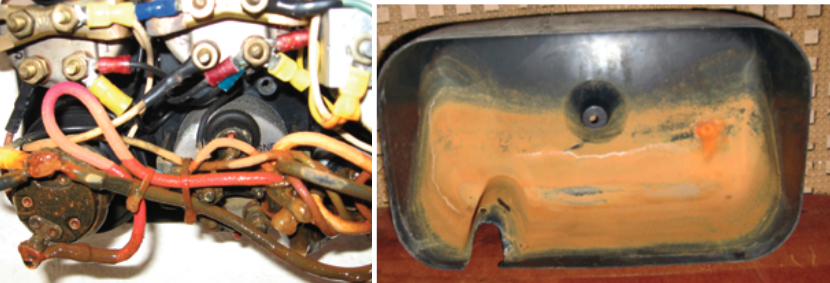
The instrument panel had been installed when the boat was new in 1985, and I had not worked on it since I purchased the boat in 1991. The first step was to dissemble the non-structural bulkhead that separated the head from the back of the outside cabin bulkhead that held the instrument panel. After that was done, I carefully removed the cosmetic back cover to the instrument panel and discovered the bottom half of the cover was full of water and the backs of the instrument connections were wet!
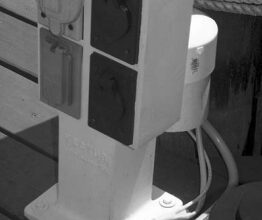
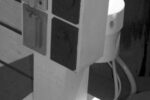
You can see in the photo how much water was sitting inside the back cover to the instrument panel by the change in color of the inside of the cosmetic cover. This cover was meant to protect the connections; but unfortunately it also trapped condensation there.
As all the instruments had been working quite nicely, I started on the assumption that the positive connections were the ones on top (above the waterline). After drying everything off, a test of the connections showed that there was no circuit breaker or fuse between the hot line from the starter to the instrument panel and all the connections (although corroded) worked, even though the positive line connection to the ignition switch had been immersed in the water. The first step after the testing was cleaning, with a brass bristle brush, and then lubricating all the connections.
At the moment, the cosmetic cover is off the back of the instrument panel while I consider my options. Since the cover is both for show and to protect the connections, I will probably drill some holes in the bottom and top to allow air circulation and avoid the water trap in the future. My question to you is: could you also have this problem and not know about it yet?
As a youngster, C. Henry Depew learned to sail on an Optimist Pram. Flying Juniors followed during the college years. Later he bought and rebuilt a blizzard of sailboats (nine in six years). He is active in the U.S. Power Squadron and sailboat racing.
Thank you to Sailrite Enterprises, Inc., for providing free access to back issues of Good Old Boat through intellectual property rights. Sailrite.com