Chocolate bars made on board are tasty and economical
Issue 96 : May/Jun 2014
Could there be a sailboat afloat that doesn’t have chocolate bars, chocolate chips, or chocolate drink powder crammed into a locker somewhere? Few treats do more to boost a demoralized crew (or skipper), shorten a tedious night watch, or add luxury to a simple dinner than chocolate. That’s why chocolate is the world’s most popular dessert. Besides, dark chocolate is good for you.
If, like me, you find commercially produced chocolate bars to be limited in variety, hard on the cruising budget, and often much too sweet, there’s no reason not to make your own in the galley. No special equipment is required.
I started experimenting when my bag of treats was almost empty and I was at anchor in Labrador, northern Canada, for a few days waiting out a south-easterly Atlantic blow. First, I melted chocolate chips in a simple double boiler — a bowl inside a saucepan of water — and mixed in two blocks of unsweetened baker’s chocolate with almonds and raisins. After I spread out the mix on a baking tray, my custom- made “chocolate bars” soon hardened in Labrador’s cold climate (there is no fridge aboard Kuan Yin).
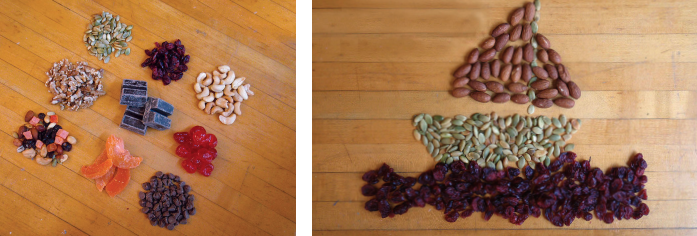
All it takes to make your own chocolate bars is chocolate to melt and whatever ingredients you want to mix in. Chocolate chips can be bought in fairly remote ports and, by mixing in some unsweetened baker’s chocolate, you can adjust the sweetness of your custom bars to your own taste. You can also experiment by combining milk, dark, and white chocolate in varying proportions.
The ingredients you can mix in are limited only by your own imagination and what’s available. Chopped apricots and local dried fruits (such as mango or banana slices), walnut pieces or other nuts, trail mix, and even breakfast cereals all make excellent additions. Try a little ground chili to really spice up your chocolate bars. When you buy what’s local, boat-made bars can be a lot cheaper than individually wrapped commercial candies.
Controlled heat
To melt the chocolate without burning it, you need a double boiler. This is not something many boats carry. As a substitute, fit a glass bowl (or other heatproof bowl) inside a saucepan that has about 1 inch of water in the bottom. Place a shallow trivet in the pan to keep the bowl off the bottom (to stop the bowl from jiggling on the bottom of the saucepan while the water boils) and leave just enough room between the rim of the bowl and the edge of the saucepan for steam to escape. The bowl should be big enough to hold all the chocolate and the mixes and still leave room for stirring.
Bring the water in the saucepan to a steady boil. Don’t cover the saucepan — if it’s covered, condensation will drip onto the chocolate in the bowl. It’s not a problem if a little water splashes into the bowl from the saucepan, but if you’re using seawater it will give the chocolate a new tang.
Chocolate chips melt the easiest. Individual chunks (such as bars of baker’s chocolate) need to be broken into smaller pieces. Measure the chocolate into the bowl. Let the chocolate chips melt before adding chunks of unsweetened, dark, or white chocolate. This helps the chunks melt faster.
Once all the chocolate has melted, add your mixes — nuts, dried fruit, or whatever takes your fancy — and stir thoroughly until everything is well coated. Mixing three parts chocolate to two parts ingredients makes rich
nuggets that bind well together and still taste very chocolaty.
Spread the melted mixture on a greased baking tray or greaseproof paper. If the tray is not well-greased, the chocolate will stick like concrete. If you want to give your chocolate some color, push chopped dried apricots, cranberries, or mango bits into the hot chocolate. Place it in a cool place to harden. This doesn’t have to be a fridge; a clean bilge might do the trick. Once it has hardened, break it into pieces and store it in a cool, dark place.
For total luxury, add hot fresh (or canned) cream to the melted chocolate to make ganache, the foundation of truffles. Add no more than one part cream to three parts chocolate and the mix will still be firm when cooled.
Dennison Berwick is the author of five books, including A Walk Along the Ganges, Amazon, and Savages: The Life & Killing of the Yanomami. Solo sailing his 32-foot Tahitiana, Kuan Yin, he is currently attempting to retrace the 1811 voyage of an Inuit family and two Moravian missionaries north along the coast of Labrador into Ungava Bay in northern Canada. Dennison comments on his travels at www.oceanhermit.com.
Thank you to Sailrite Enterprises, Inc., for providing free access to back issues of Good Old Boat through intellectual property rights. Sailrite.com