A stubborn small task is done at last
Issue 112: Jan/Feb 2017
When we purchased our 1976 Ontario 32 sailboat a few years ago, we knew she needed a refit. Most of the tasks on our to-do list, from large to small, were straightforward. Yet one very small, but significant, item plagued us for several years.
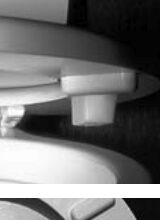
Sometime in the boat’s 40-year life, the plastic elements of the turn-button catches that secured the anchor locker hatch at the bow had simply disintegrated. Only gravity held the hatch closed. Because the locker is massive and holds a lot of expensive ground tackle, temporary workarounds would need to evolve into a permanent solution.
I was loath to make a mess of the deck, or to go through the effort and expense of installing completely new hatch closures, and it took me quite some time to think up a simple, cheap, and humbly elegant solution to the problem. Since the metal wear plates of the existing closure system were still there and in perfectly good shape, I focused on making a replacement turn button.
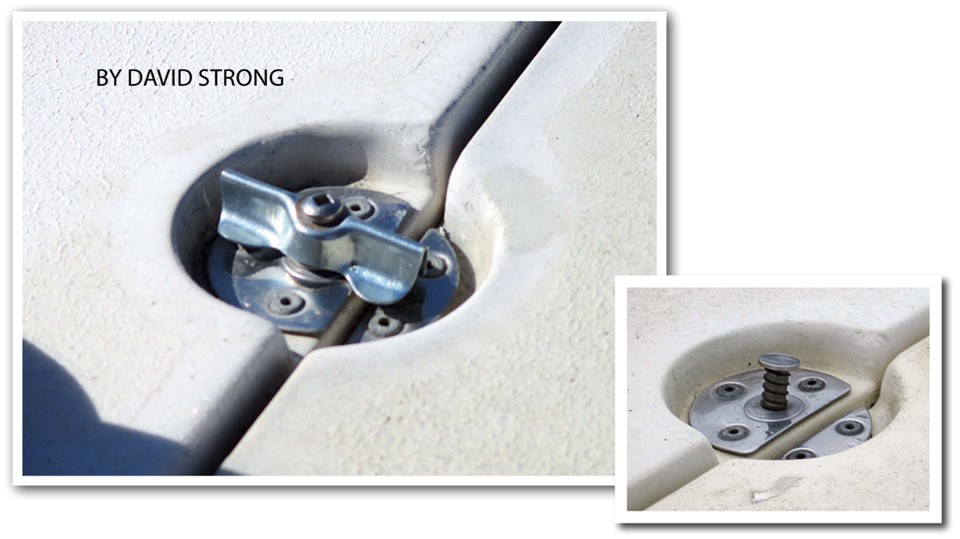
The final design solution came in the form of a traditional zinc-plated folded-metal turn button (also known to some of the Canadian persuasion as a toggle), a #10 x 2-inch stainless-steel through-bolt with a washer and double nuts, and a short length of scrap rubber tubing.
One key design consideration was that vibration might cause a loose turn button to open at the worst possible time. The role of the rubber tubing, a scavenged 1⁄4-inch-diameter fuel line, was to prevent this. I cut a piece of the tubing long enough to sit inside the main body of the turn button and protrude just a little from it. The idea was that, when I installed the turn button, the tubing would compress against the deck plate and provide sufficient friction to hold the turn button in place. I experimented until I found exactly the length of tubing needed to provide the right level of resistance.
The compressed rubber also provides a moderately effective seal against water penetration through the deck. Because it is largely concealed from the sun within the body of the turn button, it should age slowly.
The turn button itself has a very low profile and mostly fits within the recess created for the old fitting. Still, for the safety of those walking barefoot on deck, before installing it, I spent a few minutes filing off sharp corners, taking care not to significantly damage the zinc coating.
To install the new turn button, I removed the old post by simply pulling it out, then drilled through the center of the existing plate where the post had been. I inserted the bolt through the turn button, tubing, and deck, and with the help of a second pair of hands down below, slipped on the metal washer and locked the bolt in place with two nuts. As a bonus, the system is slightly adjustable for depth, up to the length of the bolt and the rubber tubing. When I eventually replace the locker seals with new thicker foam, raising the the hatch a little, I will simply back off the locked nuts to achieve the required depth.
All told, using parts available from any hardware store, the turn button refit cost less than $5. Although I have no intention of testing the system in a knockdown, I am now confident that the anchor locker hatch is properly secured.
David Strong is a professional engineer who has sailed for many years on Lake Winnipeg, Manitoba, Canada. He enjoys tinkering with boats to a point that might be defined as “refitting” them. He is always on the quest to make his boat a more robust and resilient cruising platform. He currently cruises with his wife and their young golden retriever aboard Scheherezade, an Ontario 32 with many fine stories to tell.
Thank you to Sailrite Enterprises, Inc., for providing free access to back issues of Good Old Boat through intellectual property rights. Sailrite.com