The guardians of the through-hull fell down on the job
Issue 118: Jan/Feb 2018
Fifteen years of world cruising and my wife, Ellen, and I were now gliding along the Sassafras River on Chesapeake Bay’s Eastern Shore aboard our Nor’Sea 27. It was good to be home. After tying Entr’acte securely in the marina and closing all the seacocks, we hit the road to reunite with family and old friends.
Upon our return two weeks later, I went to re-open the seacocks. Every valve turned smoothly as always, except for one. It would not budge. Tired after the long trip, I decided that, despite the inconvenience — it was the seacock on the head intake — I would deal with it the next day.
For two solid days, I experienced the sailor’s version of hot yoga, contorted into shapes and positions beyond all recognition as the Bay’s infamous August heat and humidity took its toll. I tried hammers, levers, and every trick I’d ever learned, but I failed to open the seacock. It was as if it was filled with epoxy. I continued battling that valve but gave up after two weeks and we hauled Entr’acte two months before we’d planned to.
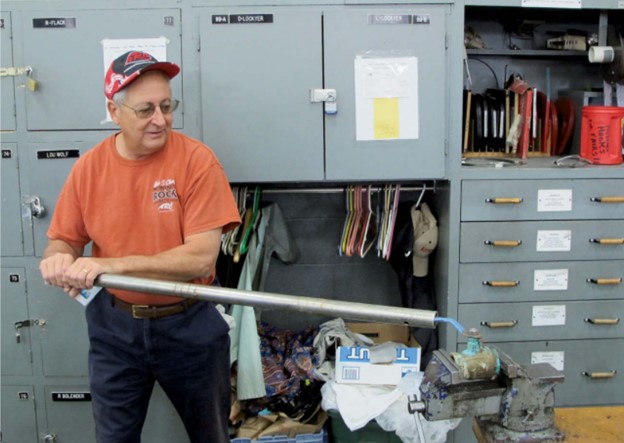
Fast forward to Arizona, 2016. Entr’acte has been hauled across the continent and is stored close to our home, her planned refit well under way. The first job on my list was to remove that seacock and find out what happened. I secured it in a large vise, but no amount of coaxing would move that handle.
This would now be the third time this seacock had failed in 15 years. But why this seacock and not any of the other four on Entr’acte?
Good intentions
When we built Entr’acte, before the advent of ball valves, we installed five of the finest tapered-cone bronze seacocks available.
One month before our launch date, we read with horror an article about “the hazards of the tapered seacock,” how it was going to seize solid to become inoperative and tear itself out of the hull when we tried to close it in an emergency. The author admonished everyone to replace these dangerous fittings with the new latest-and-greatest ball valves that were not prone to such catastrophy-causing failures.
Despite having already spent a ton of money, we immediately ran in search of these new lifesavers. They were not to be found anywhere. The hype had evidently outpaced the supply. Dejected, we launched Entr’acte and put to sea with the promise that we would install “proper ball valves” at the first opportunity.
Five years and 13,000 miles later, we returned home with all five seacocks still in perfect working condition. We did not sink even once! So much for the horror stories.
When we undertook a subsequent interior alteration, we needed to relocate the head seacock and . . . yes, we replaced that beautiful still-functional tapered-cone seacock with a new ball valve. It boasted a bronze body, a stainless-steel ball riding on Teflon seats, a stainless-steel shaft, and a steel handle. Steel?
We hated it from day one. It was horribly stiff; a real chore to open and close. The manufacturer insisted this was normal and no, unlike our tapered seacocks, handle tension could not be adjusted. Throughout our next long voyage, opening and closing that valve was a burdensome task. Ellen simply could not operate it. Had I become incapacitated when closing that valve was paramount to survival, Entr’acte would now be on the bottom.
Three years into the voyage, the steel handle broke off and I adapted the bronze handle from the late tapered-cone seacock. At the six-year mark, without warning, the valve refused to close. One day it closed smoothly as always, and the next time I tried to close it, the handle and shaft merely spun in a circle leaving the ball immovable. The only replacement we could find was another ball valve.
Several years later, halfway across the Pacific, we were launching after a haulout when the bilge pump activated. Water was leaking profusely through the shaft of the ball valve. I tightened what was supposed to be a packing nut to no avail. During the long layup, the stainless-steel ball and shaft had become so corroded that water flowed past the ball and into the boat via the shaft, even with the valve closed. Had Entr’acte been laid up afloat with all the seacocks closed, she would have sunk. We aborted our launching and replaced the valve with yet another ball valve. Considering where we were, I felt lucky to find a valve of any kind.
And now, here we were again, fighting the third “battle of the ball”! What, exactly, had happened?
Insidious corrosion
All three ball valves failed due to the corrosion of stainless steel used in an oxygen-absent environment and in the presence of seawater. Placing stainless steel in an oxygen-absent environment is like giving Kryptonite to Superman. With no oxygen present to maintain its protective oxide coating, stainless steel gradually corrodes, in this case accelerated by the presence of chloride ions in seawater. The metal appears to be superficially perfect until, struck with something hard or stressed in some way, it breaks into pieces.
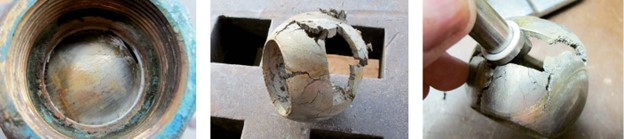
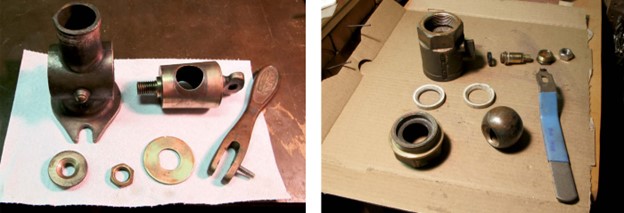
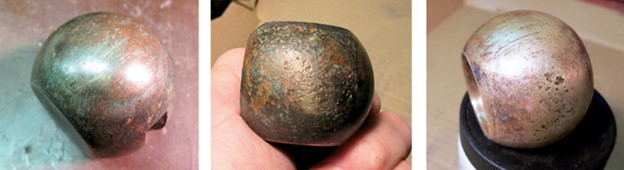
Studying the ball in the latest offender, I noticed a spiderweb of tiny cracks. I disassembled the valve and was stunned by what I saw.
When I last closed this valve, the ball rotated in the direction of the crack flow. When I attempted to open the valve, the ball rotated against the crack pattern while the rotating shaft imparted a wedge action on the ball, forcing the pieces apart to jam tightly against the Teflon seat. The more force I applied, the tighter the ball became. Disassembling the valve released the pressure, and what used to be the ball easily fell out into my hand.
What is a seacock?
A seacock is a valve attached to a through-hull fitting. When open, it allows water to pass into or out of onboard systems. When closed, it is the barrier between your boat and the sea. Every through-hull close to or below the waterline should be fitted with a seacock.
Not just any valve is suitable for use as a seacock (see “Valve Varieties,” below.) To be acceptable to the American Boat & Yacht Council and marine insurers as a seacock, the valve and its installation must meet certain manufacturing standards.
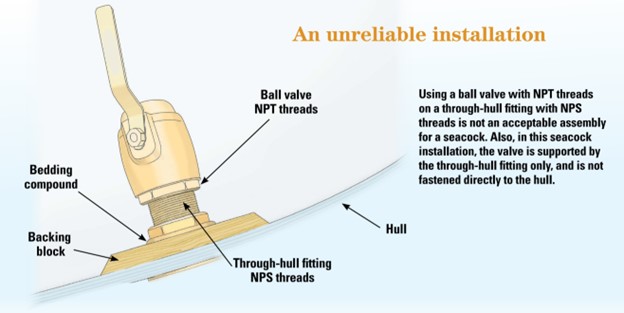
The threads on all through-hull fittings are National Pipe Standard (NPS). A valve designed as a “marine seacock” uses NPS threads that will mate properly with through-hull fittings. The inboard port might have either NPS or NPT threads, depending on the manufacturer and the model.
The threads on all gate valves and on all ball valves not specifically designed as seacocks are National Pipe Tapered (NPT), which, when connected to other NPT fittings, become tighter as the pieces are screwed together. NPT and NPS threads should not be mixed. The two fittings will indeed fit tightly together, but water will always weep between the fittings, even when the valve is closed. Because of the thread mismatch, the parts will become very difficult, perhaps impossible, to disassemble, especially after a period of several years.
To qualify as a marine seacock, the valve must be made out of the highest-quality and strongest marine-grade corrosion-resistant material. Bronze alloy 85-5-5-5 has always been the standard, although some seacocks today are made of high-strength plastic composites.
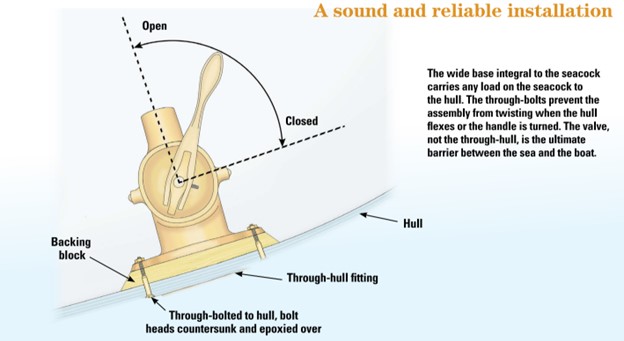
It’s best if the valve has a broad mounting base that allows the seacock to be through-bolted directly to the hull. The base, set on a backing plate, spreads the load against the hull and also prevents the valve from rotating during use and maintenance. The through-hull fitting is screwed into the mounted valve. It is not considered safe to rely on the through-hull fitting as the sole means of attachment to the hull.
The valve must have NPS threads to correctly accept the through-hull and must require only a quarter turn of the handle to open or close completely.
Whether tapered-cone or ball valve, if a valve lacks any of the above features, it will not be safe for long-term use below the waterline as a seacock.
Seacock savvy
Seacocks, perhaps the most important fixtures on a boat, seldom receive the attention they require. Often, they are installed in inaccessible places, left open and ignored for years until the day a rodent eats through the sink-drain hose, a clamp or pump fails, or a cheap brass fitting finally succumbs to de-zincification (corrosion) and the boat heads for the bottom. If anyone happens to be on board at the time, a simple quarter turn on the seacock will prevent disaster — if that seacock is readily accessible, the valve, of whatever type, has not seized solid from years of neglect, and the handle or the entire valve does not break off.
A one-inch-diameter hole one foot below the waterline, such as a small engine intake, will pass 150 gallons per hour, and a bilge pump will only function until the batteries give out. This is not the time to learn that your insurance policy does not cover loss due to rodent damage or corrosion.
Every boat owner needs to know how many seacocks the boat has, where they are located, and what type they are, and should convey that information to everyone on board. A prudent owner will also test the seacocks regularly to ensure they are functioning properly.
Seacock maintenance
Seacocks live in an extremely hostile environment and should be scheduled for regular maintenance. Every two years, we disassemble, clean, grease, and adjust our seacocks so they work smoothly. We regularly cycle them — turn the handle from open to closed and back several times. When Entr’acte is afloat and we plan to be away overnight or for more than a day, we close all the seacocks.
A tapered-cone seacock is very easy to disassemble and maintain (see “Servicing a Tapered-Cone Seacock,” below). It is usually possible to do all this maintenance with the seacock still mounted in the boat — but with the boat out of the water!
Ball valves have more parts and are a bit more complicated. They are manufactured by several different companies, each with its own philosophy on construction, materials, and maintenance. While the seacocks all have bronze bodies, the choices of ball and shaft materials differ. Groco uses stainless steel; Apollo, chromed bronze; Buck Algonquin, chromed brass (below the waterline?); and Perko, a hard polymer ball. Apollo, Groco, and Perko allow for disassembly and offer rebuild parts that include balls, shafts, seats, and packings. Buck Algonquin does not.
Make no mistake here, your chances of disassembling any ball valve to replace internal parts are slim while that valve is attached to your hull. Disassembly usually requires a solid vise, a large pipe wrench, a long lever, some swinging room, and sometimes a little heat to break the top nut free. It’s best that the valve be removed from the boat for servicing.
Our first ball valve was not designed to be maintainable. We could disassemble the valve but could do nothing about what we found inside.
The Apollo marine ball-valve seacock has the right combination of features for me. It has a wide-flange body made of 85-5-5-5 bronze, a bronze ball riding on Teflon seats, and a bronze stem. It incorporates a side plug for winter draining and a separate lug for a bonding strap. The handle and nut are stainless steel. There are no mixed metals in critical places. Apollo makes valves for a variety of applications, but only the marine ball valves are suitable for seacocks.
If I were installing ball-valve seacocks for a multi-year cruise, I would assemble a complete rebuild kit (ball, stem, seats, and shaft packing) for each size of seacock on the boat. It might seem a bit expensive, but when, not if, one of these fittings fails in some remote part of the world, I want to be able to help myself.
The case for bronze
In my opinion, a brass valve or fitting has no place on a boat. Due to its high zinc content, the brass will de-zincify (the zinc will corrode away), weakening the fitting, which could fall apart and sink your boat.
Many sales people are unaware of the difference between brass and bronze and fewer still are conversant in the various bronze alloys, only a few of which are suitable for marine use below the waterline. Here are a few that are commonly encountered:
85-5-5-5 (aka 85-three-five) – The alloy most widely used for seacocks, it contains only 5 percent zinc and is the least prone to de-zincification. (Confusingly, it’s also known as leaded red brass.)
Silicon bronze (Everdure) – This is the finest high-strength alloy for boat fastenings. It has also been used for seacocks.
Phosphor bronze – This alloy machines easily and is mainly used for springs and bushings, but not for valves.
Naval bronze – Despite its name, this alloy contains an astonishing 39.2 percent zinc. Used to manufacture military grave markers, it would not be my choice for use below the waterline.
For older bronze seacocks and through-hull fittings, a simple test for de-zincification is to scrape the surface down to bare metal with a sharp knife. If scraping reveals a bright golden color, the fitting is safe. A rusty red color indicates de-zincification, and the fitting should be replaced at once.
A dark gold color is not necessarily bronze. Brass, especially if it has been on the shelf for years, can look much like bronze.
I will never install an all-stainless-steel seacock on my boat. All its internal components will live in a permanent anoxic environment. I have seen absolute horrors with stainless-steel anchors and chain.
Conclusions
When buying or replacing a seacock, the choice is between the tapered-cone valve and the ball valve. Each type has its proponents and detractors. Whichever you choose, you must know just what you are purchasing. For some assurance of quality, look for the Underwriters Laboratories’ logo. This is no place to economize.
If installing a seacock for a new onboard service, make sure you will be able to maintain it. Locate it where it is easily accessible for operation and maintenance, and install it properly (see diagrams on page 43) to avoid problems in the future.
Regularly cycle your seacocks by moving the handle from open to closed and back several times.
While on board, close the seacocks of systems that are not in use. If the boat will be unattended for more than a few hours, close all the seacocks.
During haulouts, or at least every four years, disassemble and inspect each seacock. At the very minimum, remove the hose fittings and look inside with a bright light. If you see any hint of cracks in the ball, replace the ball and any stainless-steel components.
Layups are deadly. More deterioration and corrosion can occur during a six-month layup than after several years at sea. Before launching, grab each seacock and shake it. Tap it lightly with a hammer. Better that something break while the boat is on the hard than after it’s launched.
Our tapered seacocks have been easy to maintain and are still serviceable after 37 years. But I have no illusions. Every boat part has a life span and nothing lasts forever. Nothing is maintenance-free. Even the highest-quality seacocks will let you down if neglected.
In our experience, the working life of a ball-valve seacock with a stainless-steel ball (the only type available to us at the time we needed it) is limited. Our average has been six years, despite vigilance and regular cycling and cleaning. In all three cases, they worked until they didn’t, and they all failed without any warning.
After our third failure, I dug into my treasure trove of bits and pieces accumulated over the years, found our original tapered-cone seacock of yesteryear, cleaned, lapped, and tested it, and reinstalled it. I feel confident that we will never have to worry about “losing our head” again.
Valve varieties
Three basic types of valve are used to control the flow of liquids: gate valves, tapered-cone valves, and ball valves. All three valve types can be found in any plumbing supply, hardware store, or marine chandlery. They are available in various grades of stainless steel, brass, bronze, or plastic. All have appropriate applications.
Gate valve
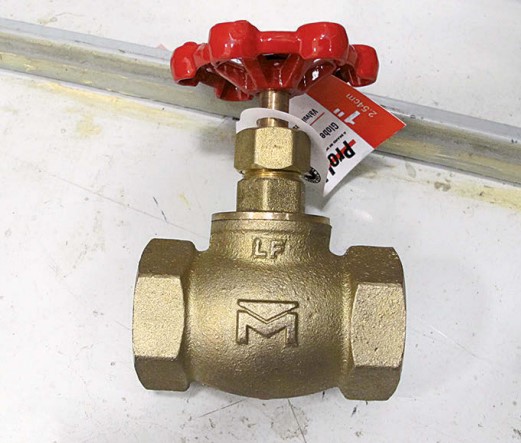
Gate valves are used throughout the plumbing industry. In the 1970s, many boatbuilders used bronze gate valves as seacocks. How wrong they were! Gate valves are extremely prone to corrosion, stripping, and jamming, and opening or closing them takes several turns of the handle. The American Boat & Yacht Council (ABYC) has long disqualified gate valves from use as seacocks, but they still abound on older boats. Regardless of quality, gate valves have no place on board a boat. Any competent surveyor will tell you they are not safe.
Tapered-cone valve
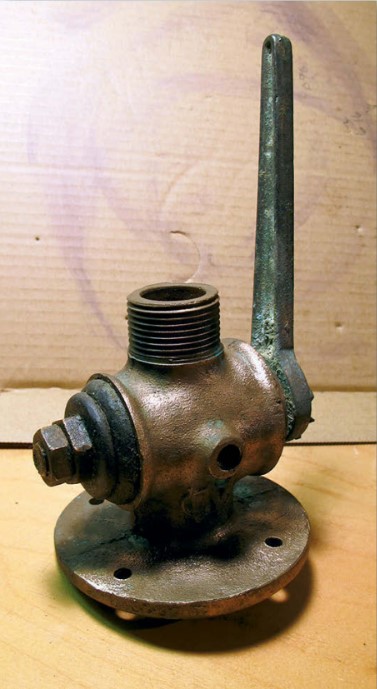
The tapered-cone design eliminated all the problems of the gate valve and for more than 100 years was considered the safest for seacocks. A tapered-cone valve has only two major parts: a tapered plug that fits perfectly into the tapered opening of the body and a nut that draws the plug into the body to create a watertight seal. It has no threads to strip or gates to jam and requires a mere quarter turn to perform its function. If adjusted properly, greased annually, and operated regularly, a tapered-cone valve will last for decades and will not leak whether open or closed.
Ball valve
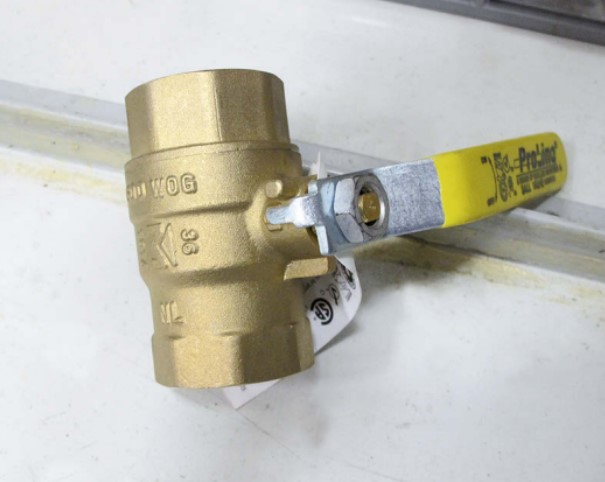
Inside the body of a ball valve, a ball rotates on Teflon seals. The valve opens and closes completely with only a quarter turn. Ball valves represent a quantum improvement over the gate valve for boat plumbing systems and have become the standard of the boating industry.
Servicing a tapered-cone seacock
Routine maintenance
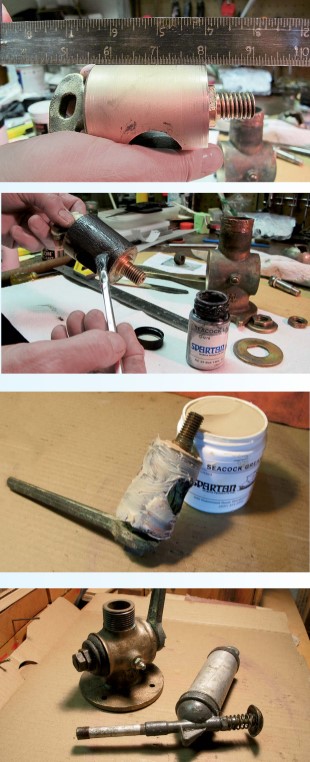
Remove both nuts, give a slight twist or light tap with a mallet, and out comes the cone. Clean all the parts with kerosene, apply a new coat of grease, reassemble, and adjust. Doing this every two to four years should suffice.
If the mating surfaces become worn and permit seepage, a simple lapping procedure with a special lapping compound will solve the problem in all but extreme cases.
Lapping
Disassemble the seacock and clean all surfaces well. Rotate the plug against a straightedge and look for gaps. In all but the most severe cases, gaps can be lapped out with valve-grinding (lapping) compound and the plug restored to like-new condition. If you see any cracks, replace the seacock.
Spartan Marine sells a lapping compound and grease formulated specifically for its seacocks, but you can also purchase lapping compound from most auto-parts stores. Choose the finer grits available (320/400/600).
Coat the plug with lapping compound, insert the plug into the body, tighten the nut to achieve some tension while allowing the plug to turn. Rotate the plug completely around (not back and forth) twenty rotations. Clean all surfaces and apply the straightedge.
Repeat this process (turning the plug in the opposite direction) until the plug appears true, but don’t overdo it. You can always remove more material but you cannot put it back.
Thoroughly remove every trace of the compound, then apply grease to the mating surfaces. Spartan’s specially formulated thick seacock grease is preferred over automotive grease. This job is easier if you remove the drain plugs and temporarily install zerk grease fittings. Be very careful to match the threads. Replace the drain plugs when finished.
Reassemble the valve and tighten the adjusting nut until it requires a reasonable effort to cycle the handle. Set too loose, it could close due to vibration, disastrous if it is your engine intake!
Check for leaks
The seacock must be watertight whether open or closed. To test your work, close the seacock completely. (Unlike on ball valves, there might not be a handle stop and the handle could pass the fully closed point, allowing water to pass.) Remove the drain plug(s).
Attach a 3-foot section of clear hose and support it in a vertical position. Fill it with water, and watch what happens. If the hose drains with the valve closed, continue lapping. If the hose remains full and nothing comes out of the drain plugs, you’re all set.
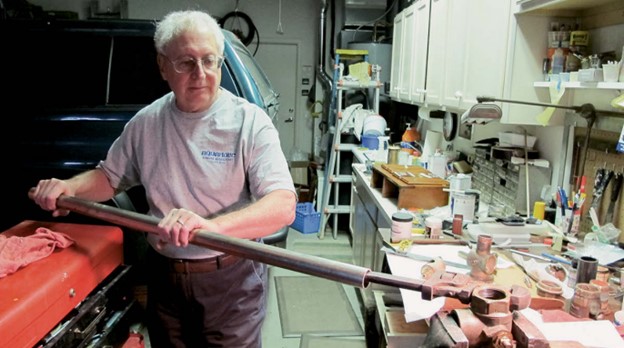
Ed Zacko is a Good Old Boat contributing editor. Ed, the drummer, and Ellen, the violinist, met while playing in the orchestra of a Broadway musical. They built their Nor’Sea 27, Entr’acte, from a bare hull, and since 1980 have made four transatlantic crossings and one transpacific crossing. After spending a couple of summers in southern Spain, Ellen and Ed recently shipped themselves and Entr’acte to Phoenix, Arizona, where they are refitting Entr’acte while maintaining a busy concert schedule throughout the Southwest US. Follow them on www.enezacko.com.
Thank you to Sailrite Enterprises, Inc., for providing free access to back issues of Good Old Boat through intellectual property rights. Sailrite.com