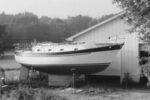
A cheap boat and cheaper labor add up to sailing riches
Issue 87 : Nov/Dec 2012
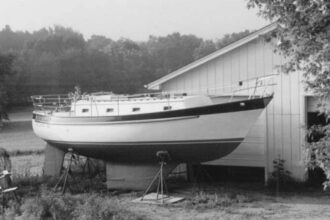
I had put our O’Day 22 on the local Craigslist and was hoping to find her a new captain by the end of May. We had sailed her out of Lansing, New York, on Cayuga Lake for five years and, like any good old boat owner, I thought she was the prettiest boat in the marina. She was a pretty little sailor, but my 2-X beam didn’t fit well into her narrow berths and I had been looking for a 25-footer that fit my big butt and narrow budget. While checking to see if someone had secretly removed my ad from Craigslist, I saw a listing for a 1968 Morgan 24 for $3,000. The ad said she was solid, but the hull showed dings and scratches and she needed a good cleaning.
The pictures on Craigslist were a couple of years old and taken at a safe distance. The boat was on a trailer, she had a heavy keel, and I liked the handsome lines of the Morgan. I spoke with the owner and asked for his best sales pitch and bottom line take-it-away price. He didn’t make any pretenses about her general condition, but he did say $2,500 would take her away. My online research turned up a couple of sites that showed restored Morgans of the same year. They cleaned up just fine, so I made an appointment to have a look.
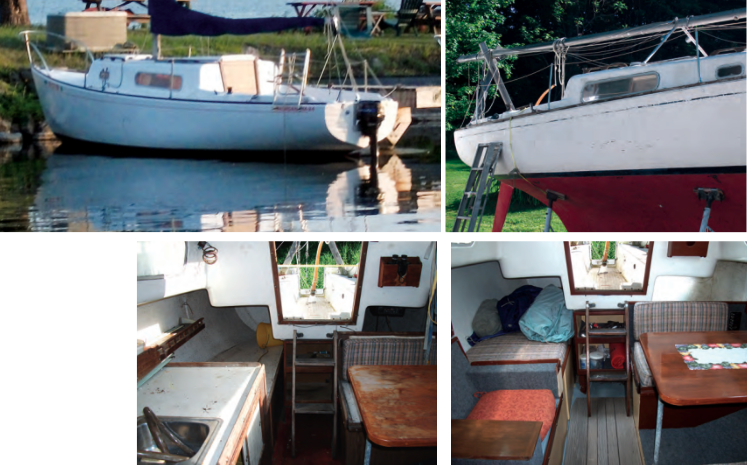
The boat didn’t give me a terrific first impression. She looked like any number of derelict boats at any local marina waiting for their owners to come and explain where they’d been for the last five years. As advertised, she bore many scars from rough docking and banging against algae-stained fenders while waiting to be hauled out late in October. The brightwork hadn’t been bright for many years and the hull was as dull as chalk. Gary, the owner, seemed like a nice fellow whose love of sailing had been cooled by the cost of boat ownership and maintenance, but he still had some affection for his Morgan and seemed quite proud of her.
I was inclined to wish him a good day and take my leave but — not wanting to offend him and since my wife, Ruth, and I were there — I climbed the ladder and stood in the spacious cockpit. The tiller looked like a dead branch. The standing water on the cockpit benches was stained reddish from the debris of tree branches hanging over this sad scene. Gary continued smiling like the best was yet to come, but I wasn’t seeing it on the boat’s exterior. He stepped down into the dark interior and invited me to come down with him. The cabin was cluttered and smelled like any boat that had been sealed up for years. The cushions had been removed for storage so the interior décor was mainly dull white spackle paint. The condition of the interior matched the outside. My impression wasn’t improving, but I did like the standing headroom and generous sleeping space. By now, Ruth was looking over the rail and smiling like she was looking at a different boat.
I walked up to the foredeck to look at the mast hardware and shuffle my feet around looking for soft spots. Then it struck me: this old boat was built like a tank. The deck was as solid as my living-room floor and, other than the obvious dirty condition, she wasn’t in bad shape. I told Gary, “I’ll take her off your hands.” I wrote the check and waited for buyer’s remorse to set in.
I clicked a few pictures, walked around the chalky hull one more time, and we made arrangements to meet and pick up the motor and sails at his house later in the week. I noted that the lights on the trailer had been broken off, the tires looked soft, and I wondered about the bearings.
The next weekend, I borrowed my friend’s truck and towed her home with my son as an escort (à la Smokey and the Bandit), parked my new yacht in the driveway, and started my job list.
Inspect, scrub, and paint
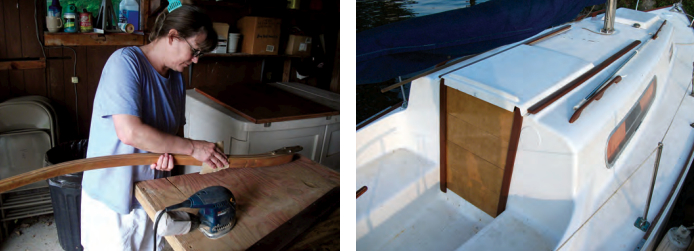
First, I stripped off all the exterior wood trim and inspected it. It was all in poor condition. I have never liked refinishing wood, so I decided to use composite deck material to make new pieces and planned to paint them, rather than use stain and varnish. The trim was mostly straight with a slight bevel; all of this I could duplicate with my limited skills. The handrails were another matter. My plan was to trace the shape and make a pattern but, before I could do this, Ruth had stripped and sanded them, and I was pleasantly surprised at how good they looked. She had already started priming the pieces so it was too late to change my mind and opt for stain and varnish, but there were now fewer jobs on the punch list.
Meanwhile, my son-in-law, who worked with auto paint, looked her over and said he could spray the hull right there in the driveway if I could scuff up the old paint. While he was there, he did a quick repair with some Bondo on a nasty gash in the fiberglass at the bow. Apparently, the previous owner couldn’t find the brakes while docking on a windy afternoon. (I would later re-gash the same spot while docking.)
The interior was just a matter of scrubbing off the mildew and repainting, or so I thought. I did not plan to restore her to new condition; my goal was to fix what was needed, clean her up, and get to the lake. It was early June and I hoped to launch her by early July. The restoration was progressing nicely, but a surprise was lurking.
I was anxious to be done with the trim and interior painting and move on to another part of the restoration. The marine toilet worked but the plumbing to the holding tank was in bad shape and the diverter valve was frozen. I decided to remove the toilet and buy a Porta Potti. I had to raise the base where the potty sat because the new one was bigger, but that was easy.
My first big setback came at the end of a rainy afternoon when I climbed into the boat to see if the windows were leaking. The seals were old and had been repaired with putty, but didn’t look very weatherproof. To my surprise, they were not leaking, but there was water coming into the starboard locker from the slot where the chainplate came through the deck to attach to the bulkhead. That looked like an easy seal to replace but, as I sat there thinking about more pressing repairs, I began to wonder about the condition of the plywood bulkhead under the leak.
A case of rot
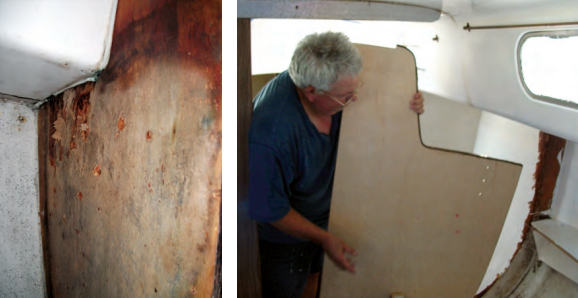
I picked up a hammer and, starting on the port side, tapped the three exposed bolts that hold the chainplate. They all made a sharp “clack” sound. Then the starboard side. Thud. Tapping on the veneer all around the bulkhead produced the same dull sound. I picked up my drill, cut a hole through the veneer with a butterfly bit, and probed with a screwdriver: the wood was like balsa. Now I really had buyer’s remorse. One of the questions I had asked Gary was about any soft spots. He assured me she was solid. This would have been a deal breaker.
I was able to pull off the Formica veneer and expose the entire front side of the bulkhead. There was not enough solid wood left to splice in a piece. It looked terminal. Back in the house, I went online to see what I could learn about replacing a bulkhead. It didn’t look as terminal as I first thought, but it did look expensive. I emailed photos to Gary and explained the dilemma. I wasn’t sure what I wanted to do. I couldn’t sail her in the present condition, but I was becoming attached to the old Morgan. By now my wife and I had about 100 hours invested. I decided to sleep on it, but sleep didn’t come. The next day, Gary called and offered to help with the expense of the repair. I wasn’t surprised at that, but I was pleased and inclined to press on. I told him I’d check at the two local boatyards and call him back. Both estimates were close to $1,000. I decided to demolish the old bulkhead myself and then re-think the job.
My first impression had been correct; the Morgan is built like a tank. I had to remove all the tabs on the back side of the bulkhead and split it with a Sawzall to free it. The boat didn’t have a galley, but there was a large counter with a small sink and icebox to starboard. It took up a lot of room and didn’t offer much storage or utility. I decided to remove the counter and re-shape the space for a settee. There were plenty of solid tabs attaching the 3⁄8-inch plywood to the hull. These could be reused.
Once I removed the bulkhead and surveyed the job, it didn’t seem so daunting. The Formica veneer I had removed was in one piece and made a perfect template. The tabs that held the old bulkhead were tough as leather. It appeared that I had only to cut out a new piece and glue it in place. I realized I could do this myself and, as I work cheap, the budget would remain intact.
After the demolition work, I thoroughly cleaned the inside of the hull with a brush, soapy water, and a hose. The next day, I repainted the inside walls a glossy white base coat. I glued gray carpet to the cabin sides and sole around the dinette and sat back to admire my work. I really needed to see a spot that looked completed. This worked. I felt that I had turned the corner from deconstruction to reconstruction. Ruth, meanwhile, had refinished the tabletop and tiller and they looked brand-new. My enthusiasm returned.
Fresh energy
I bought a sheet of 3⁄4-inch birch plywood. It took a half-day to cut out the new bulkhead and put it in place. West System makes a caulk-gun-applied epoxy that mixes itself while being dispensed and has a thick consistency for ease of use. I added a spreader between the bottoms of the two bulkhead halves to force the new one into the tabs and left it there as a base for new floor planks that I cut from composite decking material. I was pleased and confident with my repair and saved a big chunk of money.
Next, Ruth painted the bulkheads and locker a soft pumpkin color that blended nicely with the light gray carpeting and the restored wood trim. I reinstalled the locker and the new Porta Potti, put the V-berth cushions in place, and stood back to admire it all.
With the forward area completed, I worked on the dinette and reinstalled the refinished trim and old cushions. The cushions looked dated, but were in fair condition. My next and last interior project was to convert the old counter area to a settee. This took a day and a half of measuring, climbing down the ladder, cutting, climbing up the ladder, and assembling.
At 61 years of age and, as I earlier confessed, a bit wide in the beam, I was feeling exhausted from long days working on the Morgan. Every task inside the boat required several trips up and down the stepladder with arms and pockets full of parts and pieces, a giant step over the rail, and a climb down into the hot interior without the help of the refinished steps that were stored out of harm’s way. I felt we would never get to enjoy our boat that year . . . but it was still just June and we were making progress daily.
My son-in-law came over one evening and we plugged numerous holes on the cabinroof and coaming where I had removed useless and forgotten pieces of hardware and gadgets. He then primed and painted the coachroof, coamings, and companionway with two quarts of Brightside Polyurethane. The repair looked beautiful. The paint looked like new gelcoat and gave a brand-new look to my old sailboat. I then reinstalled the refinished exterior wood trim and filled, primed, and painted the screw holes.
Cruising to launch day
The end was now in sight. There was still a lengthy punch list, but we continued working at it with enthusiasm. July brought a record-breaking two-week heat wave. We took a Sunday off to go to the lake and admire everyone else’s sailboats. We deserved the rest and enjoyed it. The next week, my son-in-law and youngest son finished spray-painting the hull. My oldest son re-wired the switch panel, installed the freshly charged battery, and discovered that it was no good. A new battery and a couple of new bulbs later and we had lights.
A friend with a vinyl lettering business cut new hull numbers and a Morgan 24 logo out of bright red material to match the red sails. We hung the 7.5-horsepower Mercury longshaft, set up a bucket of water over the lower unit, and primed the fuel line. After three pulls I was sweating profusely. This Mercury seemed to pull much harder than my old 6-horsepower Johnson.
The outboard hangs directly on the transom and is some distance from the tiller and where the mainsheet bridle and backstays attach. I was concerned about having a hard-starting motor, especially one that’s hard to get to. As I hadn’t installed the tiller yet, I was able to remove the top cover easily and discovered the choke was stuck in the closed position. Part of the linkage was binding on a fuel line. I tied the fuel line back, and one pull later the Mercury was purring. I repeated the experiment several more times between cool-offs and was confident about the ease of starting.
As it turned out, my first suspicion about the Mercury was right. Because of the distance back from the tiller and the rigging and hardware in the way, it was a brute to start and nearly impossible for one person to control the motor and tiller at the same time. I found a 9.9-horsepower Mercury four-stroke with electric start and controls for $500 on Craigslist. I felt like I’d discovered indoor plumbing. Life is good.
I installed a new Windex and a set of curtains my wife had made. A few touchups on the inside and a few more on the exterior, and the Morgan was officially ready to launch.
Reflections on restoration
I’m not a craftsman or a boatwright by anyone’s measure, but the repairs and restorations we performed were the same as those done by thousands of frugal, do-it-yourself sailboat owners every year. We saw our project boat stripped to the hull and reassembled piece by piece, learning how to do new things along the way and truly earning the pride that comes with accomplishment. For less than the price of a vacation with the grandkids at Disneyland, we have a good old boat that will give us pleasure for years to come.
Sailing truly is a sport for any and all. There is a certain elitist feeling in the statement, “I’d rather be sailing,” but the truth is that the majority of sailboats, at least at my marina, have had several owners, missed a few seasons sitting on the stands, and suffered neglect and seeming abandonment. Then the right person found the right boat and a new bond was formed. What’s more, this often occurs for well under $10,000. We bought the Morgan for $2,500, spent around $600 on materials, and the previous owner refunded $300 for the soggy bulkhead. This doesn’t count the cost of our many hours on the project and the favors called in to do things I couldn’t do. The bottom line is that we are on the water for around $3,000. Truly yachting for pennies.
The sails went up on the third Sunday in July on Cayuga Lake. I hanked on the smaller jib, even though the wind was a gentle 5 to 7 knots, and we savored the solid feel of this born-again boat. She pointed up like a pro and gave us a good sail until the wind died and we used her as a swim platform. My O’Day is still looking for a new captain and crew; I’m sure when the right person finds her, she too will provide sailing pleasure for pennies for several more years.
Jim and Ruth Kiley sail their Morgan 24 on Cayuga Lake in central New York. As they began sailing only in 2005 with the O’Day 22, they think of themselves as newbies, and admit that their marina neighbors get a kick out of watching their occasional antics.
Thank you to Sailrite Enterprises, Inc., for providing free access to back issues of Good Old Boat through intellectual property rights. Sailrite.com