Tips for taking photos that “pop”
Issue 85 : Jul/Aug 2012
The difference between a snap-shot and a beautiful photo is in the details, not in the cost of the camera it’s taken with or the advanced processing skills of a photo-geek. The painless way to learn those details is by mastering a few composition and lighting concepts as well as making your camera do what you want, not what it wants.
Cameras continue to get smaller, cheaper, extra sophisticated, and more user-friendly. They’re also becoming more like our eyes and doing more things automatically, but while they often “guess” correctly, they are not yet perfect. Because of this (or maybe in spite of it) taking better photos is not rocket science; it’s not as difficult as learning to trim a jib nor as tedious as varnishing. The bad news is that improving your photos may occasionally require that you read your *$#%! manual. (I’ll recommend that only when absolutely necessary.)
Instead of turning to the manual, let’s talk about fine-tuning your photography without mention of apertures, f-stops, or digital manipulation. (Yes, you can “fix” many photos in Photoshop, but being out on the water taking excellent photos is definitely preferable to spending hours moving pixels around in the computer.) These principles are relevant for any type of camera — digital or film, SLR or cell phone. So dive right in. Before long, you’ll be shooting like a pro and creating images to beautifully portray your nautical memories.
Think like a camera
With any camera it’s always about the amount and type of lighting — light vs. dark. The quantity and hardness of light determine exposure, contrast, and visible details. More light is not always better. Camera sensors try to compensate for strong light, which often results in blown-out bright patches and also produces dark shadows with reduced detail and duller colors. That’s why harsh midday sunshine is usually less desirable for outdoor photography.
Soft and diffused light can make for better photos, providing greater detail and more vivid colors. For the best light when shooting pictures, wait for overcast or cloudy skies. If necessary, create your own shade. A hat brim or visor is a common source of unwanted shadows when you’re capturing people’s faces on sunny days. For better results, wait until a cloud passes over, place your subject in the shadow of the sail, or schedule your photo for the Magic Hours.
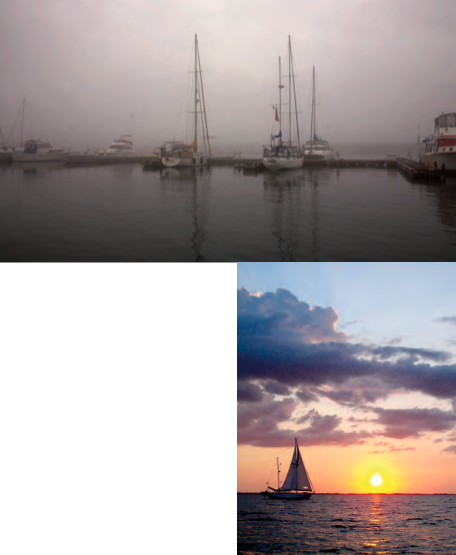
Magic Hours are the times outdoor photographers cherish — just before and after sunrise and sunset. During these “edges of the day,” when sun angles are low or just below the horizon, both hard and soft light are combined, frequently resulting in dramatic photographs. A sunset image with a sailboat in the distance and light reflected off the clouds is a perfect example.
Concentrate on composition
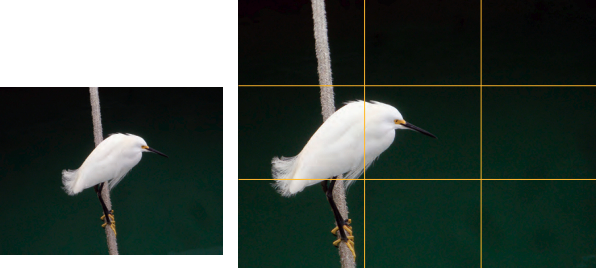
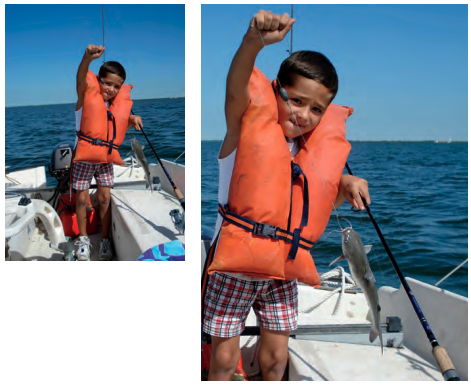
A first impulse is to place any key element in the center of the picture. Actually, off-center generally looks better and helps draw the eye to your intended focal point. Photographers and painters rely on the Rule of Thirds, which divides an image into nine sections. They imagine tic-tac-toe lines over the image and position key elements along the lines’ intersections. Some cameras can even show the grid in the viewfinder (check your manual). This definitely helps when composing photos and assists in keeping the horizon level, a common problem with nautical photos.
When framing your photos:
- Look at all four corners and behind your subject, then remove all distractions.
- Leave space for a moving subject to go. For example, if a boat is sailing toward the right, leave extra space on that side.
- Try shooting the same subject in horizontal (landscape) and vertical (portrait) formats.
- Try different perspectives by moving up and down, side to side, or by zooming.
- Create depth by including something in the foreground or something that shows scale.
- Notice and capture details — they can convey a lot.
- Take advantage of patterns and colors.
Simplify and focus
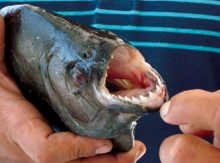
Focus (literally and figuratively) only on what you’re trying to capture . . . the rest is clutter. Watch for distractions and remove everything else from your photo. Be sure the background contrasts with the subject. If necessary, zoom (with your feet or the camera) or arrange the shoot so no visual chatter detracts from what you’re trying to show.
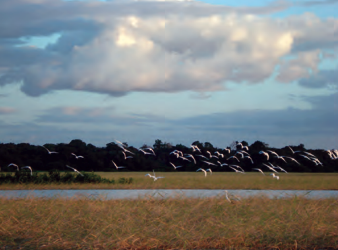
The best shots, from National Geographic images to amateur photos, are razor sharp. Whenever possible, brace yourself, lean on a friend’s shoulder, use a tripod, or get a camera with image stabilization (IS). Take multiple images to increase your chances of getting a sharp one. Your camera may focus automatically, but even automatic models may have settings for focusing priorities — the center or everything in the frame. Your camera may also have a BURST setting that automatically takes several photos at once. View them all and keep only the best. (Read your manual.)
Tell a story
Photos may be used to document boats, people, or places. However, images with lasting value go far beyond just recording something; they tell a tale or capture the essence of a subject. That can be done by portraying unique characteristics, by instilling emotion or mystery, or by engaging the viewer’s attention in other ways.
Here’s a challenge: instead of taking 30 photos of a perfect weekend afloat, try to summarize the serenity and joy with a single photo. In place of a snapshot of your boat on jackstands, find a way to depict the travails of an unexpected month of grinding and patching. This is where photography becomes most enjoyable. It’s a way to be imaginative and make your viewers pause to wonder what’s happening or why. This is how photos become keepsakes worthy of mounting.
Be creative
Look for pictures; don’t wait for them to come to you. Try taking photos from different angles, heights, and distances. Instead of capturing the sunset, turn around to check for spectacular clouds behind you. For some dramatic shots, photograph the edges of inclement weather — just before or after storms.
Experiment with unfamiliar camera settings like sepia, B&W, or panorama. Use a waterproof camera for a barnacle’s view of your keel or to convey the atmosphere of sailing in a squall. Try kite photography for an aerial view of your boat and anchorage. The possibilities are fantastic. After considerable practice and abundant deleting, your creative instincts will develop and you’ll superbly capture some memorable moments.
Practice, practice, practice
Take advantage of a digital camera’s review function to get instant feedback. Take at least two shots of everything, from different angles and with variations on the composition, while checking and adjusting between frames. Repeat this process again when the conditions are different. What you learn by constantly checking and tweaking is what takes your photos up a notch or two. Keep only the very best images. Toss the bad and average ones. The more photos you take . . . and delete . . . the better your photography will become. Soon you will start thinking and seeing the light like a camera and capturing the images you envisioned.

The best camera is with you
When you have your camera with you, you can capture all those perfect opportunities. An overlooked corollary of this pointer: a good photo does not depend upon a fancy or expensive camera. If you’re worried about damaging your good camera in some sailing situations, get an inexpensive point-and-shoot model, a disposable waterproof sport type, or upgrade your camera phone. Don’t obsess about megapixels; 6 MP is usually enough. What is essential is to have a camera you’ll use. Get in the habit of always carrying the camera and keep it where you can quickly grab it — not stashed away in the cabin (bad), car glove compartment (worse), or at home (absolute worst).

Cheat
Use every camera feature and accessory possible (there are dozens) to make your style of photography easier and more enjoyable. Using shortcuts and the right tools for the job will expand your capabilities. (See “Camera features and accessories to think about.”)
Read the manual
Today’s cameras are so impressive and easy to use we generally ignore the usermanuals. However, they’re packed with information you can use to reduce your frustration and enhance your ability to take your photography to the next level. Make time to learn your camera’s features. (That’s where I learned about turning on the Rule of Thirds grid and depressing the shutter partway down to lock in focus and exposure.) Mastering the tools available to you is one of the surest ways to graduate beyond snap-shots and start taking photos with pizazz.
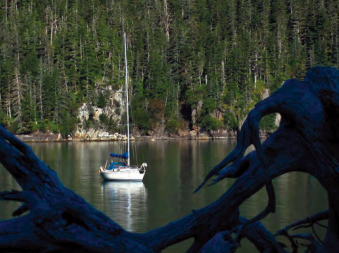
Constantly analyze photos
Get in the habit of carefully examining photos, both good and bad, no matter where you see them. Study pictures everywhere, including boat magazines, calendars, flickr.com, and forum postings. Whenever you like an image, no matter what the subject, methodically critique it. Incorporate its components into your photography. Use it for inspiration.
So you see, it’s true. Improving your photography is not rocket science. Your photos really can evolve from everyday snapshots to exceptional photographs when you apply these principles . . . and practice. Then you can take memorable photos when those perfect moments occur — just before a storm, at sunset, as a friend’s boat sails by, when your crew lounges on deck, or at anchor after a brisk passage. You will grab your camera and capture those moments of joy, serenity, chaos, terror, camaraderie, pride . . .
Your images will become excellent reminders of places, people, boats, and times. They’ll be proudly shared, printed, converted into cherished gifts, and even made into artwork. The possibilities are endless.
Paula Biles became addicted to nautical photography decades ago while cruising around Florida and the Bahamas. After her interests branched out, many of her photos were published. Paula also writes and lectures about ways to improve photography. She is co-owner of Seaworthy Goods, a company that designs, manufactures, and sells products to improve sailors’ time afloat www.SeaworthyGoods.com
Thank you to Sailrite Enterprises, Inc., for providing free access to back issues of Good Old Boat through intellectual property rights. Sailrite.com