Issue 7 : Jul/Aug 1999
Case number 1: It’s blowing hard outside your safe anchorage. You’ve successfully completed a rough passage. You’re several days’ sail from the nearest clinic when your partner develops fever, chills, and pain in the kidney area. Your boat is equipped with the latest communication equipment, enabling you to contact a physician. Do you have on board the medication the doctor recommends to treat this condition?
Case number 2: Seven days into a Caribbean sailing vacation, you develop a high fever, severe headaches, joint pain, vomiting and, later, a rash. Could you have prevented this?
Case number 3: The boiling water you were pouring for morning coffee spilled onto your leg. Your skin is painful with some blisters. Do you have the right creams, bandages, and equipment to ensure a good outcome?
Case number 4: During a fast tack, your partner grabbed a winch handle with a bee on it. Five minutes after the sting she is experiencing hives and throat swelling. Are you prepared with a simple pre-loaded epinephrine syringe that may be needed to save her life?
While sailors may be compulsive about carrying spare parts and extra supplies, the act of preparing a good medical kit seems to be an afterthought. This is understandable perhaps. From experience, we expect that the boat will need repairs, but it seems to be human nature not to anticipate illness or injury. And medical supplies are, of course, more difficult to obtain; they are not ordered from marine catalogs or found at the local chandlery.
However, with thoughtful planning, an appropriately stocked medical bag should be relatively easy to obtain. A detailed pre-trip interview with an interested primary-care physician is essential. Find a physician willing to provide long-distance advice over time, especially if your cruising plans extend over a period of months or years. Since medications are expensive and it is impossible to anticipate the need for refills, discuss the fact that you may need to have additional supplies shipped to you at a later date.
If you anticipate foreign travel, try to obtain a separate written prescription for each medication. Be sure to note the expiration date and ask your pharmacist for the farthest date possible when you purchase medications.
During your medical visit:
- Review the following list of supplies/medications, and have your doctor individualize it for your needs.
- Review any previous history of negative medication reactions to determine whether the specific drug can still be used again but perhaps taken in a different manner (with food, change in dose, etc.), or whether it was a true allergic reaction and must be avoided.
- Update immunizations for tetanus/diphtheria and determine whether you should have vaccinations for hepatitis A and B. Hepatitis A is the most common vaccine-preventable illness. A two-shot series starting six months before travel is effective for more than 10 years. The vaccine has an excellent safety profile. Hepatitis A vaccine is recommended for susceptible travelers going anywhere outside the U.S., Canada, Western Europe, Japan, Australia, or New Zealand. Hepatitis B is endemic in many parts of the world, including the South Pacific, and the vaccine is recommended for travelers who will stay more than six months or may require medical or dental care in these areas. Yellow fever vaccination is required for entry into some African countries, French Guiana, and recommended for most travelers to the South American or African tropics. Depending on your travel plans, your doctor may need to consult with, or send you to, a travel medicine specialist to determine the necessity for providing these vaccines as well as those for typhoid, polio, and additional medications to prevent malaria. The mysterious illness, dengue, described in the second case above, is a virus transmitted by mosquitoes throughout the tropics. It can be quite debilitating and, occasionally even fatal. Supportive care is the only treatment. Prevention with repellents, nets, and screens is effective, however.
- Ask your doctor to review the technique for giving injections for analgesia and epinephrine for severe allergic reactions.
- Obtain information about how to clean wounds and close lacerations with Steri-Strips or sutures. Discuss methods and medications for burn treatment. Your physician may recommend a general surgeon as the best resource for these topics.
You can get advice concerning treatment of any medical problem when you’re offshore, but you will need a stock of essential medications to ensure the best outcome.
Antibiotics
Several types and classes are required for treatment of the variety of infections that might be encountered. Also, a variety of antibiotics is necessary to provide an alternative if anyone develops an allergic reaction or resistance to the first choice. In general, most infections other than uncomplicated urinary-tract infections require a minimum of seven days of treatment. A 10-day supply would almost always be adequate to treat an infection. Generic medications, when available, are usually acceptable. A conservative approach to initiating antibiotic therapy is wise since these medications can occasionally cause severe diarrhea, allergic reactions, or yeast infections, especially in women. Unnecessary antibiotic use also serves to promote the development of resistant organisms.
You should have these:
Cephalosporins
This large family of general-purpose antibiotics can be used for skin, soft tissue, urinary, sinus, bronchial, pulmonary, and strep-throat infections. There is a 15 percent cross-reaction with patients who are allergic to penicillin, so avoid them if the reaction was severe.
First generation, cephalothin (Keflex, Duricef). A generic will be considerably less expensive.
Second generation (Cefzil, Ceftin, etc.). These are more expensive but offer somewhat better coverage for respiratory and other infections.
The third generation isn’t applicable.
Penicillins
Penicillin is inexpensive, but its usefulness has been limited by the resistance people are developing. Amoxicillin/clavulanic acid (Augmentin) is another excellent choice to have on board for treatment of most infections if none of the crew members has an allergy to penicillin.
Quinolones
This is another large family useful for urinary-tract infections (including prostatitis) and travelers’ diarrhea (ciprofloxacin). Newer members of this family have expanded coverage for respiratory infections. These medications may cause nausea. Cipro would have been an excellent choice for treating the kidney infection described earlier in case number one above.
Macrolides (Erythromycin and many other brands, including generic)
These medications present a good alternative when there is a penicillin allergy. They’re useful for skin, soft tissue, respiratory, sinus, and strep-throat infections (optional for carrying on board).
Sulfonamides
This is a useful, relatively inexpensive class of broad-spectrum antibiotics, especially when combined as trimethoprim/sulfamethoxazole, for respiratory and urinary-tract infections. I tend to avoid prescribing this, due to a relatively high rate of allergic reactions.
Trimethoprim
This is especially useful for treatment of uncomplicated urinary-tract infection in women. One advantage is that it is inexpensive.
Metronidazole (Flagyl)
It is important to carry this one for treatment of diarrhea caused by antibiotics, Giardia, and amebiasis. This is a drug of choice for non-specific vaginitis.
Topical antibiotics
- Mupirocin ointment (Bactroban). The best, but most expensive, treatment for superficial staphylococcal, streptococcal infections.
- Bacitracin ointment (Baciguent). This is available over the counter (OTC). It’s a good, inexpensive, general-purpose ointment for mild localized skin infections and burns.
- Silver sulfadiazine (Silvadene). This is the most widely used cream for burns although some experts advocate newer, more expensive dressings.
Antifungal medication (fluconazole, Diflucan)
One tablet ingested is usually sufficient to treat vaginitis.
Topical antifungal cream
- Lotrimin (OTC). This is usually adequate for most superficial infections.
- Terazol is available in cream and tablets. This is a good choice for yeast vaginitis.
Anaphylaxis/allergy treatment
Be prepared for life-threatening allergic reactions even if you or other members of your crew have not had a prior incident with bee stings, medications, and so on as in case number 4 above.
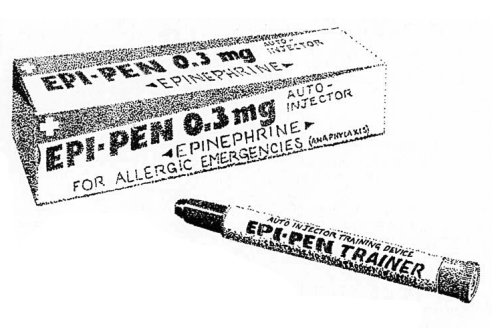
Epinephrine (EpiPen)
Prepackaged auto-injector syringes containing 0.3 mg for intramuscular injection. These come with explicit patient-oriented instructions. At least two should be carried on board.
Antihistamines (diphenhydramine, Chlor-Trimeton, OTC)
These are useful for allergic rashes, itching, and sinus congestion, but they frequently cause some sedation. Non-sedating forms (Claritin, Allegra) can be obtained by prescription.
Corticosteroids
These offer an important adjunct to treatment of life-threatening allergic reactions, allergic rashes, and asthma. Different forms have different potencies. Prednisone: I’d suggest enough to take a 10-day supply at 40 mg per day. Medrol Dosepak: These are commonly prescribed, but they’re expensive and not more effective than prednisone. Topical Corticosteroids: I’d suggest a 0.1% triamcinolone cream for topical use on localized allergic rashes. This is too strong for facial areas, so use 0.1% hydrocortisone cream on the face. A widespread rash would need prednisone.
Analgesics
Acetaminophen (Tylenol, etc.) should always be the first choice for treatment of pain as the side-effect profile is minimal if prescribing directions are followed.
Nonsteroidal anti-inflammatory drugs (NSAIDs): Ibuprofen, Naprosyn, Motrin, Aleve, and many others. These medications relieve pain with about the same effectiveness as Tylenol but have more potential for side effects (fluid retention, gastritis, ulcers, occasionally liver and kidney inflammation). NSAIDs do not exhibit significant anti- inflammatory effects with over-the-counter prescription dosing recommendations. Near maximum prescription strength doses are needed for this. These meds should be tried if Tylenol is not effective. (Newer NSAIDs without gastro-intestinal side effects will soon be marketed.)
Narcotics: These may be hard to obtain, but it would be reasonable to request at least a modest supply to treat pain from an acute fracture, burn, or similar accident. Consider Darvocet or Tylox (propoxyphene, oxycodone) to treat mild and more severe pain. Occasional side effects include hallucinations, sedation, nausea, vomiting, and constipation.
Antidiarrheal
In most cases, this probem is self-limiting, so it is best to let diarrhea run its course and not use agents to slow it down. It is better to let your body get rid of the bacteria and toxins. A few doses of Imodium (OTC) or Lomotil can be used to temporarily slow the process down when absolutely necessary (such as when trying to travel by airplane).
Anti-ulcer medications
Be sure to have some of these on board, especially if you have required these medications in the past. Over-the-counter versions (half the dosage strength of those obtained by prescription) are now available as Pepcid, Zantac, etc. Antacids such as Mylanta may suffice for occasional “simple indigestion.”
Medications for motion sickness
Since this is a common problem, it would be wise to carry both tablet forms and transdermal, rectal, or injectable medication in case the oral route is not feasible.
Meclizine (Antivert or Bonine or Dramamine II, which is available over the counter) is useful for prevention and treatment of mild to moderate motion sickness in a dose of 25 to 50 mg once a day.
Transderm scopolamine patches, used for 72 hours at a time, are probably the most effective remedy. A dry mouth is a likely side effect. Drowsiness and difficulty focusing can occur. Difficulty urinating and disorientation are infrequent, but possible, complications.
Phenergan, used orally, injectable, or as a rectal suppository can be quite useful for this and for nausea in general. It has a similar side effect-profile to the medications mentioned above.
Diabetic treatment
If diabetics are on board who require medication, insist that they bring along Glucagon and Reactose for treatment of hypoglycemia, along with a blood-sugar measuring meter, and have them instruct someone else on board in their use.
Insect repellents
Repellents should be on your shopping list if you’re traveling to the tropics. These would have prevented the dengue fever described earlier in case number 2. They should contain at least 35 percent DEET to be effective against serious mosquito-borne illness (malaria, dengue, yellow fever, encephalitis, and so on.) Hour Guard (Amway), a slow-release polymer developed by 3M, is now provided to military personnel for this purpose. Lower concentrations of DEET can be used to protect against nuisance bites of mosquitoes and flies, where serious illness is not a consequence. Avon’s Skin-So-Soft has been popular but only provides 40 minutes of protection.
DEET is very safe, but young children given excessive doses have developed toxic reactions. DEET can damage plastics and may reduce the effectiveness of sunscreens. Repellents and permethrin can be applied to clothing for significant additional protection.
Supplies
Sailors who plan only short trips where medical care is more readily available can probably limit their medical supplies to the following:
- Cephalosporin – antibiotic
- Ciprofloxacin – antibiotic
- Bacitracin – antibacterial ointment
- EpiPen (for life-threatening allergic reaction)
- Analgesics – Tylenol, ibuprofen, etc.
- Meclizine (Dramamine II, etc.) – anti-seasick
- Steri-Strips – for closing wounds
- Hibiclens – Antibacterial cleansing solution
- Any others recommended by your physician
Remember to store medications in a cool, dark place. Obtain a blood pressure cuff and stethoscope and verify your technique with your physician’s nurse. An automatic cuff would probably be the best for the occasional user. Practice your readings and learn what is normal for you and your crew.
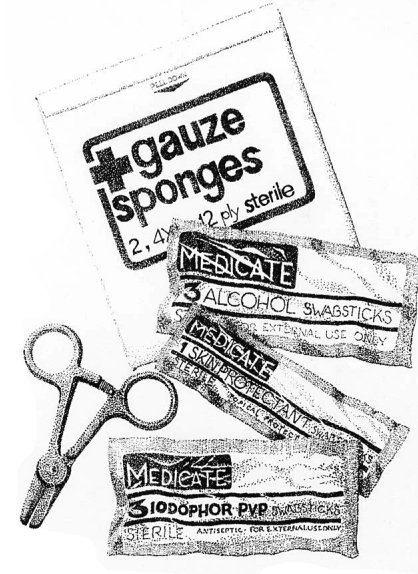
Obtain the following from your pharmacy:
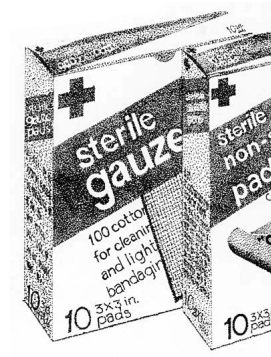
- Ace wraps and possibly a 3M Coban, which is a similar but self-adherent wrap that can be readily cut to any length.
- Kerlix gauze wrap.
- Steri-Strips and benzoin solution to
help them stick to the skin for
laceration repair, in different sizes. - Injectable lidocaine, syringes, non-
latex gloves, and suture materials as suggested by your physician. - Betadine solution for cleaning wounds and lacerations.
- Syringes (3- and 6-cc).
- Mild antibacterial soap for cleaning wounds, burns, etc.
- Insect repellent containing 33 percent or more DEET. This is especially useful for preventing mosquito bites which lead to malaria or dengue in the tropics. (Do not use on young children.)
- Oral rehydration packets containing World Health Organization-recommended nutrients for cases of severe diarrhea.
Make it a priority to conduct a pre-trip medical interview with crew members concerning their past and ongoing health problems. If you plan a long passage, be sure they bring their own appropriate supplies.
The Center for Disease Control has a website which is quite valuable for international travelers and is updated with current recommendations for vaccinations, and so on: http://www.cdc.gov.
Your sailing adventure will be happier if you anticipate that medical illness or injury could occur. Keep track of the expiration dates on your medications. Have guidelines for their use and, if possible, contact a physician before initiating treatment. Don’t forget to send your helpful physician a periodic postcard from those exotic places you are visiting. See your physician when you return home for that annual visit.
Thank you to Sailrite Enterprises, Inc., for providing free access to back issues of Good Old Boat through intellectual property rights. Sailrite.com